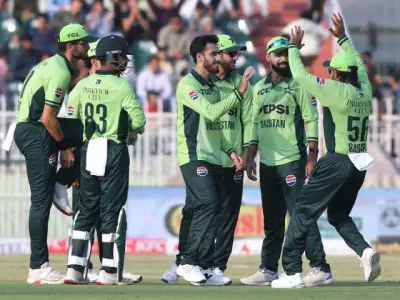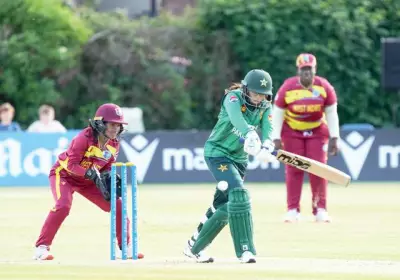
The 35th National Games have drawn to a close in Lahore, leaving behind a familiar scene of waving flags, shining medals, and a surge of national pride. However, as the celebrations fade, a pressing and difficult question emerges for Pakistan's sporting community: what comes after the closing ceremony?
A System That Rewards Participation, Not Excellence
While winning hundreds of medals at a national event looks impressive on paper, it masks a deeper crisis. The current structure often sees the athletic dream conclude once the medals are packed away and the spotlight dims. For a vast majority of competitors, the ultimate goal is not a podium finish at a world championship but securing a stable government job. This has subtly transformed sport into a form of employment for the low-income bracket rather than a genuine platform for cultivating world-class talent and national development.
The Pakistan Sports Federation (PFF) chief emphasizes that departments remain the backbone of national sports. The core issue is not a lack of ability; Pakistan boasts one of the world's largest youth populations. The real challenges lie in governance and strategic direction. Despite an annual sports budget exceeding 28 billion rupees, a minimal fraction is invested in critical areas like athlete development, advanced coaching, or systematic talent scouting. Billions are instead consumed by administrative maintenance, salaries, and politically motivated events that contribute little to producing international champions.

Medals Without Markets, Champions Without Careers
This funding misallocation leads to a stark reality: Pakistan demonstrates dominance in domestic competitions but consistently fails to translate that success onto the international stage. We produce medal-winners but lack the professional ecosystems—like viable leagues, sponsorship pipelines, and structured career pathways—to sustain them. The system celebrates athletes at the National Games but then fails to support their journey beyond it.
In this landscape, Mixed Martial Arts (MMA) stands out as a rare and powerful success story. It exemplifies what is possible when structure aligns with passion. In just the past year, Pakistan's MMA fighters have made history, winning medals in competitions in Lebanon and Georgia, and achieving a stunning 10–0 victory over India in an international team event. Pakistani fighters are now feared and respected across Asia and Europe. Yet, paradoxically, MMA remains under-recognized and critically underfunded within the country itself.
A Blueprint for a Billion-Dollar Sports Industry
Sports have the potential to be far more than mere entertainment. Globally, they are powerful instruments for national unity, education, and social rehabilitation. For Pakistan, a strategic focus on sports could be a transformative tool to counter radicalization, drug abuse, and deep social divisions. Every young person engaged in training, competition, and learning discipline is one less individual drawn toward extremism or despair.
The MMA model shows what every sport in Pakistan could become: a global success story built on merit, professionalism, and pride. To replicate this, a significant policy shift is required. Key steps could include:
- Establishing a dedicated Pakistan Sports Development Authority.
- Ranking sports federations transparently based on performance and outcomes.
- Integrating sports deeply into school and college curricula.
- Forging strong links between sports, media, and corporate sponsorship.
Such reforms could turn sports from a perennial cost centre into a powerful engine for economic growth and social cohesion. The medals awarded at the 35th National Games should not be the end of an athlete's journey. They must become the starting point for systemic reform. It is time to move beyond ceremonial celebration and start building robust systems that produce true athletes and world champions, not just employees with medals.