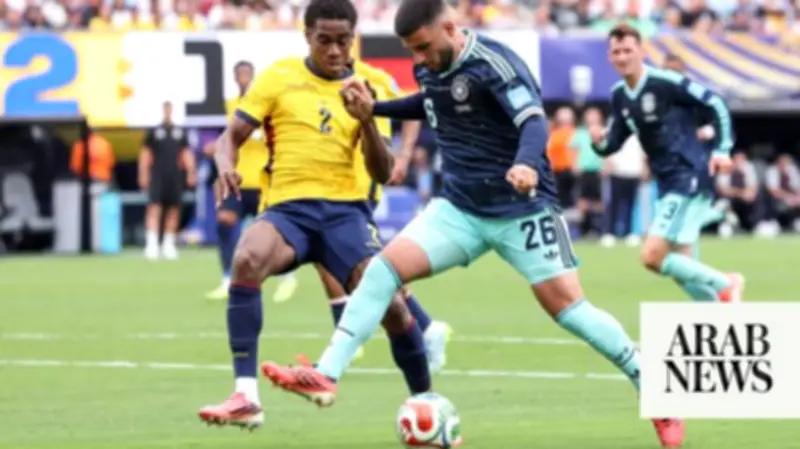
Deniz Undav, a 29-year-old striker for Germany, has emerged as one of the surprise stars of the 2026 FIFA World Cup, scoring three goals and providing two assists as a substitute. His performance has brought pride to the Yazidi and Kurdish communities, who see him as a symbol of resilience and achievement on a global stage where they lack their own national teams.
Heritage and Background
Undav identifies as a Kurdish Yazidi and is the son of Yazidi refugees. The Yazidi community, a Kurdish-speaking religious minority, has endured decades of oppression, including a 2014 onslaught by Daesh militants in Iraq’s Sinjar region that killed or abducted thousands. The Kurds, one of the largest stateless ethnic groups globally, number about 30 million across Turkiye, Iraq, Iran, and Syria.
In Germany, where around 235,000 Yazidis live according to Irfan Ortac, chair of the Central Council of Yazidis in Germany, Undav’s success is particularly meaningful. “Until now, we have mostly been known as victims of violence,” Ortac said. “Whenever we spoke about Yazidis, we always had to talk about genocide, discrimination, and displacement. It makes us very proud and happy to be able to talk about something positive.”

Community Celebrations
In the village of Khirbet Al-Ghazal in northeastern Syria, Yazidis gathered at the home of community leader Ismail Dalaf to watch Germany’s match against Ecuador. Many residents are related to Undav’s mother. Dalaf said Undav’s performance has made him “a symbol that shows Yazidis can reach a higher position and be seen with respect.” He added, “When people see a Yazidi entering the field, scoring goals and changing the result of matches, it changes public perception. It tells the world that Yazidis have a role in the world.”
In Iraq, home to the largest Yazidi population and their holiest site, the Lalish temple, spokesperson Luqman Sleiman said, “It makes me very happy to see a Yazidi bringing our name to the World Cup and playing in front of the whole world.” Diyar Bakir, a 29-year-old Yazidi from Sinjar, expressed hope to travel to Germany to see Undav play, noting his family “came from a place where his ethnicity and religion were not appreciated, yet he is now recognized and valued by a great team like Germany.”
Overcoming Abuse
Undav has faced abuse over his heritage from spectators and on social media. When his club Stuttgart played in Turkiye at Fenerbahce last year, German media reported obscene chants about his mother. Two Kurdish anti-discrimination groups said social media insults were part of a growing campaign of “racist and ethnically motivated hostility.” His decision to represent Germany rather than Turkiye also drew online hostility from some Turkish fans.
Despite this, his popularity is surging. Düzen Tekkal, a German documentary filmmaker and Kurdish Yazidi author, co-founded Scoring Girls, a nonprofit offering free soccer classes for girls. She noted a “Deniz Undav effect,” where children can celebrate their heritage and feel they belong in Germany. “It is no coincidence that he plays with this lightness and freedom,” Tekkal said. “People are asking how come he’s so good under pressure? Because he doesn’t know it any other way. That is the DNA, that is the resilience. ... That’s how he scores these goals because what is that pressure compared to being Kurdish or Yazidi?”
Cultural Expression on the Field
After scoring against Curacao, Undav broke into a Yazidi-inspired dance with his hands clasped behind his back, joined by teammate Antonio Rüdiger, a Black German star who has faced racist abuse. Tekkal called it “one of the highlights, no matter how this World Cup goes from here.” She explained, “Dancing is a form of expressing resistance for us. We dance on the graves of our dead. Our mantra is that resistance is life. He’s dancing there for his forefathers who were oppressed.”
Mahmoud Kanabi, a Kurd from Irbil who moved to Berlin in 2020, purchased a Germany jersey because of Undav. “Unfortunately, for us Kurds, we don’t have a team because we don’t have a country,” he said. “Now, when a Kurdish player is in a team, we have to be fans of it. It doesn’t matter what team it is.”