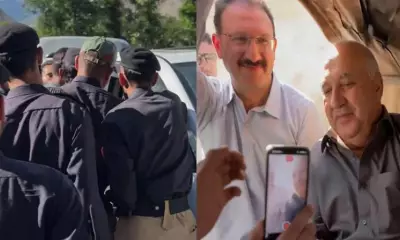
The Chief Minister of Khyber Pakhtunkhwa, Sohail Afridi, has ignited a major controversy by questioning the state's claim that Afghanistan's territory is being used for terrorism against Pakistan. During a press conference in Karachi, Afridi stated that evidence should be provided for such assertions, noting that other nations bordering Afghanistan do not voice similar complaints.
A Statement Contradicted by Hard Data and International Reports
This stance has been labeled as extremely shameful and preposterous, especially coming from the leader of a province that has borne the brunt of Pakistan's terrorism crisis. Official data reveals that out of 5,397 terrorist attacks recorded across the country in 2025, a staggering 3,811—or 71%—occurred in Khyber Pakhtunkhwa. Terrorists operating from Afghan soil continue to target the province's security forces almost daily.
Contrary to the CM's skepticism, multiple international bodies have corroborated Pakistan's long-standing position. A report from the UN Security Council's Anti-Terrorism Committee confirms that the banned Tehrik-e-Taliban Pakistan (TTP) has executed high-profile attacks from Afghan soil with support from Kabul's de facto authorities. The UN describes the TTP, which operates with an estimated 6,000 fighters inside Afghanistan, as a serious and evolving danger to regional security.

UN Evidence Details Taliban's Support for TTP Operations
The 35th report by the UNSC's Analytical Support and Sanctions Monitoring Team provides damning, detailed evidence. It vindicates Pakistan's narrative of the Afghan Taliban's logistical, operational, and financial backing of the TTP. Key findings from the report include:
- The TTP launched 600 terrorist attacks inside Pakistan between July 1 and December 31, 2024.
- TTP leader Noor Wali Mehsud receives approximately $43,000 monthly from the Afghan Taliban.
- New TTP training centers have been established in Afghan provinces like Kunar and Nangarhar, with recruitment ongoing from within the Afghan Taliban's own ranks.
- Enhanced collaboration with Al-Qaeda and other groups has boosted the TTP's operational capability, with attacks now conducted under the banner of Tehrik-e-Jihad Pakistan.
- The report also highlights a dangerous nexus between the ethno-nationalist Balochistan Liberation Army (BLA) and the religiously inspired TTP, warning this could transform the TTP into an "extra-regional threat."
Political Repercussions and a Call for Course Correction
Afridi's comments have drawn sharp criticism for appearing to align with an anti-state narrative. Observers note that as CM, he would have received comprehensive briefings from security agencies, making his public doubt seem deliberate. The statement is seen as an attempt to discredit Pakistan's official stance and appease TTP sympathizers within the Taliban regime, reflecting a perceived soft corner of his party, the PTI.
His claim about other bordering nations not having complaints is also factually challenged. In November 2024, Tajikistan faced two terrorist attacks from Afghanistan, including a drone strike on a Chinese mining company that killed three citizens and a gun attack on workers from a Chinese state corporation.
Former KPK Chief Minister Ali Amin Gandapur has publicly contradicted Afridi, confirming that both provincial and federal governments possess concrete evidence of TTP operations from Afghanistan. Gandapur stated that the presence of wanted TTP militants on Afghan soil is a documented fact, with many arrested attackers being Afghan nationals.
Analysts urge the PTI and its leaders to recalibrate their stance, align their political agenda with national security interests, and operate as a normal political party. With KPK suffering immensely, the security of the country must remain the topmost priority, leaving no room for narratives that undermine the fight against terrorism.