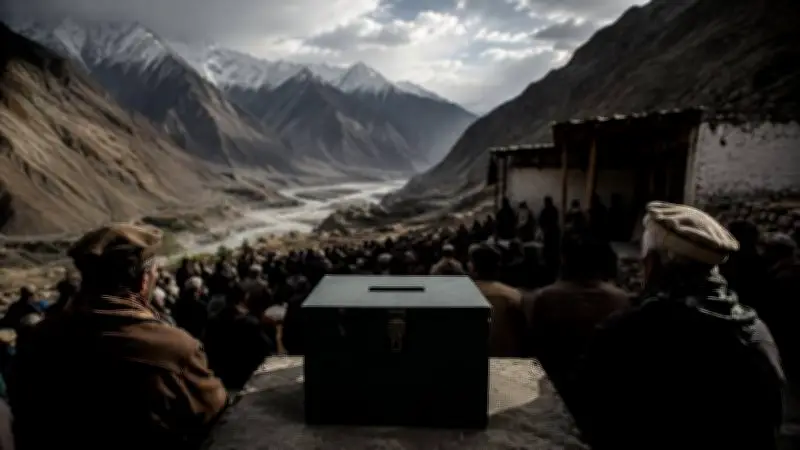
As Pakistan grapples with record-breaking heatwaves across its southern plains, the northern reaches of the country are experiencing an entirely different kind of political heat: the feverish anticipation surrounding the upcoming Gilgit-Baltistan Assembly elections. On June 7th, nearly a million registered voters across this breathtakingly scenic yet deeply neglected region will head to the polls to elect their representatives for the next five years. Yet beneath the surface spectacle of election campaigns, rallies, and party slogans lies a troubling reality. The people of Gilgit-Baltistan are, once again, on the verge of being let down by the very system that is supposed to serve them.
Electoral Landscape and Voter Demographics
The GB Assembly comprises 33 seats in total, of which 24 are to be filled through direct voting across various constituencies, while the remaining nine are reserved: six for women and three for technocrats. According to the Election Commission of Gilgit-Baltistan, a total of 958,480 voters are registered, with women constituting 48% and men accounting for 52% of the electorate. For the 24 general seats, as many as 396 candidates are contesting, and notably, approximately 68% of them are running as independents. Nevertheless, both major and minor political parties are actively participating. The Pakistan Peoples Party (PPP) is fielding candidates in 23 seats, the Pakistan Muslim League-N in 22, the Istehkam-e-Pakistan Party (IPP) in 15, the Pakistan Muslim League-Q in 11, the Pakistan Nazaryati Party (PNP) in 10, and the Muttahida Qaumi Movement (MQM) in six. Religious parties, too, are making their presence felt: Islami Tehreek Pakistan (ITP) is contesting 10 seats, Jamiat Ulema-e-Islam nine, and Majlis Wahdat-e-Muslimeen seven. It is, on the surface, a commendable sign that such a broad spectrum of political and religious parties has chosen to participate in the democratic process. However, beneath this apparent vibrancy lies a deeply concerning vacuum: not a single party has yet presented a concrete, substantive manifesto addressing the genuine developmental needs of Gilgit-Baltistan.
The Vacuum of Substance in Campaigns
Representatives travel to the region, deliver thunderous speeches, chant populist slogans, and promptly depart, leaving behind nothing more than unfulfilled promises and a politically charged atmosphere. Alarmingly, politicians continue to exploit the public based on sectarian divisions, family loyalties, and federal patronage networks to manipulate an electorate that, tragically, remains susceptible to such emotional and psychological manoeuvring. Gilgit-Baltistan remains without a single medical or engineering university, a staggering deficiency for a region that has now witnessed three successive government formations under the PPP, PML-N, and PTI. The general public, particularly the poor and the marginalised, finds itself entrapped in a cycle of political deception with each electoral cycle.

Election Commission Under Scrutiny
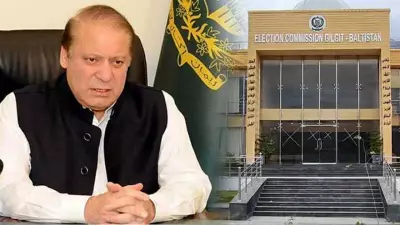
Moreover, the conduct and preparedness of the GB Election Commission itself have come under serious scrutiny. Irregularities in voter registration have been found, with voters from one constituency being inexplicably transferred to adjacent ones, and original polling stations being altered without adequate notice or justification. In a region characterised by high mountain terrain and vast geographic distances, such administrative carelessness disproportionately disenfranchises the elderly and women, who are physically unable to undertake long journeys to reach distant polling booths. Far from being a minor administrative oversight, this negligence constitutes a direct infringement upon a fundamental constitutional right to vote. The Election Commission must be held accountable for such structural failings before polling day arrives.

Chronic Socio-Economic Challenges Ignored
Perhaps the most glaring indictment of the political class, however, lies in their persistent failure to address the region’s chronic socio-economic challenges. Gilgit-Baltistan remains without a single medical or engineering university, a staggering deficiency for a region that has now witnessed three successive government formations under the PPP, PML-N, and PTI. Each of these parties pledged, during their respective election campaigns, to establish such institutions. And yet, year after year, the promise evaporates into thin air. One must ask: if resource constraints are genuinely the obstacle, then why do these very parties continue to expand medical and engineering seats in their own governing provinces for students of Gilgit-Baltistan? Furthermore, why does Gilgit-Baltistan continue to be systematically excluded from the National Finance Commission Award?
Unemployment Crisis Among Educated Youth
Unemployment, particularly among educated youth, represents another festering wound in the social fabric of the region. Under the crushing weight of Pakistan’s current economic crisis, young men and women holding MPhil and PhD degrees are being compelled to accept subsistence-level wages, if they can find employment at all. What is especially frustrating is that meaningful solutions are well within reach. Dozens of educational, health, and other government departments across Gilgit-Baltistan have been upgraded in their functions, yet these upgrades remain unrecorded in the official PC-4 documentation. A simple administrative update to PC-4 could instantaneously create thousands of vacancies, absorbing a significant portion of the unemployed educated workforce. Additionally, the number of available seats in competitive examinations remains woefully limited, further narrowing the pathway to formal employment. These are not monumental undertakings; they are practical, achievable steps that any sincere government could implement within months. And yet, not one political manifesto has bothered to include them.
Untapped Agricultural and Entrepreneurial Potential
Beyond the public sector, Gilgit-Baltistan is endowed with remarkable entrepreneurial potential that remains scandalously untapped. The region produces an extraordinary variety of high-value fruits and vegetables such as apricots, cherries, apples, peaches, potatoes, and tomatoes. Yet an estimated 30 to 40 per cent of this agricultural produce is lost annually due to the absence of adequate cold storage and processing facilities. A targeted intervention, such as a small-scale, interest-free youth entrepreneurship scheme combined with subsidised grants for agro-processing units, could simultaneously reduce food waste, generate livelihoods, and stimulate local economic activity. The blueprint is straightforward; what is missing is political will. Regrettably, no party has articulated such a vision in its electoral platform.
Climate Change: An Existential Threat Overlooked
Compounding these man-made failures is the existential threat of climate change, which is ravaging Gilgit-Baltistan with particular ferocity. Glacial Lake Outburst Floods (GLOFs), flash floods, and rapid soil erosion have become alarmingly routine occurrences, displacing thousands of families every year and destroying homes, livestock, agricultural land, and trees. This region, which contributes negligibly to global carbon emissions, bears a disproportionate burden of the climate crisis. Yet its political representatives have chosen to remain wilfully deaf to these urgent realities. Climate resilience, disaster preparedness, and community-level adaptation strategies are conspicuously absent from the electoral discourse.
A Call for Informed Voting
As polling day draws inexorably closer, the hollow manifestos and vacuous rhetoric of the competing parties stand as a damning testimony to their fundamental insincerity towards the people and the region. It increasingly appears that many politicians regard their visit to Gilgit-Baltistan not as a solemn democratic responsibility, but rather as an opportunity to enjoy its magnificent landscapes while delivering rehearsed speeches. Meanwhile, ordinary citizens, instead of collectively demanding accountability, are being drawn into partisan conflicts on behalf of candidates who have no intention of addressing their pressing concerns. This cycle must be broken. The people of Gilgit-Baltistan deserve far better than the performative politics that have robbed them of decades of development. Every vote cast on June 7th is not merely a personal choice. It is a promise made to the next generation. A vote cast wisely, for a candidate who possesses a genuine understanding of local realities as well as broader national and international challenges, and who comes equipped with a measurable, credible action plan, is an investment in the future of this remarkable region. The electorate must think critically, look beyond tribal loyalties and emotional appeals, and demand concrete commitments before lending their mandate to anyone. The future of Gilgit-Baltistan depends not on politicians finding their conscience, but on voters finding their collective voice.