Despite ongoing gridlock with Iran and lackluster results from diplomatic trips to China, President Donald Trump has experienced a relatively successful month politically. Three primary elections in May demonstrated his enduring influence within the Republican Party, as his endorsed candidates achieved significant victories.
Primary Victories Across the Country
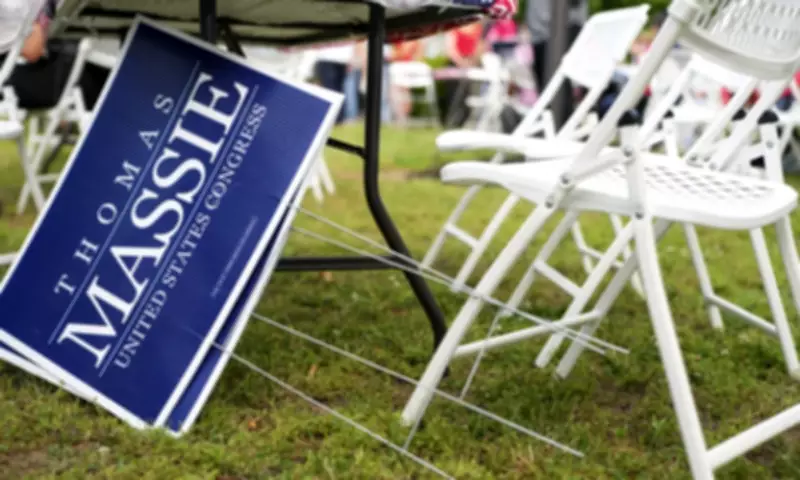
In Indiana, five challengers backed by Trump successfully defeated Republican state senators who had opposed the president's efforts to redraw electoral maps. In Louisiana, Senator Bill Cassidy, who drew Trump's ire by voting to convict him during his second impeachment trial following the January 6 Capitol attack, lost decisively to a candidate endorsed by Trump. Meanwhile, in Kentucky, Trump waged an aggressive campaign against Representative Thomas Massie, an eight-term Republican who had advocated for releasing the Epstein files and criticized the administration's stance on Iran. Massie was defeated by Ed Gallrein, a political newcomer and Trump surrogate.
Trump has framed these victories as evidence that his political influence remains strong. However, a New York Times/Siena poll released on Tuesday revealed that his approval rating has dropped to 37 percent, the lowest of his second term. This unpopularity poses a significant risk for Republicans, who may lose control of Congress in the November midterm elections.

The Primary Paradox
The apparent contradiction between Trump's primary success and his low approval ratings can be explained by examining who votes in primary elections. In the US two-party system, primaries are where ideological differences within each party are resolved. As Vox's Matt Yglesias once noted, primaries are where "nuance enters the political process." Yet only one in five eligible voters participate in midterm primaries, and those who do tend to be whiter, older, wealthier, and more partisan than the general electorate.
This dynamic allows fringe ideas within each party to gain prominence during primary elections. It also explains why Trump-backed candidates continue to perform well despite the president's declining popularity. According to the same New York Times/Siena poll, three-quarters of Republicans and Republican-leaning independents still approve of Trump's performance.
Uncompetitive General Elections
Primaries have become even more critical due to the ongoing "redistricting wars," as both parties race to redraw electoral maps to create safe seats. Gerrymandering and political self-sorting have made general elections far less competitive since the 1970s. Today, most members of Congress represent districts that are safely Democratic or Republican. According to the Cook Political Report, only 18 of 435 House races are considered toss-ups, meaning that most members of Congress are effectively chosen during their party's primary election.
Political reformer Katherine Gehl told Vox's Andrew Prokop in 2022 that "the root cause of our political dysfunction is that November elections in this country are for the most part meaningless. Most November voters are wasting their time, which is profoundly undemocratic and unrepresentative."
Efforts to Reform Primaries
Gehl is among the reformers who have pushed to eliminate partisan primaries. In November 2022, Nevada considered switching to a nonpartisan primary system where all candidates, regardless of party, compete in the same election. The top five candidates would then advance to the general election, where voters rank their preferences. Ultimately, Nevada did not adopt the reform.
However, other jurisdictions have implemented similar changes. California, Washington, and Alaska use nonpartisan primaries, while Maine and New York City employ ranked-choice voting for certain elections. Advocates argue that these systems reduce polarization by forcing candidates to appeal to a broader electorate. Whether such reforms would have helped figures like Bill Cassidy or the Indiana Republicans is uncertain, but they could theoretically insulate independent-minded Republicans from the intense pressure of Trump's base.
Correction, May 20, 11:30 am ET: A previous version of this story misstated the status of an electoral reform effort in Nevada.