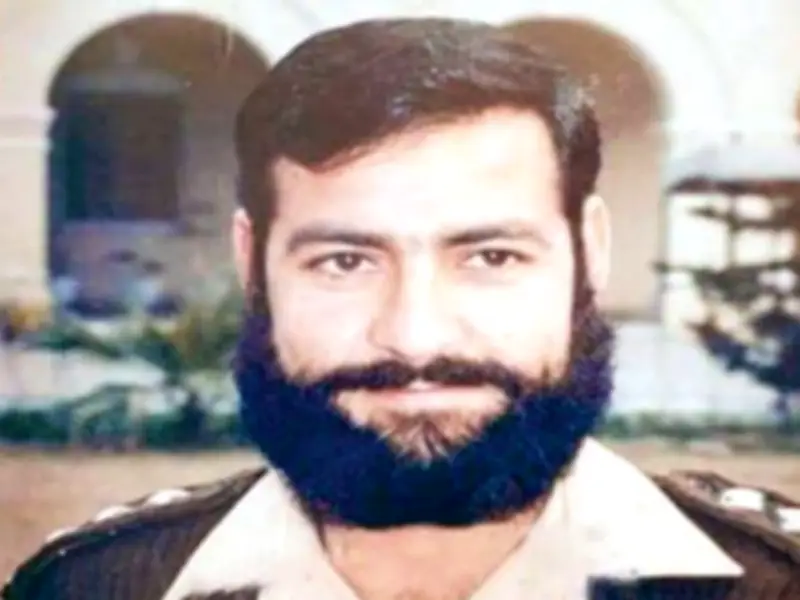
The Pakistan Armed Forces on Sunday paid tribute to Captain Karnal Sher Khan, the Nishan-e-Haider recipient who was martyred during the 1999 Kargil conflict, on the 27th anniversary of his death. The Inter-Services Public Relations (ISPR) issued a statement honoring his sacrifice.
Military Leadership Pays Homage
Chief of Army Staff and Chief of Defence Forces Field Marshal Asim Munir, Chief of the Naval Staff Admiral Naveed Ashraf, Chief of the Air Staff Air Chief Marshal Zaheer Ahmed Baber Sidhu, and the armed forces honored Khan's unmatched courage, unwavering devotion, and supreme sacrifice in the service of the nation. The ISPR statement highlighted that Khan displayed extraordinary gallantry and resolute leadership while defending Pakistan during the Kargil conflict, leading from the front before embracing martyrdom.
ISPR said his sacrifice continues to inspire generations of Pakistanis and described his legacy as a timeless beacon of courage, patriotism, and commitment to Pakistan's sovereignty and territorial integrity. The military affirmed that the armed forces remain committed to the ideals for which Captain Sher Khan laid down his life, and his legacy will endure in the country's history.

Interior Minister's Tribute
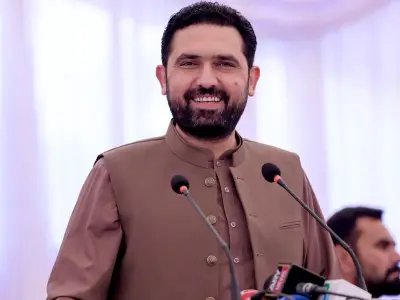
Interior Minister Mohsin Naqvi also paid tribute to Khan on his martyrdom anniversary, describing the Nishan-e-Haider recipient as one of the nation's bravest soldiers. "The nation salutes its great and courageous son," Naqvi said in a statement. He remarked that the mountains of Kargil stand as witnesses to Khan's bravery and credited him with having struck fear into the enemy during the conflict.
The minister said that the officer, "who fought the enemy with determination, continues to live on in the hearts of the people," adding that Khan had fought with exceptional courage and thwarted the enemy's designs. He noted that Khan wrote a remarkable chapter in the history of gallantry and bravery. "With brave soldiers like Khan, no enemy can cast an evil eye on our beloved homeland," Naqvi concluded.
The Lion of Kargil's Heroism
More than two decades have passed since Khan laid down his life in the icy, inhospitable peaks of Indian Illegally Occupied Jammu and Kashmir (IIOJK). While many lone survivors faced the dilemma of keeping the fight ongoing, the 'Lion of Kargil' dashed alone into the Indian camp, killing several Indian soldiers before embracing martyrdom. When his body was being returned to Pakistan, even the Indians spoke of his valor—how the young officer on a 'mission impossible' did the honorable thing: fight to the very end. Pakistan awarded him the Nishan-e-Haider, the highest military award.
Early Life and Military Career
Born in 1970 in Swabi, Khan first joined the Pakistan Air Force (PAF) as an Airman but later joined the Pakistan Army as a commissioned officer in 1992. On 14 October 1994, he was commissioned in the 27th Sindh Regiment of the Pakistan Army, also known as the 'Lion of Haider' because of its bravery. He was named Karnal Sher Khan by his grandfather, who as a volunteer went to Kashmir and fought against Indian aggressors under a commander called Colonel Sher Khan.
On November 8, 1992, when Sher arrived at the Pakistan Military Academy for training, he was no stranger to rugged training, but the harsh days and nights prepared him for his final moments in the nation's war against the enemy. His colleagues recall numerous anecdotes about how he was always in the good graces of his seniors and earned admiration for his courage, perseverance, professional competence, and devout piety.

Service in 27th Sindh Regiment
Khan was the first officer to be posted directly to the 27th Sindh Regiment from the academy. Lt Col Iqbal Mahmood, the second in command, was given the responsibility of developing Khan's professionalism and personality. He found Khan very serious and confident in his professional duties. "Joining the Pakistan Army was my biggest dream that came true today," Khan told Iqbal, who immediately guessed that the young man wanted to do something special. "He was not only wise but also brave, courageous, and forward in every task during training. Whether it was a field of study or philosophy of warfare, a playground or a shooting competition, Khan used to receive awards for his unit everywhere. He would greatly participate in physical training, assault courses, and other unit competitions," the lieutenant colonel shared.
Deputy Subedar Qasim, who was posted in the 27th Sindh Regiment on the same day Khan arrived, recounted that as a junior soldier, he came across a role model like Khan. "It was a great honour for me to see him active and busy in the unit at all times. This young officer on a bicycle was at the forefront of every unit." Qasim, who spent much time with Khan during physical labor, explained that Khan was accustomed to physical exertion and was unmatched in PT, drill, and various activities. He would take the unit's shooting team to practice at the firing range, explain techniques, and encourage them.
On October 17, 1996, Khan was promoted to the rank of captain. At the ceremony, he presented a model of a G3 rifle to his unit, which is still preserved in the 27th Sindh Regiment as a milestone for its soldiers and officers. Khan would spend the entire day in the sweltering sun at the firing range. He often rushed to the target as soon as firing ended, despite security protocols, saying, "I won't be killed by the bullet that didn't belong to me, and the bullet that has my name written on it will kill me."
The Kargil Conflict and Martyrdom
During the Kargil conflict, Khan was assigned to clear a vital position. He and his fellow soldiers ignored the firepower of the opponents and bravely managed to push them back, inflicting heavy losses on the enemy. While serving in the Northern Light Infantry (NLI), on July 5, 1999, enemy forces launched a furious attack to recapture the post with artillery support. Despite having insignificant power compared to the numerical strength of Indian ground forces, Khan repulsed the attack. He was successful but received multiple bullet wounds that resulted in his shahadat (martyrdom).
In recognition of his valor, determination, and gallantry, Khan was awarded the Nishan-e-Haider. The 27 Sind Regiment was later named Sher Haidri on August 20, 1999, after Shaheed Karnal Sher Khan.
Recognition by the Indian Army
Khan was evenly praised by the rival Indian army for setting the highest standards of bravery on the battlefield. According to the Indian Express of July 17, 1999, Khan of Delta Company, 12 Northern Light Infantry (NLI), won the respect of Indian officers defending the Tiger Hills feature and the adjoining hills with his courage and brilliant attack. Officers of both 18 Grenadiers and 8 Sikhs watched the brave Pakistani captain lead a counterattack. The Indian officer-in-charge who witnessed his bravery placed a praise-filled note in his pocket. Indian Brigade Commander Brigadier (retd) Mahendra Pratap Singh acknowledged his fearlessness and courage, stating, "Full-scale counterattacks have disrupted our steps under his leadership."