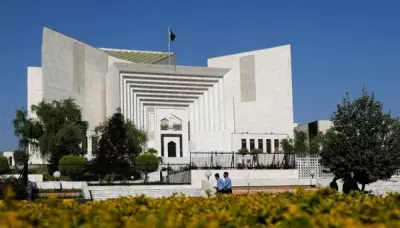
Understanding Pakistan's Political Journey
The political history of Pakistan is a complex tapestry woven with moments of triumph, turmoil, and transformation. From its inception in 1947, the nation has navigated through periods of democratic governance, military rule, and social upheaval. This article delves into the past perspective, offering a nuanced understanding of how historical events have shaped contemporary Pakistan.
Early Years and Nation Building
In the aftermath of partition, Pakistan faced immense challenges, including the integration of diverse ethnic groups and the establishment of a functional state apparatus. The early leadership, under figures like Muhammad Ali Jinnah and Liaquat Ali Khan, laid the groundwork for a democratic framework. However, political instability and the assassination of key leaders soon led to a power vacuum.
The first military coup in 1958 marked a significant shift, initiating a pattern of military intervention that would recur in later decades. General Ayub Khan's era brought economic development but also centralized authority, setting a precedent for future regimes.

Decades of Change: 1970s to 1990s
The 1970s witnessed the rise of Zulfikar Ali Bhutto, whose populist policies resonated with the masses. His tenure saw the promulgation of the 1973 Constitution, a milestone in Pakistan's democratic evolution. However, political strife and the 1977 military takeover by General Zia-ul-Haq plunged the country into another period of authoritarian rule.
Zia's Islamization policies and alignment with the United States during the Soviet-Afghan war had lasting impacts on Pakistan's social fabric and foreign relations. The 1980s also saw the emergence of a vibrant civil society and media, which would play crucial roles in the subsequent democratic transitions.
Democratic Resurgence and Challenges
The 1990s were characterized by a seesaw between democratic governments led by Benazir Bhutto and Nawaz Sharif, and military interventions. Economic reforms, nuclear tests in 1998, and the Kargil conflict defined this era. Yet, corruption allegations and political instability undermined governance.
The 1999 coup by General Pervez Musharraf brought a period of economic growth and media liberalization, but also controversial policies and a war on terror that exacted a heavy toll. The return to civilian rule in 2008 marked a new chapter, with democratic transitions occurring in 2013 and 2018.
Contemporary Reflections
Today, Pakistan's political landscape remains dynamic, grappling with issues of governance, economic stability, and regional security. The past perspective offers valuable lessons on the importance of institutional resilience, rule of law, and inclusive dialogue. As the nation moves forward, understanding its historical context is essential for charting a path toward sustainable development and democracy.
In conclusion, the past perspective is not merely a recounting of events but a lens through which to view the present and future. By learning from history, Pakistan can aspire to overcome its challenges and fulfill the vision of its founding fathers.