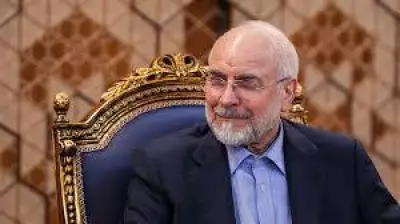
In a political landscape often defined by confrontation, a new initiative seeks to open channels of conversation. Former PTI leader Fawad Chaudhry, alongside former party colleagues Imran Ismail, Mehmood Maulvi, and Dr. Shahzad Wasim, has convened the first meeting of a newly formed National Dialogue Committee (NDC) in Islamabad.
The Dialogue Initiative and Its Attendees
The primary stated goal of the NDC, as explained by Fawad Chaudhry, is to "lower the temperature" in the country by initiating dialogue between key stakeholders. The meeting saw participation from a diverse group, including former Prime Minister Shahid Khaqan Abbasi, representatives from MQM and Jamaat-e-Islami, senior lawyers, and journalists. The gathering concluded with a declaration urging confidence-building measures between the government and the opposition.
On the surface, this appears to be a constructive step towards political reconciliation. However, the initiative immediately confronts the hard reality of Pakistan's current zero-sum political conflict. The establishment shows no willingness to engage with the PTI except on its own terms, while incarcerated former Prime Minister Imran Khan is similarly disinclined to talk to the establishment unless his conditions are met. The PML-N, for its part, seems uninterested in facilitating any dialogue that might mend fences between its two main rivals.

The Global Context: Why Dialogue Seems Distant
To understand the resistance to dialogue, one must look beyond domestic politics. A volatile international environment is reinforcing the strength of the hybrid regime at home. Global instability is reducing pressure on the government to show flexibility towards the opposition or expedite electoral processes.
Internationally, seismic shifts are occurring. Former US President Donald Trump's more aggressive foreign policy, termed the 'Donroe Doctrine', has created uncertainty from Latin America to Europe. Russia's advances in Ukraine and Trump's threats towards allies like Denmark have left European nations feeling insecure. In the Middle East, the failing Gaza peace plan, protests in Iran, and the looming threat of a US-Israeli action against Tehran keep the region on edge.
For Pakistan, these external pressures coincide with serious domestic security challenges, including Indian-sponsored terrorism from Afghanistan and instability on both eastern and western borders. This "all-hands-on-deck" security scenario diminishes the impetus for political compromise. Furthermore, reports of a potential Pakistan-Saudi Arabia-Turkey strategic defence pact and advanced negotiations for JF-17 fighter jet sales with Iraq and Saudi Arabia highlight a strategic pivot that further consolidates the current setup.
The Calculated Optimism Behind the Talks
Given this formidable array of obstacles, why would a shrewd politician like Fawad Chaudhry pursue what many see as a fantasy? The answer may lie in a long-game strategy. Chaudhry's move is an acknowledgment of the entrenched reality, but also an attempt to plant the seed for a future middle path.
The initiative is rooted in an idealism whose time has not yet arrived. It operates on the principle that by persistently keeping the conversation about dialogue alive, a point may eventually be reached where the current zero-sum logic is challenged. Today, major players are intransigent. Tomorrow, circumstances—perhaps driven by an unforeseen economic crisis or a shift in the external environment—might make some stakeholders more receptive.
Fawad Chaudhry's National Dialogue Committee, therefore, is less about achieving an immediate breakthrough and more about creating a forum and a narrative for when the political calculus eventually changes. It is a bet on the future, a reminder that while no one is interested in talking today, continuous effort might one day bring someone to the table—even if they have to be dragged to it.