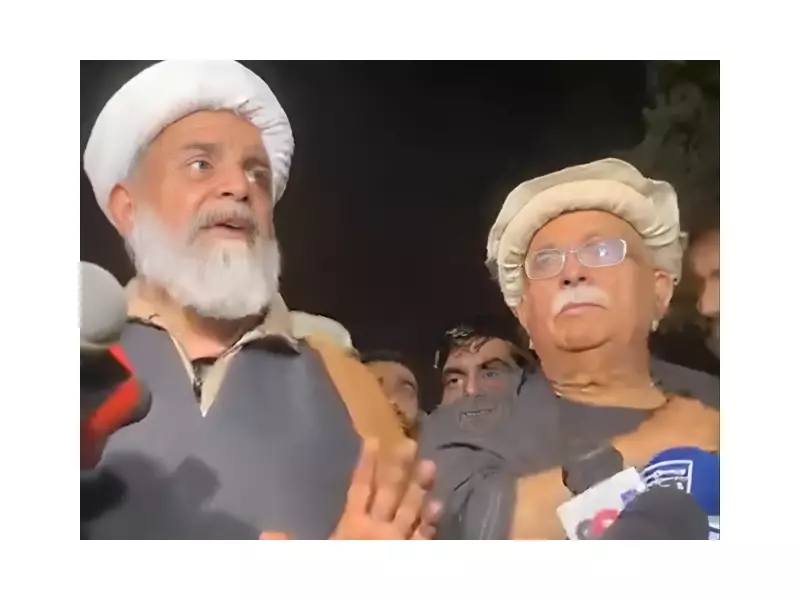
In a statement that has ignited fresh political discourse, Mahmood Khan Achakzai, the head of the Pashtunkhwa Milli Awami Party (PKMAP), has pointed to internal failings within the Pakistan Tehreek-e-Insaf (PTI) as a primary reason for the incarceration of its founder, former Prime Minister Imran Khan. Achakzai's critique centers on what he perceives as a significant lack of discipline and strategic direction within the party ranks.
Achakzai's Critical Analysis of PTI's Strategy
Achakzai did not mince words when discussing the current predicament of the country's most popular political figure. He asserted that the PTI's approach, particularly its handling of the controversial cipher case, demonstrated a profound failure in party discipline. Imran Khan was sentenced to 10 years in prison in the cipher case earlier this year, a verdict that has kept him behind bars since.
The PKMAP chief elaborated that the party's leadership failed to guide its workers and lawmakers effectively during critical junctures. This lack of cohesive strategy and control, according to Achakzai, ultimately created vulnerabilities that led to Khan's legal troubles and imprisonment. His comments suggest that a more disciplined and unified party structure might have navigated the political and judicial challenges differently.

The Cipher Case and Its Political Ramifications
The cipher case, which has been at the heart of Imran Khan's legal battles, involves a diplomatic document that the former premier alleged contained evidence of a foreign conspiracy to topple his government. The case took a decisive turn on January 30, 2024, when a special court established under the Official Secrets Act handed down the decade-long sentence to Khan and former Foreign Minister Shah Mahmood Qureshi.
Achakzai's remarks imply that the PTI's public and legal strategy surrounding this sensitive case was mishandled. Instead of a carefully calculated response, the party's actions may have exacerbated the situation, leading to the severe judicial outcome. This perspective shifts part of the blame from external political forces to the internal mechanics of the PTI itself.
Broader Implications for Opposition Unity
Achakzai's criticism comes at a time when opposition parties are often seen as potential allies against the ruling coalition. By publicly faulting the PTI's internal discipline, he is highlighting a fundamental weakness that could hinder broader opposition unity. His statement is not merely an observation but a pointed commentary on the operational effectiveness of a major political player.
This analysis raises important questions about the future of political strategy in Pakistan. It underscores the notion that popular support alone is insufficient without the backing of a rigid, disciplined party apparatus capable of protecting its leadership from legal and political onslaughts. The fate of Imran Khan, as Achakzai frames it, serves as a stark lesson in the consequences of organizational disarray.
Furthermore, Achakzai's stance may influence how other political entities interact with the PTI. It signals that collaboration requires not just shared goals but also confidence in a partner's organizational strength and strategic acumen. The PKMAP leader's forthright assessment is likely to resonate in political circles and may prompt introspection within the PTI regarding its structure and decision-making processes.
In conclusion, Mahmood Khan Achakzai has cast a spotlight on an aspect of the PTI's crisis that is often overshadowed by discussions of external pressure. By attributing Imran Khan's jailing to a breakdown in party discipline, he has introduced a contentious but pivotal narrative into Pakistan's political discourse. The long-term impact of this critique on the PTI's internal reforms and on the landscape of opposition politics remains to be seen, but it undoubtedly adds a new layer of complexity to the ongoing saga surrounding the former prime minister's imprisonment.