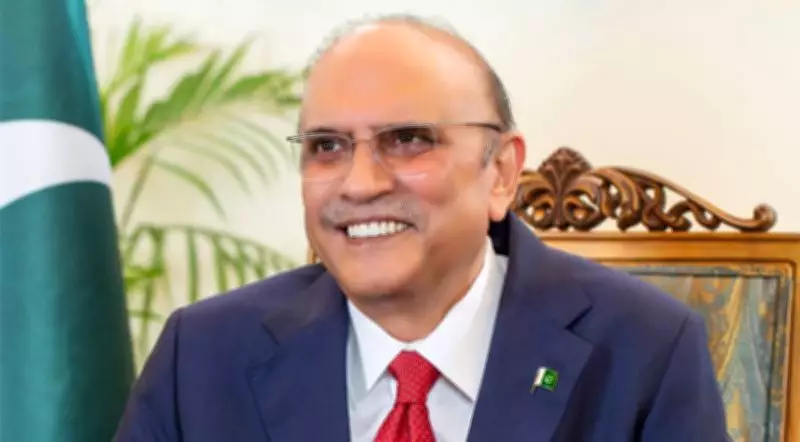
President Zardari Approves Key Government Measures
President Asif Ali Zardari has given his formal approval to a series of significant government actions, including the remission of sentences for prisoners on the occasion of Eid-ul-Fitr. This decision is part of a broader set of approvals that encompass the enactment of key legislative bills and the announcement of civil awards for distinguished individuals.
Eid Remission for Prisoners
In a move aligned with traditional practices, the President sanctioned the remission of sentences for prisoners across Pakistan. This measure is specifically timed for Eid-ul-Fitr, aiming to provide relief and foster a spirit of forgiveness during the festive period. The remission applies to eligible inmates, reflecting the government's commitment to humanitarian considerations and social welfare.
Approval of Legislative Bills
President Zardari also approved several important bills that had been passed by the Parliament. Among these is the National University of Technology Bill 2026, which establishes a new institution focused on advancing technological education and research in the country. This bill is expected to enhance Pakistan's capabilities in science and innovation, addressing the growing demand for skilled professionals in technology-driven sectors.

Other bills receiving presidential assent include measures related to governance and public administration, though specific details were not fully disclosed in the initial reports. These approvals mark a crucial step in the legislative process, ensuring that the proposed laws are now officially enacted and ready for implementation.
Announcement of Civil Awards
In addition to the legislative actions, the President approved the conferment of civil awards to recognize the contributions of various individuals to Pakistan's development and culture. The awards cover a range of fields, including:
- Public service and community leadership
- Arts and literature, honoring creative achievements
- Science and technology, acknowledging innovations and research
- Social work, highlighting efforts in humanitarian causes
The recipients include both national and international figures, with the awards set to be presented in a formal ceremony. This initiative underscores the government's appreciation for excellence and dedication across diverse sectors.
Implications and Reactions
The approvals by President Zardari are seen as a significant development in Pakistan's political and administrative landscape. The Eid remission is likely to be welcomed by human rights advocates and families of prisoners, promoting goodwill during the religious holiday. Meanwhile, the passage of the National University of Technology Bill is anticipated to boost educational infrastructure, potentially attracting investments and partnerships in the tech industry.
Public and political reactions have been generally positive, with many praising the government for balancing legislative progress with social initiatives. However, some analysts have called for transparency in the implementation of these measures, particularly regarding the criteria for prisoner remission and the selection process for civil awards.
Conclusion
President Asif Ali Zardari's recent approvals highlight a multifaceted approach to governance, combining humanitarian gestures with strategic legislative actions. The Eid remission, key bills like the National University of Technology Bill 2026, and the civil awards collectively reflect efforts to address social, educational, and cultural needs in Pakistan. As these measures take effect, their impact on society and the economy will be closely monitored by stakeholders and the public alike.