Pakistan Cancels March 23 Military Parade Amid Economic Austerity Measures
The government of Pakistan announced on Tuesday that the annual military parade and related ceremonies scheduled for March 23 will not be held this year. This decision is a direct result of ongoing economic constraints linked to the Gulf oil crisis, as part of broader austerity measures introduced to manage financial pressures.
Government Statement on Austerity and Financial Management
According to a statement issued by the Prime Minister’s Office, the move is aimed at reducing expenditures in light of the current economic challenges. "In light of the ongoing Gulf oil crisis and the austerity measures announced by the government, it has been decided that the Pakistan Day parade scheduled for March 23 and all associated ceremonies will not be held," the PMO's statement read. This announcement underscores the government's commitment to fiscal responsibility during a period of heightened economic uncertainty.
Commemoration of Pakistan Day with Dignity
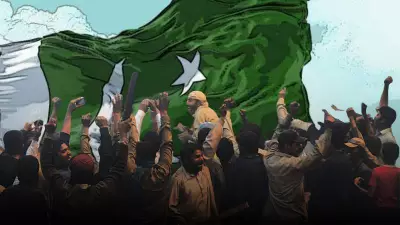
Despite the cancellation of the large-scale parade, the government clarified that Pakistan Day, observed annually on March 23, will still be commemorated with dignity. A simple flag-hoisting ceremony will be held at appropriate levels to mark the occasion. The government has directed all ministries, divisions, and departments to observe the day in a solemn and respectful manner, ensuring that the significance of Pakistan Day is preserved despite scaled-down celebrations.

Historical Significance of Pakistan Day
Pakistan Day marks the adoption of the Lahore Resolution on March 23, 1940, a historic milestone in the country’s journey toward independence. On this day, leaders of the All-India Muslim League formally called for independent states for Muslims in the subcontinent. The resolution, passed in Lahore, laid the political foundation for a separate homeland, articulating the demand that Muslim-majority regions in northwestern and eastern India be constituted into independent units.
The vision outlined in the Lahore Resolution galvanized the Muslim political movement under the leadership of Quaid-e-Azam Muhammad Ali Jinnah, eventually leading to the creation of Pakistan in 1947. Today, the day is commemorated as a symbol of unity, political struggle, and the realization of a separate national identity. The scaled-back celebrations this year reflect a pragmatic approach to honoring this legacy while addressing contemporary economic realities.