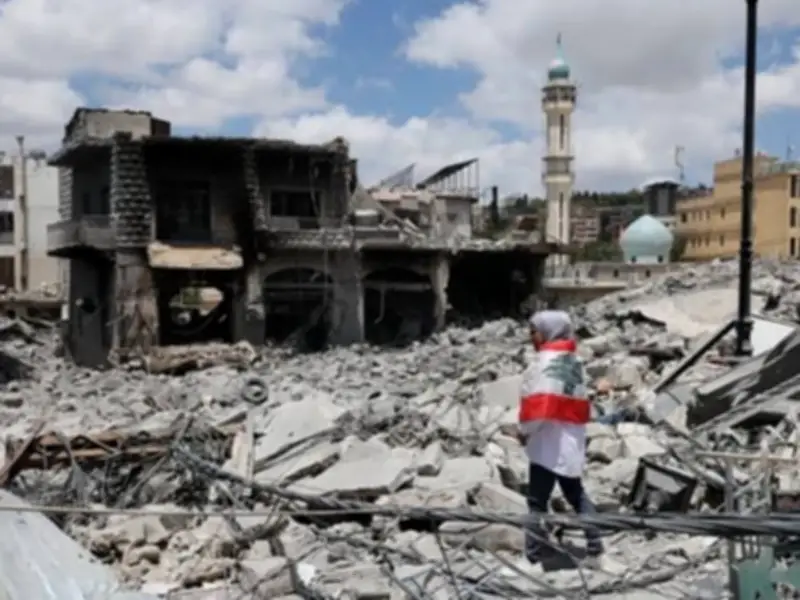
The United Nations Development Programme (UNDP) and Lebanon's National Council for Scientific Research (CNRS) reported on Monday that direct damage to buildings in south Lebanon from the recent war between Israel and Hezbollah is estimated at $1.38 billion. A rapid building-level damage assessment, comparing satellite imagery from late April 2025 with October 2025, revealed that 11,095 buildings were completely destroyed, affecting 17,891 housing units. Additionally, 2,242 buildings sustained partial damage and 9,311 buildings incurred minor damage.
Conflict Timeline and Ceasefire
Hezbollah initiated rocket fire into Israel on March 2, 2025, in support of its backer Iran, drawing Lebanon into the broader Middle East conflict. Israel responded with heavy airstrikes and a ground invasion, with troops operating inside a strip of border territory approximately 12 kilometers deep inside Lebanon, conducting extensive demolition and bulldozing operations. A ceasefire agreed on April 17 was not respected by either side, and fighting only paused on Saturday evening after threatening to derail a deal signed last week between Iran and the United States to end the wider Middle East war.
Human Toll and Displacement
Lebanese authorities report that Israeli attacks since March 2 have killed more than 4,100 people and displaced over one million others. Some residents have begun returning to the south over the past two days to inspect their damaged homes and businesses, though the Lebanese army has urged them to delay returning to border villages and towns. Prime Minister Benjamin Netanyahu stated on Sunday that Israeli forces would remain in southern Lebanon "as long as necessary."

The damage assessment covers the period up to late April, meaning it does not include destruction from the final weeks of the conflict. The UNDP and CNRS emphasized that the $1.38 billion figure represents direct damage to buildings only, not including infrastructure or economic losses.