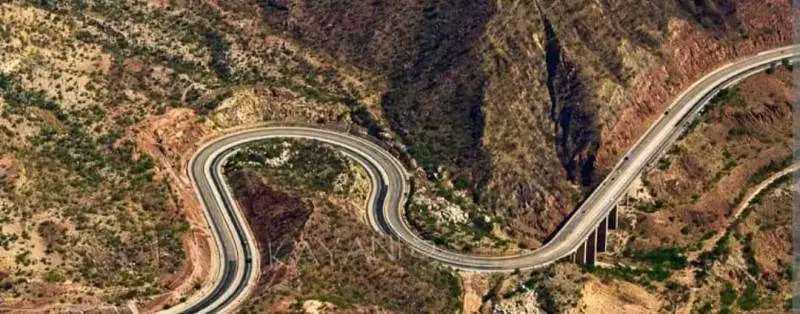
Pakistan embarked on a transformative journey in its infrastructure development on this day in 1997, witnessing the grand opening of its very first motorway. The historic Islamabad–Lahore Motorway (M-2) was officially inaugurated by the then Prime Minister, Mian Muhammad Nawaz Sharif, marking a pivotal moment in the nation's history.
A Nation's Entry into Modern Infrastructure
Stretching an impressive 339 kilometres, the M-2 was not just a road but a symbol of national progress. It represented Pakistan's bold entry into a new era of modern road infrastructure, fundamentally altering how citizens and the government perceived the role of advanced highways. This first-of-its-kind project demonstrated that such infrastructure was critical for driving economic growth, improving connectivity, and supporting overarching national development.
During the inauguration ceremony, Nawaz Sharif, who now serves as the Quaid of the Pakistan Muslim League-Nawaz (PML-N), articulated a powerful vision. He declared, “Highways are not merely lines of tar; they are lines of good fortune for the welfare and advancement of a nation and its civilization. The Pakistan Motorway linking Lahore with Islamabad will, God willing, prove to be such a line of prosperity for us.”

The Historic Inaugural Journey
To commemorate the occasion, Nawaz Sharif led a large convoy from the capital, Islamabad, to the cultural heartland of Lahore, traversing the newly completed, smooth expanse of the M-2. This journey was more than a ceremonial drive; it signified the beginning of a transformative chapter in Pakistan's transport history, connecting two major cities with unprecedented speed and efficiency.
The Lasting Legacy of the M-2 Motorway
The significance of the M-2 extends far beyond its initial launch. This pioneering project laid the essential groundwork for the vast and extensive motorway network that millions of Pakistanis depend on today. It served as the blueprint, proving the feasibility and immense benefits of high-speed road corridors, which subsequently encouraged the development of similar infrastructure projects across the country.
Today, the M-2 stands as a testament to a pivotal decision that reshaped Pakistan's landscape, fostering trade, unifying regions, and accelerating the nation's journey towards modernization. It remains the foundational pillar of the country's contemporary road system.