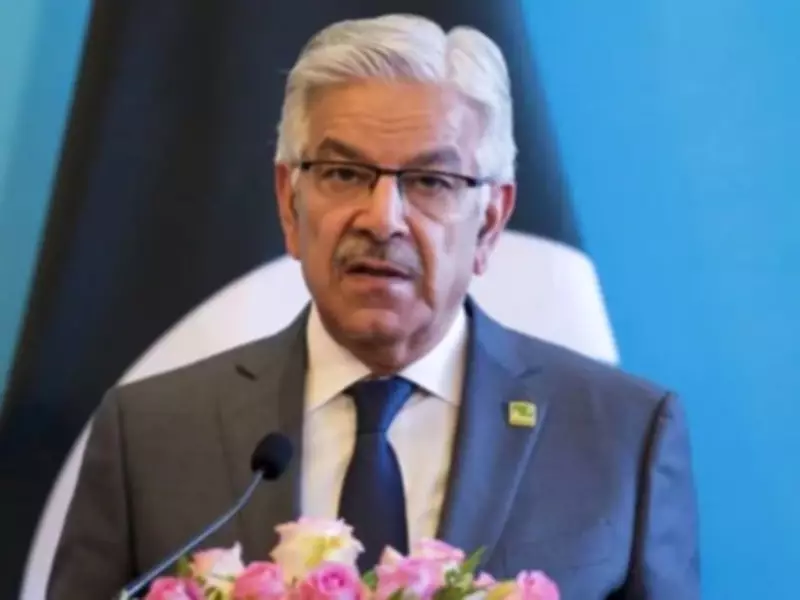
Defence Minister Points Finger at Begging Mafia for Gulf Visa Restrictions
Defence Minister Khawaja Muhammad Asif has publicly blamed organized begging mafia groups for the stringent visa restrictions imposed on Pakistani citizens by Gulf countries. In a recent statement, Asif highlighted how these criminal networks are severely tarnishing Pakistan's international reputation and causing diplomatic repercussions.
FIA Data Reveals Scale of the Problem
According to official figures presented to the National Assembly Standing Committee on Overseas Pakistanis and Human Resource Development, the Federal Investigation Agency (FIA) off-loaded 66,154 passengers last year to prevent organized gangs of beggars and illegal immigrants from traveling abroad. The FIA Director General reported that 51,000 of these individuals were stopped due to questionable travel documents, primarily involving work visas, tourist visas, and Umrah visas.
The international impact has been significant, with 56,000 beggars reportedly deported from Saudi Arabia alone. The United Arab Emirates has also implemented visa restrictions in response to this troubling phenomenon, reflecting growing frustration among Gulf nations.

Organized Begging as a Lucrative Profession
In a detailed post on social media platform X, Defence Minister Asif described begging as having evolved into "a full-fledged profession" that is "completely organized." He revealed that regular contractors systematically recruit children, women, and individuals pretending to be disabled, earning crores of rupees through their operations.
"The same mafia is exporting thousands of these same beggars to Gulf countries," Asif stated. "Those countries, fed up, have closed our visas."
Government Complicity and Regional Operations
The Defence Minister made serious allegations about government involvement, claiming that staff from various departments deployed at airports have become "equal partners in the illicit trade," facilitating the movement of beggars abroad while profiting from these operations.
Referring specifically to Sialkot, Asif noted that many beggars originate from southern Punjab and operate from hotels while conducting their activities. Although recent actions by local administration and police have reduced the scale of operations, organized begging remains visibly present in the city.
Well-Connected Operators and Criminal Networks
Asif pointed out that the contractors behind these begging operations often appear as "financially stable and socially respectable individuals." He explained that whenever crackdowns are launched against beggars, these influential contractors intervene using their connections and recommendations to protect their operations.
The Defence Minister termed this situation a "bitter reality," noting that organized begging has become one of the largest sources of so-called employment in Pakistan. He emphasized that such widespread operations cannot exist in any city without the active patronage of local administration and police forces.
Call for Sustained Action
Highlighting the broader criminal implications, Asif warned that the begging business is interconnected with several other disturbing criminal activities. He called for serious and sustained action to dismantle the networks involved, stressing that only comprehensive measures can address this multifaceted problem that continues to damage Pakistan's international standing and affect legitimate travelers seeking opportunities abroad.