Supreme Court Grants Post-Arrest Bail in Child Marriage Case, Raises Questions on Consent
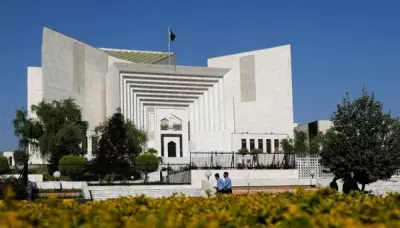
The Supreme Court of Pakistan, in a significant ruling on Wednesday, granted post-arrest bail to an accused individual, Muhammad Irfan, who had been arrested under the provisions of the Child Marriage Act. The bail was approved against surety bonds valued at Rs100,000, following a detailed hearing that delved into the complexities of the case.
Bench Proceedings and Legal Arguments
A three-member bench, presided over by Justice Hashim Kakar, heard the bail application. After thorough arguments from both sides, the court decided to approve the post-arrest bail. During the proceedings, counsel for the complainant presented allegations that Muhammad Irfan had abducted a minor girl and stolen gold and cash from her residence. The court was informed that the girl in question is 16 years old, which falls under the purview of the Child Marriage Act.
In response, the defense counsel, Muhammad Sadiq Awan, submitted that the girl had entered into a court marriage with the accused. He emphasized that her statement, recorded before a magistrate, is part of the judicial record and supports the claim of a consensual union. Additionally, he noted that the girl is one of twin sisters, with her other twin having been married three years earlier, though Justice Hashim Kakar remarked that there was no need to elaborate on the family tree and questioned if such arguments were aimed at implicating others.

Court's Observations on Consent and Legal Implications
Justice Hashim Kakar made pointed observations during the hearing, highlighting that the girl had appeared before a magistrate on three separate occasions. In each instance, she clearly stated that she had married of her own free will. The justice questioned the prosecution's stance, asking what the issue was when both husband and wife were consenting to the marriage. This line of inquiry underscored the court's focus on the element of consent in such cases.
The court also inquired about the duration of the accused's custody, to which the defense counsel revealed that Muhammad Irfan had been in custody since June 2025. Furthermore, Justice Ishtiaq Ibrahim raised questions regarding the trial proceedings under the Child Marriage Act and the prescribed punishments. The prosecutor informed the court that under this act, the maximum punishment could extend up to 16 years and four months, highlighting the severity of the charges.
Conclusion and Bail Grant
After considering all arguments and the judicial record, the Supreme Court concluded the hearing by granting post-arrest bail to Muhammad Irfan. The bail is conditional upon the submission of surety bonds worth Rs100,000. This decision reflects the court's careful examination of the facts, particularly the alleged victim's consent, and sets a precedent for similar cases involving the Child Marriage Act in Pakistan.