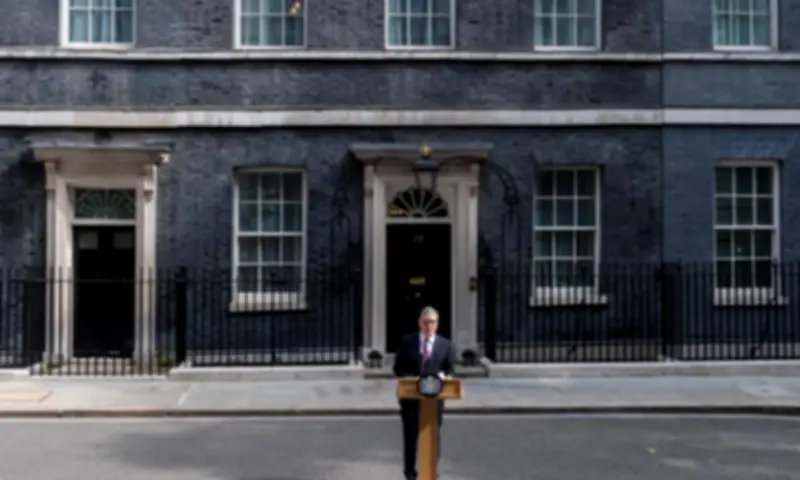
Brexit Legacy Under Scrutiny as Starmer Steps Down
Ten years after the Brexit referendum, the issue is back at the forefront of British politics. Prime Minister Keir Starmer’s announcement that he is stepping down has triggered a Labour Party leadership contest, with several prominent candidates suggesting the UK could return to the European Union. The referendum, held on June 23, 2016, saw 52% of voters opt to leave the EU, but the promised economic and political benefits have not materialized.
Starmer, elected in a landslide two years ago, now faces approval ratings more than 50 points underwater. Factors include sluggish economic growth, policy U-turns, and the controversial appointment of Peter Mandelson, a former associate of Jeffrey Epstein. Starmer is Britain’s sixth prime minister in a decade, highlighting the instability that has plagued post-Brexit governance.
Growing Public Support for Rejoining the EU
A recent YouGov poll found that 55% of Britons favor full EU membership. A European Council on Foreign Relations (ECFR) poll showed that 63% support closer economic ties with the EU, even if it means accepting free movement of people—a key issue in the original Brexit debate. This shift is notable given the rise of the far-right Reform UK party, which has capitalized on anti-immigration sentiment.

Among leadership contenders, former Manchester mayor Andy Burnham, considered the front-runner, has expressed a desire for the UK to rejoin the EU in his lifetime, though he pledges not to “re-run” Brexit debates. Former health secretary Wes Streeting also supports rejoining. A top Treasury official recently told Parliament that a return to membership was “an inevitability.” London Mayor Sadiq Khan has called for rejoining to be in Labour’s next election manifesto.
Economic Impact of Brexit Becomes Clearer
A Bank of England study estimates that UK GDP is 6-8% lower than it would have been if the country had remained in the EU. Productivity and investment have declined, and living standards have risen slowly compared to other nations. Poland, once the subject of Brexit campaigners’ fears about “Polish plumbers,” is now on track to overtake the UK in wealth per capita. Irregular migration has also increased despite promises of border control.
The US trade deal promised by Brexit advocates has not materialized. The “Economic Prosperity Deal” with the Trump administration fell short of a comprehensive agreement and was never ratified by Congress. The UK’s lack of EU negotiating leverage is now seen as a disadvantage, especially regarding US-developed AI models and European military coordination in response to Russia’s invasion of Ukraine and US President Donald Trump’s undermining of NATO.
Obstacles to Rejoining Remain Significant
Rejoining the EU would require a new public mandate, likely through another referendum or a general election fought on a pro-EU platform. The next scheduled election is in 2029, though the next prime minister could call one sooner. Anand Menon, director of UK in a Changing Europe, said a “catastrophe” might be needed to force the issue, such as a severe electoral defeat for Labour or a major international crisis.
Even if the UK applied, the accession process would take years. Finland’s fastest accession took three years; Britain’s would likely be longer, partly because EU members would want assurance of commitment. The rise of Nigel Farage’s Reform UK raises the possibility of a future government reversing any deal. Approval would require unanimous consent from all member states, some of which—like France—would need referendums. Rosa Balfour of Carnegie Europe noted that some EU countries still believe the bloc is better off without Britain, while others feel diminished by its departure.

No Quick Return to EU Membership
Britain is unlikely to secure the same opt-outs it had before, such as not joining the euro or the Schengen area. Poland’s foreign minister stated that the UK would not get “à la carte” membership this time. Intermediate options include a Turkey-style customs union or a Swiss-style deal with full market access but free movement of people. However, the fundamental question of sovereignty versus integration remains unresolved, as it has been for the past six prime ministers. The next leader is unlikely to settle it.