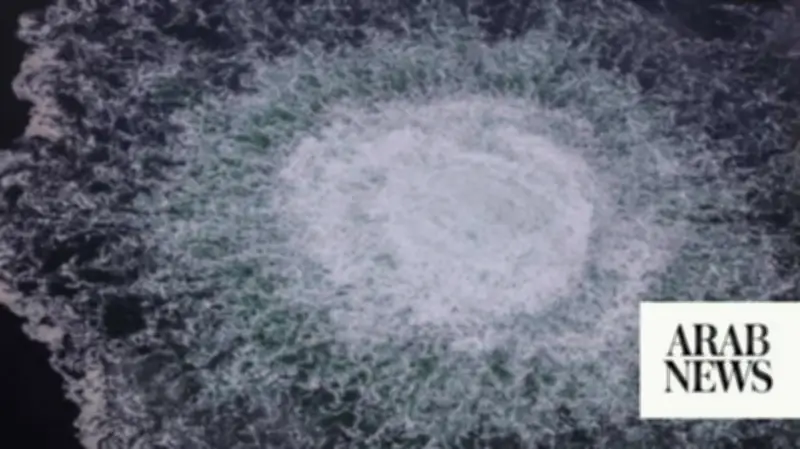
German prosecutors stated on Thursday that the Ukrainian state ordered the 2022 bomb attack on the Nord Stream gas pipelines, a development that strains relations between Kyiv and its key military backer, Berlin. The sabotage destroyed three of the four Baltic seafloor pipelines of the major energy link from Russia to Germany, releasing vast amounts of methane into the atmosphere.
Charges Against Ukrainian Suspect
News emerged Wednesday that German prosecutors had filed charges against Ukrainian suspect Serhii Kuznetsov, who allegedly led a team of divers in the operation. Kuznetsov was arrested while on holiday in Italy last summer and extradited to Germany in November. In a statement detailing the charges, including the alleged war crime of targeting civilian infrastructure, prosecutors said he was “an officer in the Ukrainian army” and acted “on the orders of state authorities in Ukraine.”
Motivation and Context
Following Russia’s February 2022 full-scale invasion of Ukraine, “he and other members of the military... developed a plan to destroy” the pipelines to deprive Russia of gas revenues, prosecutors said. The Ukrainian government has consistently denied ordering the destruction. Ukrainian President Volodymyr Zelensky, asked about the charges on Wednesday, told reporters, “we have not officially received all the details, at least I have not seen them ... For now, it is too early to speak.”

Details of the Operation
Prosecutors allege that Kuznetsov led a team “consisting of several professional divers, a skipper, and an explosives expert” who chartered a yacht in the German port of Rostock using forged identity documents. “Using this vessel, the accused and his accomplices transported large quantities of high-performance explosives suitable for military use through international waters to an area near the Danish island of Bornholm,” prosecutors said. The explosives were attached to the pipelines with timed detonators, and the blasts occurred four days later.
Legal Proceedings and Reactions
Kuznetsov is currently in detention in Hamburg, where he will face trial. German media described the evidence against him as “overwhelming,” as he allegedly incriminated himself during phone calls from custody in Italy. The ARD broadcaster reported that investigators found traces of military explosives on the yacht and identified seven suspects, one of whom has since died fighting Russia. Last year, a Polish court refused a German extradition request for another Ukrainian suspect in the case.
Kuznetsov’s Italian defense lawyer, Nicola Canestrini, dismissed “the fragile theses of the prosecution” and argued that a conviction was “out of the question.” He noted that German authorities sought extradition on lesser charges including sabotage and later added the war crime allegation. Canestrini added that “with the charge of a war crime, the prosecuting authority acknowledges for the first time that the conduct alleged took place in the context of an armed conflict — that is, in the framework of a war.”
Impact on Germany-Ukraine Relations
The case is awkward for Germany and Ukraine at a time when Germany, Europe’s leading economy, has emerged as the biggest military backer of Ukraine in its war against Russia. The sabotage, never claimed by any actor, destroyed three of the four pipelines of the Nord Stream system, which had previously allowed Russia to earn billions through gas sales to Germany and beyond.