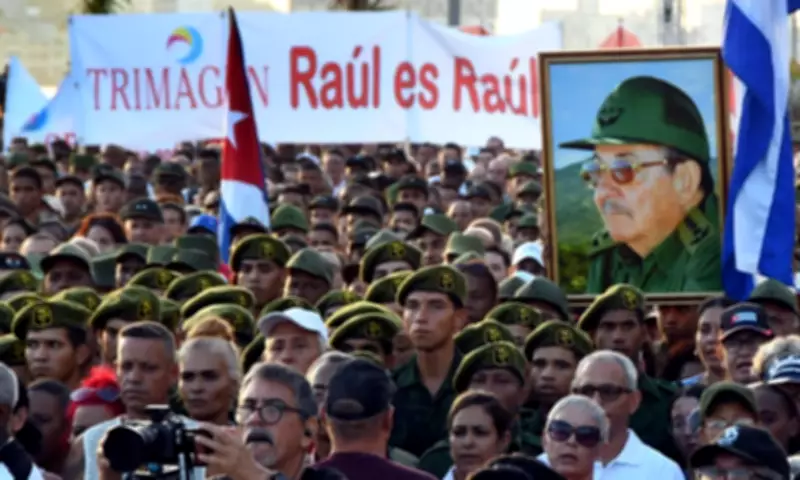
The United States indicted former Cuban President Raúl Castro in federal court last week, marking one of its most aggressive actions against the island since the Cold War ended. The unsealed indictment charges Castro, the 94-year-old brother of deceased Cuban leader Fidel Castro, and five others for alleged involvement in the shooting down of two small planes over Cuba in 1996. Four people, three of them US citizens, were killed.
This indictment is the latest in a series of US moves that have left Cuba in a precarious position. The US embargo on Venezuelan oil to the country has plunged Cuba into a massive energy crisis, with blackouts affecting homes and hospitals. The crisis is so severe that Cuba has reduced the workweek to four days for state-owned companies, shortened school days, and waived in-person attendance requirements at universities.
Expert Analysis on the Crisis
Cécile Shea, a Cuba expert and nonresident senior fellow at the Chicago Council on Global Affairs, explained that for the last 50 years, the US has ensured that no country other than a few like Venezuela exported oil to Cuba. Now that Venezuela is also not exporting oil to Cuba, the country is out of oil, and Shea attributes this directly to US policies.

With Cuba already vulnerable, the Castro indictment has sparked speculation: Is the US about to invade Cuba? Is this the same playbook used to oust former Venezuelan President Nicolás Maduro? Shea discussed the situation with Today, Explained co-host Sean Rameswaram.
Secretary of State's Message
Secretary of State Marco Rubio posted a video last week addressing Cubans in Spanish. He said that the energy crisis is not the US's fault but rather due to mismanagement by the Cuban government. Shea countered that while the Cuban government has not always been great, the current crisis is directly caused by US pressure on Venezuela to stop shipping oil to Cuba. She noted that anyone in Cuba listening to Rubio's speech would know this.
Current Opportunities and Risks
According to press reports, Cuba has offered to release political prisoners, open its economy, and allow Cuban exiles to return—concessions the US has sought for decades. Shea believes the US should accept these wins and add a promise for free and fair elections in two years. This would avoid military action and allow President Trump to achieve what no president since Eisenhower has: ending the communist-oriented regime in Cuba.
However, Shea expressed concern that the Trump administration might not take this path, especially given the indictment against Raúl Castro, which seems counterproductive. She questioned whether the indictment reflects the desires of the older Cuban diaspora.
Best and Worst Case Scenarios
The best-case scenario, according to Shea, is that the US accepts Cuba's concessions and allows a gradual transition to free elections. The worst-case scenario could involve military intervention, which would further alienate the Cuban people and harm long-term US-Cuba relations. She emphasized that invading Cuba is not a way to build a good future relationship.
Shea urged Americans to consider the benefits of peaceful engagement: selling spare parts to Cuba, allowing tariff-free imports of American vehicles, and resuming inexpensive vacations to Cuba. These options are preferable to sending young people into harm's way and becoming even more of a global pariah.
Moral Considerations
Shea highlighted the moral dimension: Cubans are suffering from lack of oil for kidney dialysis and transportation. She argued that the US should not let this pain continue, especially given the proximity of Cuba—just 90 miles from Florida. The long-term harm to Cuba's view of the United States could be severe.