When former President Donald Trump declared that starting February 1, 2026, eight of America's closest allies would face a blanket 10% tariff on all goods entering the United States, the shockwaves extended far beyond mere economic concerns. The targeted nations—Denmark, Norway, Sweden, France, Germany, the United Kingdom, the Netherlands, and Finland—are not adversaries but NATO partners and treaty allies, long presumed to hold a special status in Washington's strategic framework. Trump's justification was particularly striking, as he argued that the United States had subsidised these countries for centuries by avoiding tariffs, warning that world peace was now at stake and the bill had come due.
A Broader Strategic Shift Beyond Trade
At first glance, this move aligns with Trump's established worldview, where tariffs serve as leverage, pressure shapes policy, and transactions define diplomacy. However, focusing solely on trade overlooks the deeper implications. This development is not just another episode in a trade war but a test case for a more expansive idea: that economic coercion, national security, and territorial ambitions can be merged into a single, flexible justification for executive authority.
The Greenland Factor and Legal Battles
The immediate trigger, according to Trump, is Greenland. Without presenting evidence, he has claimed that China and Russia covet the island, that Denmark is incapable of defending it, and that only the United States can ensure its security. The tariff threat, explicitly linked to forcing an agreement over Greenland and set to rise to 25% by June, functions more like a sanction than a trade measure, aimed at compelling changes in state behavior.

In substance, this approach is not entirely new, as great powers have historically used economic pressure for political ends, from Britain's naval blockades to America's Cold War sanctions. Tariffs, in this context, are essentially sanctions under a different name. What is unprecedented is the target: for perhaps the first time so openly, U.S. allies are being treated as acceptable collateral damage in a strategy traditionally reserved for adversaries. This signals a erosion of the norms that governed transatlantic relations post-Cold War, where disputes were managed quietly and cooperatively within institutional frameworks.
Supreme Court and Executive Authority
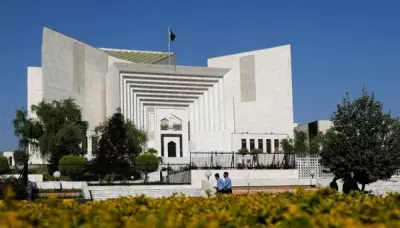
The most consequential battlefield, however, lies in Washington, particularly at the Supreme Court. Trump's tariff regime remains under a legal cloud, with federal courts having ruled that parts of his reciprocal tariff framework, imposed under the International Emergency Economic Powers Act of 1977, exceed presidential authority. The core issue is not tariffs themselves but whether a president can unilaterally invoke emergency powers to reshape global trade. Trump frames Greenland as a national security necessity while justifying tariffs on economic security grounds, leading critics to argue that statutes designed for financial emergencies are being stretched to serve unauthorized territorial and geopolitical goals.
Supporters counter that in a globalized world, economic and national security are inseparable. The post-9/11 era has shown that security rationales expand easily and rarely contract, with surveillance and financial regulations becoming permanent governance features. Trade is now being absorbed into this same logic. Trump has appealed to the Supreme Court, asking it to clarify or expand the limits of executive discretion in trade policy. While he faces a conservative court with three of his appointees, judicial ideology does not guarantee political loyalty, and adverse rulings are plausible based on recent decisions against his agenda.

Long-Term Implications for Global Order
Even if the Supreme Court rules against Trump, the impact may be more symbolic than constraining. Alternative pathways, such as the Trade Act of 1974, allow for tariffs without congressional consultation, ensuring that the broader toolkit remains intact. This highlights a larger point: the Greenland episode is not fundamentally about the island itself but about how the definition of national security continues to expand, encompassing trade, alliances, supply chains, and real estate. As this definition stretches, presidential power grows, often at the expense of Congress and traditional partners.
History offers cautionary lessons, such as the Roman Republic's collapse due to routine emergency powers or the Weimar Republic's fall from governing by decree. Democracies erode through precedents that seem justified in the moment. While Trump's concerns about Greenland are not wholly unfounded—given the Arctic's strategic significance as ice melts and China and Russia show interest—the question is whether tariffs against allies are an appropriate or sustainable means to pursue these interests.
A New Normal in International Relations
Once tariffs become the default instrument for geopolitical negotiation, alliance management, and territorial ambition, the logic becomes hard to contain. Today it is Greenland; tomorrow it could involve basing rights, UN voting patterns, or domestic regulations. If this approach gains international acceptance, reversing it will be difficult, leading other powers to follow suit and normalizing economic coercion. This blurs the distinction between friend and foe, fostering a more transactional, fragmented, and brittle world skeptical of American leadership.
Ultimately, whether Trump secures Greenland is almost beside the point. The precedent is being set: tariffs are evolving from economic tools into instruments of power, blending pressure, diplomacy, and ambition. The long-term question is what kind of international order emerges when emergency becomes routine and leverage replaces trust—a question far larger than Greenland and more enduring than any single presidency.