Trump Issues Ultimatum to Canada Over China Trade Partnership
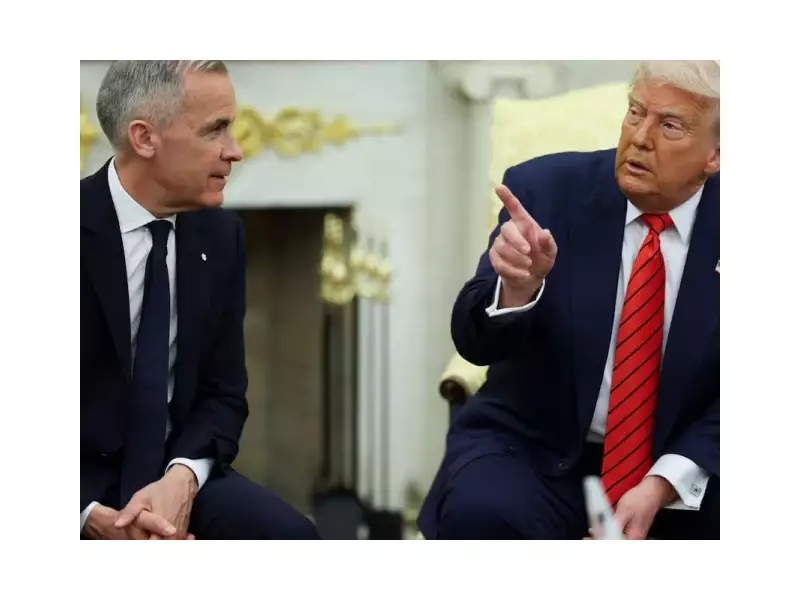
In a dramatic escalation of tensions, US President Donald Trump has directly threatened Canada with severe economic consequences should it proceed with a trade agreement with China. The warning came via Trump's Truth Social platform on Saturday, where he explicitly stated that a 100 percent tariff would be imposed on all Canadian goods and products entering the United States if such a deal is realized.
Background of Deteriorating Relations
Relations between the United States and its northern neighbor have grown increasingly strained since Trump returned to the White House approximately one year ago. The friction has been characterized by persistent trade disputes and public disagreements over global leadership. Canadian Prime Minister Mark Carney has been particularly vocal, recently describing a "rupture" in the US-led international order during a speech at the World Economic Forum in Davos.
Carney's comments, which earned him a standing ovation, were widely interpreted as a critique of Trump's disruptive influence on global affairs, though he did not mention the US president by name. This set the stage for a rapid exchange of rhetorical barbs between the two leaders.

The China Factor and Trump's Reaction
The immediate catalyst for Trump's tariff threat was Carney's recent visit to Beijing, where he hailed a "new strategic partnership" with China. This diplomatic engagement resulted in a preliminary agreement aimed at reducing tariffs between Canada and China—a move Trump views as a direct challenge to US economic interests.
Trump's response was uncompromising. "If Carney thinks he is going to make Canada a 'Drop Off Port' for China to send goods and products into the United States, he is sorely mistaken," Trump wrote. He further claimed, "China will eat Canada alive, completely devour it, including the destruction of their businesses, social fabric, and general way of life."
Personal Insults and Geopolitical Posturing
The dispute has taken on a personal dimension. Trump insultingly referred to Prime Minister Carney as "Governor"—a deliberate slight that echoes his longstanding suggestion that Canada should become the 51st US state. This was reinforced earlier this week when Trump posted an image on social media depicting Canada, along with Greenland and Venezuela, covered by the American flag.
In retaliation for Carney's Davos speech, Trump withdrew an invitation for the Canadian leader to join his "Board of Peace"—a self-styled international conflict resolution body. Initially focused on postwar Gaza, this board's expanded scope has raised concerns that Trump aims to create a rival institution to the United Nations.
Canada's Defiant Response
Prime Minister Carney responded defiantly to Trump's threats on Thursday. "Canada doesn't live because of the United States. Canada thrives because we are Canadian," he asserted. However, he also acknowledged the "remarkable partnership" that has historically existed between the two nations, attempting to balance defiance with diplomatic nuance.
The core of Trump's argument was summarized in his direct message to Carney: "Canada lives because of the United States. Remember that, Mark, the next time you make your statements." This assertion underscores the profound power imbalance Trump perceives in the relationship, framing US support as essential for Canadian prosperity.
Implications for Global Trade and Diplomacy
This confrontation has significant implications beyond bilateral relations:

- It threatens to destabilize North American trade networks that have been carefully built over decades.
- It positions Canada in a delicate balancing act between its traditional ally, the United States, and the emerging economic giant, China.
- It highlights the growing fragmentation of the US-led global order, with nations seeking alternative partnerships.
- It raises questions about the future of international institutions if Trump proceeds with parallel bodies like the "Board of Peace."
The situation remains fluid, with economic analysts warning that the implementation of 100 percent tariffs would have devastating consequences for Canadian exporters and could trigger retaliatory measures, potentially spiraling into a broader trade conflict. As both leaders continue their war of words, the international community watches closely, concerned about the erosion of diplomatic norms and the stability of global economic systems.