Former United States President Donald Trump has cast doubt on the reliability of Denmark as a security guarantor for Greenland, a vast autonomous territory within the Danish realm. The remarks, made during a recent political rally, have reignited discussions about Arctic security and America's strategic interests in the region.
Trump's Skepticism Over Danish Defense Capabilities
Speaking to supporters, Trump directly addressed the defense arrangement concerning Greenland. He stated that the United States "cannot rely" on Denmark to protect Greenland, implying a potential vulnerability in the current security framework. This comment underscores a long-standing view held by Trump and some of his advisors that America must reassess its dependencies on allied nations for safeguarding critical geopolitical assets.
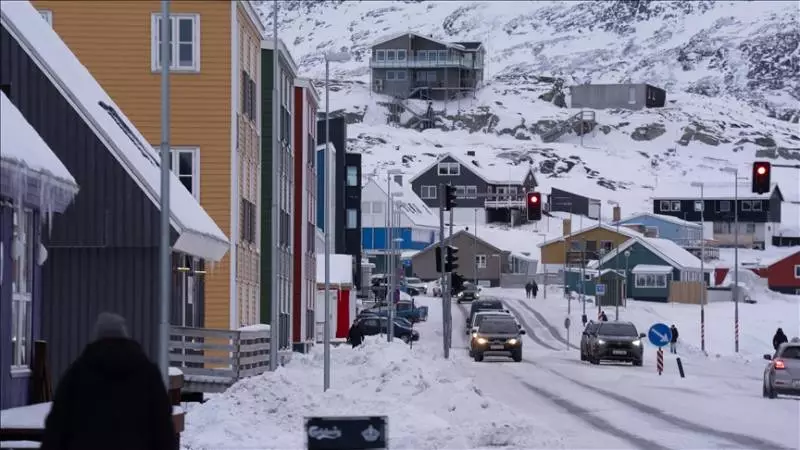
Greenland, the world's largest island, holds immense strategic importance due to its location in the Arctic. The region is becoming increasingly contested as melting ice opens new shipping routes and access to untapped natural resources. The United States maintains a critical military presence at Thule Air Base in northern Greenland, which is pivotal for missile warning and space surveillance.

The Historical Context and a Failed Bid
This is not the first time Trump has focused intently on Greenland. In 2019, during his presidency, he publicly floated the idea of the US purchasing the territory from Denmark. The proposal was swiftly and firmly rejected by the Danish government, which called the notion "absurd" and reaffirmed that Greenland was not for sale. The incident caused a brief diplomatic rift, with Denmark's then-Prime Minister Mette Frederiksen stating that she hoped Trump was not serious.
Trump's latest comments suggest his strategic interest in the island's future has not waned. By questioning Denmark's protective role, he is implicitly arguing for a more direct and dominant US security role in Greenland's affairs. Analysts suggest this perspective is driven by a broader "America First" ideology that views international partnerships through a lens of transactional reliability and direct control.
Implications for Arctic Geopolitics and Alliances
The statement carries significant weight for regional dynamics. Denmark, as a member of NATO, is formally responsible for Greenland's defense as part of the collective security agreement. Trump's skepticism challenges this established NATO principle and could signal a future policy direction should he return to office. It raises questions about how a potential Trump administration would engage with Arctic allies like Canada, Norway, and Denmark itself.
Furthermore, the remarks come at a time of heightened great-power competition in the Arctic, primarily with Russia and China. Russia has been modernizing its military bases along its northern coastline, while China has declared itself a "near-Arctic state" and is investing in polar research and infrastructure. A perceived weakening of the US-Denmark security understanding over Greenland could create uncertainties that other powers might seek to exploit.
For Greenland itself, which has a population of about 56,000 and is moving toward greater independence from Copenhagen, external statements about its security are closely watched. The local government balances its relationship with Denmark, its economic needs, and the interests of larger global players.
In summary, Donald Trump's assertion that America cannot depend on Denmark to protect Greenland is more than a passing comment. It is a pointed critique that touches on core issues of alliance burden-sharing, Arctic sovereignty, and America's global military posture. As the geopolitical significance of the Arctic continues to grow, the debate over who secures Greenland and how is likely to intensify, making it a key topic in international relations and future US electoral politics.