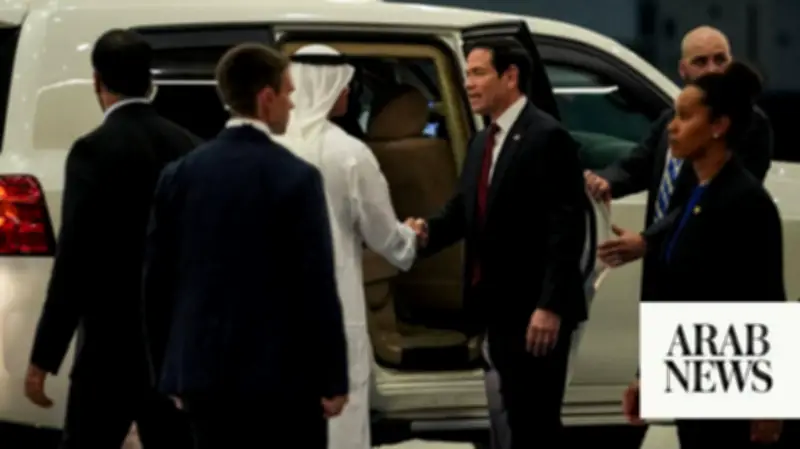
Rubio Arrives in UAE, Reaffirms US Position on Strait of Hormuz
US Secretary of State Marco Rubio arrived in Abu Dhabi on Tuesday and stated that the United States will not accept any tolls or fees imposed on the Strait of Hormuz. The vital waterway, through which about 20% of the world's oil passes, has been a point of contention as Iran seeks to extract revenue from it.
Rubio emphasized that the strait is an international waterway under existing international law, and no country has the right to charge tolls or fees. He expressed confidence that regional countries share this view.
International Law and Regional Consensus
“It’s an international waterway. No country is allowed to charge tolls or fees on an international waterway. That’s existing international law,” Rubio said upon his arrival in the UAE. He added, “I don’t think we have anybody to convince around here in that regard. I think all the countries in this region would agree with us.”

The Strait of Hormuz connects the Persian Gulf to the Gulf of Oman and is a critical chokepoint for global energy supplies. Any attempt to impose tolls could disrupt international shipping and raise oil prices.
Context of Iran's Economic Pressures
Iran, facing severe economic sanctions, has previously threatened to block the strait or impose fees as a means of exerting pressure. The US stance firmly rejects such measures, reinforcing the principle of freedom of navigation.
Rubio’s visit to the UAE is part of a broader regional tour to discuss security and economic issues. The UAE, a key US ally, has not commented publicly on the tolls issue but is expected to align with the US position.