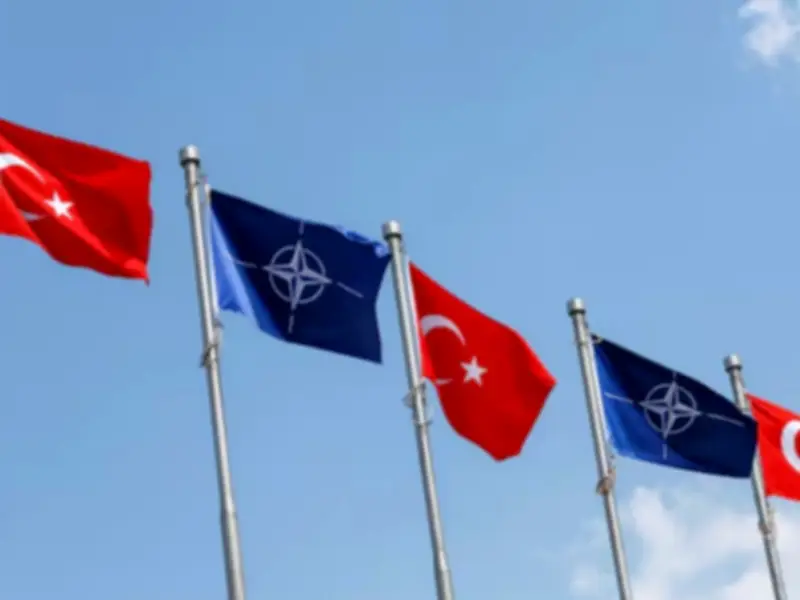
NATO leaders will convene in Ankara on Tuesday and Wednesday for a summit overshadowed by President Donald Trump's demands for Europe to boost defence spending and ongoing transatlantic tensions over the Iran war and Greenland. Trump's frequent criticism of the alliance, combined with announced troop withdrawals from Europe and a six-month review of the US military presence on the continent, has deepened uncertainty within NATO.
Key Summit Agenda: Defence Spending and Burden-Shifting
Officials expect leaders to concentrate on progress toward defence spending targets, enhancing defence industrial production, and implementing "burden-shifting" from the United States to Europe. The Trump administration has pushed for Europe to assume primary responsibility for the continent's defence.
Participating Leaders and Guests
Leaders from all 32 NATO member countries, including Trump, will attend. Ukrainian President Volodymyr Zelenskiy, South Korean President Lee Jae Myung, European Council President Antonio Costa, and European Commission President Ursula von der Leyen are expected to join a dinner with NATO leaders on Tuesday evening.

European Commitments on Defence Spending
European leaders aim to demonstrate to Trump that they are fulfilling a pledge made at last year's summit in The Hague to spend 5% of gross domestic product on defence and related measures by 2035. According to a draft summit declaration seen by Reuters, leaders are expected to state: "In 2025, European Allies and Canada increased their investments in core defence requirements by more than $139bn." The declaration adds: "We are building the future: a stronger Europe in a stronger NATO - a modernised Alliance. European Allies and Canada, working with the United States, are assuming greater responsibility for the Alliance’s defence."
Support for Ukraine
NATO members are expected to reaffirm their support for Ukraine and pledge further assistance. The draft declaration states: "For 2026, Allies pledge €70bn in military equipment, assistance and training for Ukraine and affirm their sovereign commitments to sustaining at least equivalent levels in 2027." Part of this funding will come from existing bilateral pledges and an EU loan facility providing €60 billion for Ukrainian defence investment and procurement for 2026-2027. The United States is not expected to contribute funding.
Defence Industry and Innovation Focus
While last year's summit centred on agreeing a new spending pledge, officials want this year's gathering to focus on scaling up weapons production and boosting defence innovation. NATO will host a defence industry forum in Ankara on Tuesday, where deals worth tens of billions of dollars will be announced.
Iran War and Transatlantic Friction
European officials are concerned that the US-Iran war and Trump's irritation with European governments over their response could overshadow the summit. In their declaration, leaders are expected to say: "Allies reiterate that Iran must never have a nuclear weapon and call on Iran to fully respect freedom of navigation in the Strait of Hormuz."
Turkey's Hosting Objectives
Turkey aims to highlight its growing defence industry capabilities and repeat its longstanding call for alliance members to lift all restrictions on defence trade within NATO. President Tayyip Erdogan also seeks progress with allies such as France and Italy on purchasing SAMP/T missile defence systems and other defence industry cooperation. In bilateral talks with Trump, Erdogan is expected to emphasise improving ties between Ankara and Washington while pressing for the lifting of US sanctions and renewed access to the F-35 fighter jet programme.
Additional Meetings on Summit Sidelines
NATO foreign ministers are expected to meet counterparts from Bahrain, Kuwait, Qatar, and the United Arab Emirates, and to hold a dinner discussion with Ukraine's foreign minister and EU foreign policy chief Kaja Kallas. NATO defence ministers will also hold talks with ministers from Australia, Japan, New Zealand, and South Korea.