Middle East Conflict Escalates with Global Oil Crisis and Embassy Attacks
The ongoing war between the United States and Iran showed no signs of abating on Saturday, spilling over into a global oil price crisis as attacks targeted key diplomatic and energy sites across the region. US President Donald Trump has urgently called for other nations to assist in securing the vital Strait of Hormuz, a critical shipping lane now choked off by Iranian military actions, which has precipitated a staggering 40 percent surge in global oil prices.
Diplomatic and Energy Facilities Under Fire
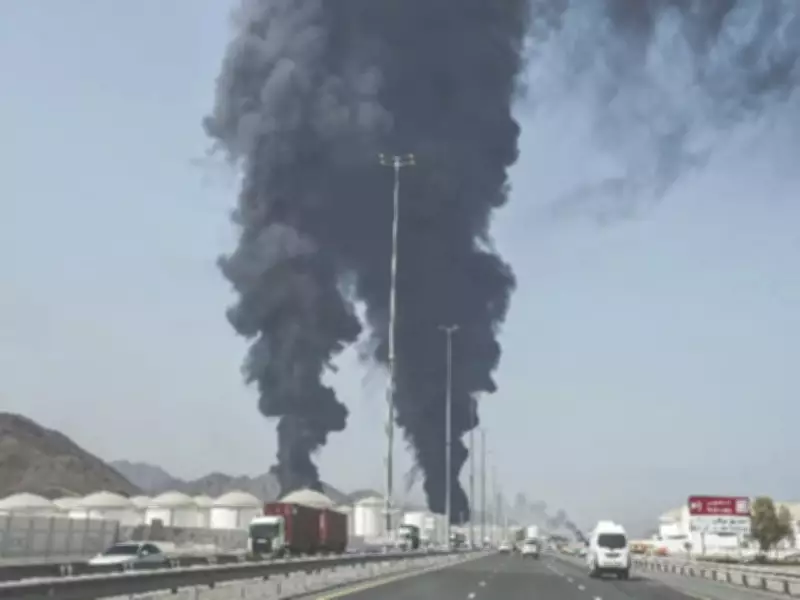
In a significant escalation, the US embassy in Baghdad was struck by a drone attack, security sources confirmed to AFP. This marks the second assault on the embassy since the conflict began two weeks ago. Simultaneously, a major Emirati energy facility in Fujairah—home to a crucial oil storage and export terminal—was hit, with clouds of black smoke visible over the area. Iran's military had previously issued warnings to UAE civilians to avoid port zones, heightening tensions.
Further compounding the crisis, the Emirati consulate in Iraqi Kurdistan was also attacked for the second time in a week. These incidents underscore Iraq's precarious position as a proxy battleground, dragged swiftly into the war following initial US and Israeli strikes on Iran on February 28.

Military Strikes and Regional Fallout
US officials disclosed that five United States Air Force aerial refueling aircraft sustained damage during an Iranian missile strike on Prince Sultan Air Base in Saudi Arabia, a key installation hosting American forces. This attack was part of a broader wave of Iranian missile launches targeting US military assets across the Middle East in recent days.
In a pivotal move, US forces conducted a strike on Iran's Kharg Island on Friday, the primary export hub for nearly all of Iran's oil. President Trump asserted that every military target was "obliterated," while energy facilities were deliberately spared. Analysts, such as Vali Nasr from Johns Hopkins University, suggest this could represent a turning point, with both sides escalating in a bid to force surrender, potentially inflaming the Gulf region further.
International Response and Economic Implications
President Trump, having earlier vowed US Navy escorts for tankers through the Strait of Hormuz, appealed for reinforcements on Saturday via Truth Social. He indicated that many countries, including China, France, Japan, South Korea, and the United Kingdom, would "hopefully" deploy warships in conjunction with the US to maintain the strait's openness and safety.
The economic repercussions are severe, with oil prices skyrocketing due to Iran's blockade of the Strait of Hormuz and attacks on Gulf energy infrastructure. The Pentagon reported that over 15,000 targets in Iran have been hit by US and Israeli forces, with the first six days alone costing the US an estimated $11.3 billion and resulting in 13 military fatalities.
Iran's Defiant Stance and Threats
Despite facing superior US and Israeli firepower, Iran remains resolute. Iranian Foreign Minister Abbas Araghchi mocked the United States, claiming it is now "begging others" to secure the Strait of Hormuz. In posts on X, he criticized the US security umbrella as "full of holes" and called on neighboring countries to expel foreign aggressors, emphasizing that their primary concern is Israel.
Araghchi issued a stark warning, stating that Iran will retaliate against any American-linked energy infrastructure in the region if its own facilities are attacked. "Our Armed Forces have already answered that they would retaliate if our oil and energy infrastructure are attacked," he declared, adding that Iran "will attack any energy infrastructure in the region which belongs to an American company or an American company is a shareholder."
Humanitarian and Strategic Developments
The conflict's human toll is mounting, with Iran's health ministry reporting over 1,200 fatalities from US and Israeli attacks—though these figures remain unverified independently. The UN refugee agency estimates up to 3.2 million people have been displaced.

In a show of resilience, Iranian President Masoud Pezeshkian vowed to rebuild destroyed infrastructure "even better than before," despite challenges in transportation and communication. Meanwhile, Israel's Defence Minister Israel Katz described the war as entering a "decisive phase," cautioning that it would "continue as long as necessary."
US media outlets have raised the possibility of American ground troops deploying to Iran, with reports indicating the Pentagon has dispatched the USS Tripoli amphibious assault ship and approximately 2,500 Marines from Japan to the region. As the conflict grinds on, the international community watches closely, with the Strait of Hormuz's security hanging in the balance and global energy markets reeling from the turmoil.