European Commission President Calls for Enhanced Strategic Independence
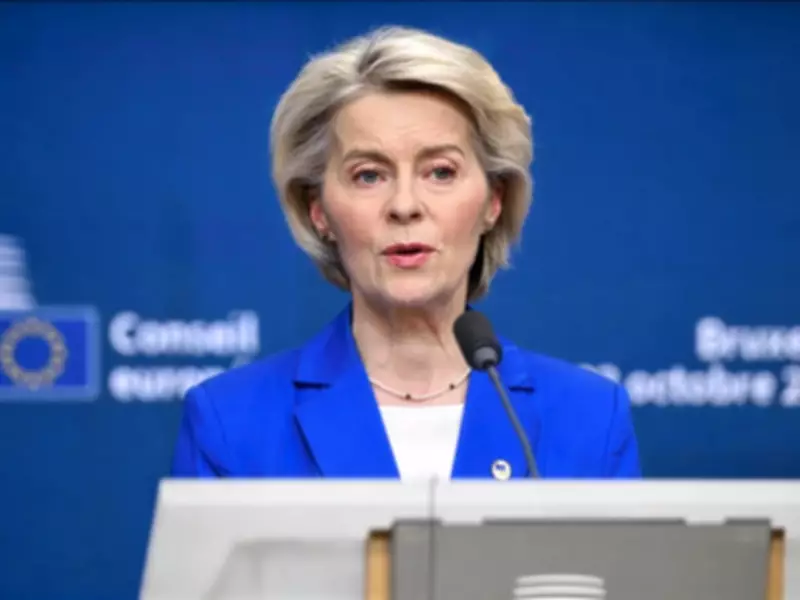
European Commission President Ursula von der Leyen delivered a stark warning on Saturday, emphasizing that Europe must be prepared to defend itself "at all times" in the face of escalating geopolitical tensions and external pressures on democratic systems. Speaking at the prestigious Munich Security Conference, von der Leyen articulated the urgent need for the continent to bolster its strategic independence to navigate a fractured global landscape.
Addressing Threats from Within and Without
Von der Leyen highlighted the "very distinct threat of outside forces trying to weaken our union from within," coupled with intensifying global rivalries that impact areas ranging from territorial disputes to technology regulation. She underscored that these challenges point to a fundamental reality: "Europe must become more independent. There is no other choice." This independence, she stressed, must encompass critical sectors such as defense, energy, trade, raw materials, and digital technology.
Rejecting notions that stronger European autonomy might undermine transatlantic relationships, von der Leyen asserted, "an independent Europe is a strong Europe, and a strong Europe makes for a stronger transatlantic alliance." She pointed to the bloc's defense initiatives following Russia's invasion of Ukraine, noting that European military spending in 2025 has surged by nearly 80% compared to pre-war levels.

Strengthening Defense and Decision-Making
The Commission President called for the activation of Europe's mutual defense clause under Article 42.7 of the EU treaty, describing collective defense as "not an optional task" but a binding commitment. To expedite security-related actions, she suggested that the EU might increasingly adopt qualified majority voting instead of relying on unanimity, thereby accelerating decision-making processes.
Von der Leyen also emphasized the importance of industrial capacity and innovation in modern warfare, drawing lessons from Ukraine's battlefield experiences. She revealed that drones now account for "around 80% of battlefield damages on both sides," underscoring the necessity for Europe to enhance defense production and develop dual-use technologies, including artificial intelligence and advanced manufacturing.
"Some ask whether we can afford this, but I say we cannot afford not to," von der Leyen added, arguing that investments in defense are crucial to safeguarding "peace and freedom."
UK Prime Minister Advocates for a 'More European NATO'
In a parallel address at the conference, British Prime Minister Sir Keir Starmer called for Europe to focus on reducing "some dependencies" and advocated for the creation of a "more European NATO." He urged collective action, stating, "We must move forward together to create a more European NATO," while emphasizing the need to diversify and decrease certain dependencies.
Starmer described Europe as a "sleeping giant," noting that European economies surpass Russia's by more than tenfold and that Europeans possess "huge defense capabilities." He affirmed, "If necessary, we must be ready to fight, to do whatever it takes to protect our people, our values and our way of life."
The Prime Minister also highlighted the UK's evolving stance post-Brexit, declaring, "There is no British security without Europe, and no European security without Britain. That is the lesson of history — and it is today’s reality too." He reiterated the UK's unwavering commitment to NATO's collective security clause, Article 5, and announced plans to deploy the UK's carrier strike group to the North Atlantic and the High North this year as a demonstration of commitment to Euro-Atlantic security.
Starmer further proposed leveraging the UK's leadership in defense technology and artificial intelligence in collaboration with Europe to amplify strengths and establish a shared industrial base. "We want to bring our leadership in defense tech and AI together with Europe to multiply our strengths and build a shared industrial base across our continent, which can turbocharge our defense production," he explained.

He noted that achieving this vision requires enhanced coherence and coordination across Europe, citing ongoing efforts with Germany and France in the E3 format, as well as close cooperation with EU partners like Italy and Poland, and allies such as Norway, Canada, and Türkiye.
Broader Implications for European Security
The speeches by von der Leyen and Starmer reflect a growing consensus on the need for Europe to assert greater autonomy and resilience in an increasingly volatile world. Their calls for strengthened defense capabilities, technological innovation, and deeper intra-European cooperation underscore a strategic pivot towards self-reliance without forsaking transatlantic alliances.
As geopolitical tensions continue to rise, the emphasis on strategic independence and collaborative defense initiatives marks a critical juncture for European security policy, with implications for global stability and democratic resilience.