US-Iran Talks Yield 60-Day Roadmap, Lebanon Emerges as Key Test
US-Iran talks in Switzerland produced what mediators described as “encouraging progress” on Monday, with both sides agreeing to a 60-day roadmap toward a broader deal aimed at ending the regional war. Key early steps include establishing direct communication channels to prevent escalation in the Strait of Hormuz and continuing technical negotiations. Despite a tense start — marked by Iranian threats to walk out over US warnings about Hezbollah — the talks have held.
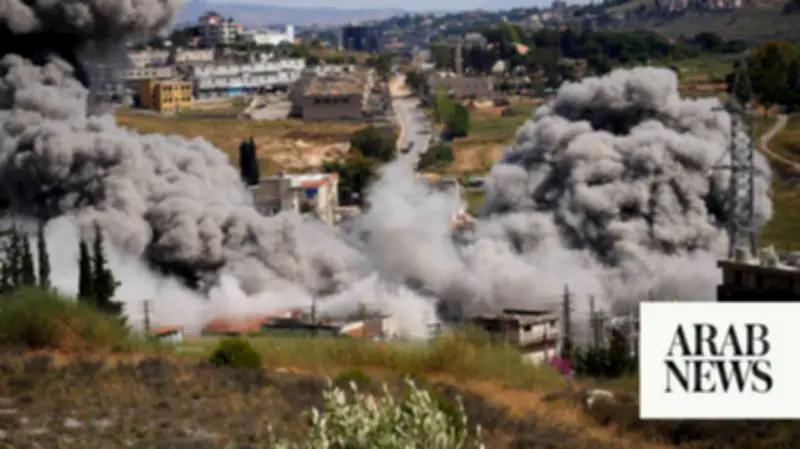
Lebanon has emerged as an immediate test of whether diplomacy can translate into stability on the ground. Mediators confirmed the creation of a “de-confliction cell” involving Iran, the US and Lebanese authorities to prevent renewed clashes between Israel and Hezbollah after repeated violations of a provisional ceasefire. Although no strikes were reported by Sunday evening and some displaced residents have begun returning home, the situation remains fragile. Previous flare-ups have repeatedly derailed negotiations.
Lebanon Mechanism Seen as Indicator of Broader Deal’s Viability
The success or failure of the Lebanon mechanism is widely viewed as the first concrete indicator of whether the broader US-Iran diplomatic track can endure. Lebanon has been bracing for the repercussions of the US-Iran memorandum of understanding on its future. Yet the day after the MoU was signed, Israel and Hezbollah resumed armed exchanges.

Many Lebanese are now wondering whether the hopes revived by the MoU will materialize — including the prospect of a new political era and an end to the dominance of Iran’s Islamic Revolutionary Guard Corps in Lebanese affairs. The MoU, however, remains only a transitional framework, with the details of any final settlement to be negotiated in the coming weeks.
Former Minister Calls MoU an Ambiguous Text
Fares Boueiz, a former Lebanese foreign minister, described the agreement as one “with neither victor nor vanquished, and with an ambiguous text. The US did not achieve its goals of nuclear disarmament, preventing Iran from supporting its proxies in Lebanon and the region, nor did it achieve regime change.”
“Iran suffered painful blows at the leadership and nuclear facility levels but remained steadfast. The agreement did not change the balance of powers but rather kept the fuse burning and created a sterile equilibrium,” Boueiz added.
MoU Clauses and Israeli Objections
The first clause of the MoU states that the US, Iran and their allies “declare the immediate and permanent termination of military operations on all fronts, including Lebanon,” and guarantee “the territorial integrity and sovereignty of Lebanon.” It further states that “the final deal will confirm the permanent termination of the war on all fronts, including in Lebanon.”
Israel, however, continues to insist that any future security arrangement must be based on ending Hezbollah’s military presence and preventing its redeployment near the border. Lebanese observers fear the country could become the first obstacle to the agreement, given that Israel rejects the MoU because it did not take part in drafting it.
Researcher: Iran Gained Leverage, but Costs High
Academic researcher Harith Sleiman said that “the US-Iran war practically achieved none of its objectives. The Americans did not put an end to Iran’s nuclear program, and the Iranians did not achieve the lifting of sanctions.”
“Iran managed to gain leverage by using the Strait of Hormuz to threaten global interests and, through tactical negotiations, sidelined discussions on the nuclear program and the issue of Iranian proxies. Iran incurred high costs as a result of this war. However, it also inflicted significant costs on Gulf states and managed to harm East Asia. Meanwhile, Iran was able to cope with its losses at the leadership level,” Sleiman added.
For that reason, he said, “we must wait and see what will happen during the 60-day period and whether Iran’s behavior will change,” adding that the devil remains in the details. Sleiman also noted that “Israel’s priorities differ from American objectives. The Israeli side is dissatisfied with the US-Iran agreement and has affirmed that it will remain in southern Lebanon as long as Hezbollah has not been disarmed.”

Hezbollah’s Claims Contradicted by Ground Reality
Asked what leverage Hezbollah retains, Sleiman was blunt. “Hezbollah’s claims of victory are contradicted by developments on the ground. The group’s rhetoric makes it sound as if it has captured Nahariya, not that Israel has advanced deep into the south. I believe the current situation will get worse.”
“Hezbollah is handing Prime Minister Benjamin Netanyahu free gifts, allowing him to destroy Lebanon. Israel does not want to have negotiations with Lebanon because the US would then compel it to withdraw from Lebanon, and ironically, Hezbollah is serving the Israeli position in this regard,” Sleiman said.
MoU Reconnects Lebanese and Iranian Tracks
Notably, the clause dealing with Lebanon in the MoU makes no mention of an Israeli withdrawal. However, according to information circulated by Hezbollah, Iranian Foreign Minister Abbas Araghchi told Lebanese officials that “the withdrawal will be part of the 60-day negotiations related to the nuclear file.”
Following the ceasefire with Iran on April 8, Washington sought to open a direct negotiating channel between Lebanon and Israel, aiming to separate the Lebanese and Iranian tracks. The Lebanese state continues to support that approach. However, according to Ali Al-Amin, editor in chief of Janoubia, the first clause of the MoU “reconnected the two tracks and granted Iran an explicit veto over the Lebanese decision.”
Al-Amin argued that “the Lebanese negotiator’s position has become weak as a result of the Lebanese state’s reluctance to fulfill its obligations in terms of restricting arms in the past. The problem is not with the agreement itself, but with who signs it, because whoever signs it is the one who decides.”
He added: “All the US slogans collapsed with the closure of the Strait of Hormuz. Iran is no longer willing to relinquish its gains. It has shown an ability to adapt to pressure, absorb shocks, and cope with the blockade, while the US has proven less capable of doing so.”
Lebanon Faces Difficult Period Ahead
Lebanon now faces another difficult period, confronting both the prospect of continued Israeli military presence and ongoing disputes over Hezbollah’s weapons. Academic and legal expert Ali Murad believes that “the 60-day US-Iran MoU negotiations represent a pivotal moment that could reshape the situation in Lebanon. The most Iran is likely to achieve is a ceasefire, with nothing related to the Israeli withdrawal, reconstruction, the return of displaced persons, or the security arrangements in southern Lebanon.”
“Hezbollah and Iran will attempt to bring Lebanon back under Iranian influence, but I believe the situation has changed. We cannot return to how things were pre-Oct. 7, 2023, especially after the fall of the Assad regime, the developments in Iran, and the events in the Gaza Strip,” Murad said.
Murad stressed that Hezbollah remains “a major political force in Lebanon” with significant popular support, but argued that the real issue concerns “its military role, the question of arms control, and decisions of war and peace. This is Lebanon’s main issue with Hezbollah, which must take the initiative and responsibly address the challenges facing Lebanon as a result of its choices. Lebanon’s interests cannot be part of Iranian influence.”
He added that Lebanon “must be part of Arab national security, not Iranian national security,” and should participate in regional economic projects rather than remain tied to external agendas.
Lebanese Leadership Maintains Sovereign Stance
The Iranian narrative, amplified by Hezbollah, portraying Tehran as Lebanon’s principal negotiator, was met with a measured response from President Joseph Aoun and Prime Minister Nawaf Salam. Both described the US-Iran MoU as “a positive factor that contributes to reducing tensions in the region and pushing toward peaceful solutions and an end to the state of war.”
The fifth round of direct Lebanese-Israeli negotiations is scheduled for June 23-25. Ahead of the talks, Aoun told the Lebanese delegation that “the Lebanese position is based on a set of fundamental principles, particularly a permanent ceasefire, the withdrawal of Israeli forces from occupied Lebanese territories, the deployment of the Lebanese army to the internationally recognized borders, the return of prisoners, and the launch of the reconstruction process.”
He stressed that “the Lebanese state is sovereign in its decisions, and no one can replace it. Any settlement will be reached through us, not at our expense.”
Murad echoed that position, saying: “Iran and any other country can help Lebanon. However, Lebanon has to separate the tracks. There is no return to the principle of ‘unity of path and destiny.’ The Lebanese state alone is leading the negotiations, and whoever criticizes the state for not being in a position of strength should put their weapons at its disposal and consider them a leverage for the Lebanese negotiator to improve conditions. This is the opposite of what Hezbollah has done so far by obstructing every ceasefire reached by the Lebanese state, which the Israelis also did not respect.”