Prime Minister Shehbaz Sharif Participates in US-Led Board of Peace Meeting in Washington
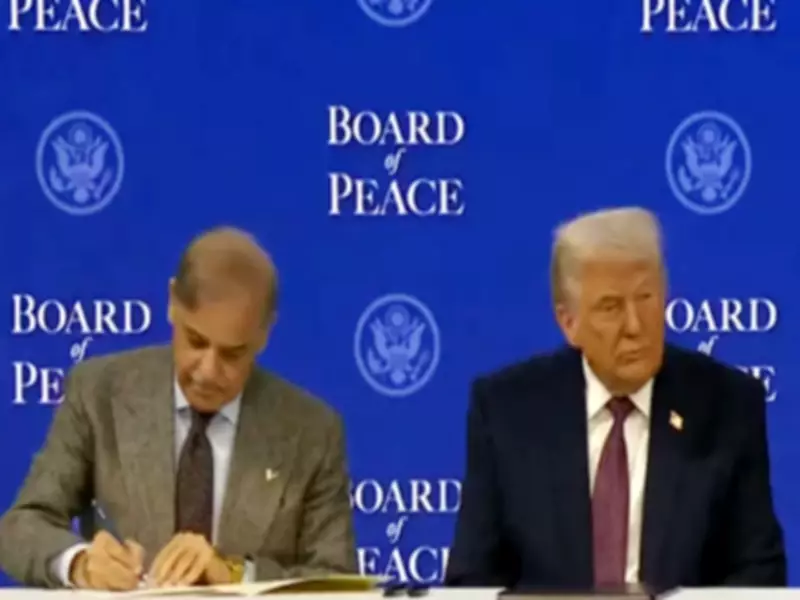
Prime Minister Shehbaz Sharif is set to attend the first meeting of US President Donald Trump's Board of Peace in Washington today, Thursday. The session, chaired by President Trump, includes participation from eight Muslim nations and several other countries. PM Shehbaz will be accompanied by a delegation featuring Deputy Prime Minister Ishaq Dar, who also serves as the country's foreign minister.
Focus on Gaza Reconstruction and Ceasefire Strengthening
The discussions at the meeting will center on key issues such as the reconstruction of Gaza, strengthening the ceasefire, and fulfilling funding commitments. President Trump is expected to announce a multi-billion dollar reconstruction plan for Gaza and detail plans for a UN-authorised stabilization force for the Palestinian enclave.
Pakistan's Stance on Troop Deployment

Before Pakistan commits to sending troops to Gaza as part of the International Stabilization Force (ISF), it seeks assurances from the United States that the mission will be for peacekeeping rather than disarming Hamas, according to three government sources. During the Washington visit, PM Shehbaz aims to better understand the ISF's goals, operational authority, and chain of command before making a deployment decision.
"We are ready to send troops. Let me make it clear that our troops could only be part of a peace mission in Gaza," said one source, a close aide of PM Shehbaz. "We will not be part of any other role, such as disarming Hamas. It is out of the question." Pakistan's foreign ministry did not respond to a Reuters request for comment.
Trump's Gaza Plan and Pakistan's Potential Role
Trump's 20-point Gaza plan calls for a force from Muslim nations to oversee a transition period for reconstruction and economic recovery in the devastated Palestinian territory. Washington has been pressing Islamabad to join this effort. Analysts note that Pakistan would be an asset to the multinational force, given its experienced military history, including conflicts with arch-rival India and handling insurgencies.
"We can send initially a couple of thousand troops anytime, but we need to know what role they are going to play," the source added. Two sources indicated that PM Shehbaz, who has met Trump earlier this year in Davos and late last year at the White House, is likely to have an audience with him on the sidelines of the meeting or the following day at the White House.
Broader Implications and Domestic Concerns
Initially designed to cement Gaza's ceasefire, Trump envisions the Board of Peace, launched in late January, taking a wider role in resolving global conflicts. Some countries have reacted cautiously, fearing it could become a rival to the United Nations. While Pakistan has supported the board's establishment, it has voiced concerns against missions to demilitarise Hamas.
Analysts suggest Islamabad must strike a balance between pleasing Trump by providing troops and managing potential domestic fallout in a predominantly Muslim nation. Husain Haqqani, a former Pakistan ambassador to the United States, highlighted that the Pakistani public supports sending troops to Gaza only to help protect Palestinians.
"If developments in Gaza after the deployment do not improve the position of Palestinians, there could be a massive reaction at the public level in Pakistan," said Haqqani, currently a scholar at the Hudson Institute in Washington. The meeting underscores ongoing diplomatic efforts and Pakistan's cautious approach to international peacekeeping roles.