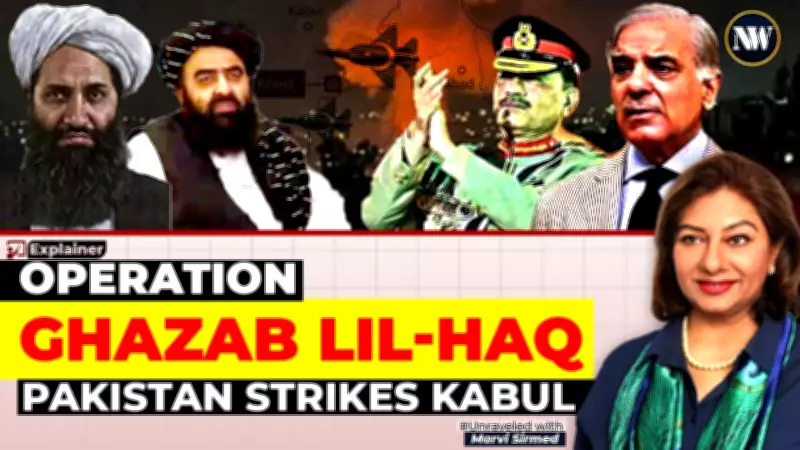
Pakistan Declares Open War with Afghanistan, Launches Operation Ghazab-lil-Haq
In a critical analysis on Unraveled, journalist Marvi Sirmed dissects the rapidly intensifying military confrontation between Pakistan and Afghanistan. The situation has escalated dramatically following unprovoked firing incidents attributed to the Afghan Taliban, prompting Pakistan to officially initiate Operation Ghazab-lil-Haq, which translates to Righteous Fury. This marks a significant shift from diplomatic tensions to active military engagement.
Defense Minister's Stern Declaration
Pakistan's Defense Minister, Khawaja Asif, has issued a stark statement, declaring that the nation's patience has been exhausted. He explicitly characterized the current scenario as an open war, underscoring the gravity of the conflict. This declaration follows a series of aggressive actions by the Afghan Taliban, which Pakistan views as direct threats to its sovereignty and security.
Military Actions and Conflicting Reports
The operation has involved heavy airstrikes conducted by Pakistani forces targeting key locations in Afghanistan, including Kabul, Kandahar, and Paktika. These strikes represent a significant escalation in military tactics, moving beyond border skirmishes to targeted aerial assaults. However, there are conflicting casualty claims emerging from both sides:

- Islamabad's Stance: Pakistani authorities report precision strikes aimed at militant hideouts, minimizing civilian casualties.
- Taliban Leadership's Claims: The Afghan Taliban allege high civilian tolls and damage to infrastructure, disputing Pakistan's accounts.
This discrepancy highlights the fog of war and the challenges in verifying information amid ongoing hostilities.
From Ceasefire to Full-Blown Conflict
The deterioration from the Qatar-mediated ceasefire of 2025 to full-scale military engagement in 2026 is a central point of analysis. Key factors contributing to this breakdown include:
- Persistent TTP Safe Havens: The status of Tehrik-i-Taliban Pakistan (TTP) sanctuaries within Afghanistan remains a contentious issue. Pakistan accuses the Afghan Taliban of harboring these groups, leading to cross-border attacks.
- Failed Diplomatic Efforts: Despite international mediation, trust deficits and unmet security demands have eroded the ceasefire, pushing both nations toward confrontation.
- Escalating Provocations: Repeated incidents of firing and militant incursions have strained relations, culminating in Pakistan's decisive military response.
Humanitarian Crisis at the Border
The conflict has severe implications for Afghan refugees caught in the crossfire, particularly at the Torkham border. The human cost is mounting, with reports of displacement, injuries, and fatalities among civilian populations. This humanitarian aspect underscores the broader impact of the war, affecting vulnerable communities who are already grappling with instability and economic hardship.
As Operation Ghazab-lil-Haq unfolds, the regional dynamics are poised for further upheaval. The international community watches closely, with concerns over potential spillover effects and the long-term implications for peace in South Asia. The analysis by Marvi Sirmed provides a comprehensive overview of this critical juncture, emphasizing the need for urgent dialogue to prevent further escalation and humanitarian suffering.