Pakistan Raises Kashmir and Palestine Issues at UN Treaty Meeting
As United Nations member states commenced preparations to draft an international treaty focused on preventing Crimes against Humanity, Pakistan seized the opportunity on Tuesday to spotlight the criminal offenses perpetrated against innocent populations in occupied Kashmir and Palestine. The Pakistani delegation delivered a forceful statement during a meeting of the Preparatory Committee for the UN Conference dedicated to the prevention and punishment of such grave crimes.
Strong Condemnation from Pakistani Delegate
Zulfiqar Ali, a first secretary in the Pakistan Mission to the UN, articulated Pakistan's position with clarity and conviction. He emphasized that "Crimes against Humanity are one of the gravest offenses" and pointed out that "No act is more sacrilegious than committing criminal offenses against innocent people." Expressing profound sadness and indignation, Ali stated, "It is with great sadness and indignation that we see these crimes committed against the innocent people in different parts of the world, including in the Occupied Jammu and Kashmir and Occupied Palestinian Territories."
He further elaborated that instead of addressing historic injustices faced by oppressed peoples, their aspirations for a dignified future are being crushed by brute force and violence. Pakistan, Ali affirmed, unequivocally condemns these crimes and supports calls to eliminate impunity for perpetrators. "Indeed, it is only by holding perpetrators accountable that we can take a meaningful and concrete step for restoring the honour and dignity of victims," he asserted.

Pakistan's Stance on the Draft Treaty
Regarding the International Law Commission's draft articles for the proposed treaty, Ali described them as a "useful starting point." However, he stressed that provisions on the prevention and punishment of crimes against humanity—such as enslavement, torture, and enforced disappearance—must align with those established in corresponding UN conventions. Pakistan hopes the Preparatory Committee can harmonize differing perspectives to ensure the forthcoming Convention gains widespread acceptance, particularly among states not party to the Rome Statute of the International Criminal Court (ICC).
Indian Response and Diplomatic Clash
The Pakistani delegate's pointed remarks about the situation in Indian-occupied Kashmir prompted a swift response from an Indian representative. Luther Rangerji, legal adviser at the Indian External Affairs Ministry, claimed Pakistan has no locus standi on Kashmir, asserting it is an integral part of India. He also accused Pakistan of using the Jammu and Kashmir issue to divert attention from its own treatment of minorities.
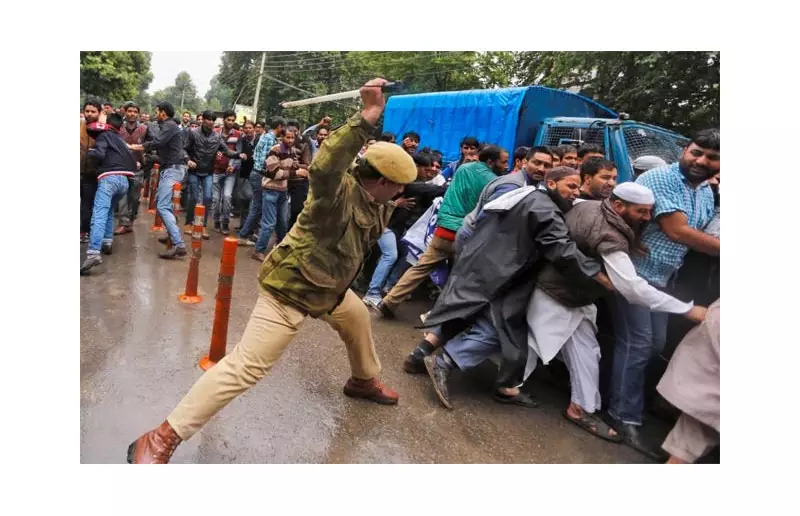
Zulfiqar Ali countered these allegations robustly. He accused India of violating Pakistan's sovereignty by attacking civilians, including children blinded by pellet guns. Ali highlighted that New Delhi fails to implement Security Council resolutions on Jammu and Kashmir and breaches the Indus Water Treaty. "The world needs no lectures on crimes against humanity from a country that is a serial violator of international law and the UN Charter and a perpetrator of atrocity crimes—in occupied Jammu and Kashmir, against minorities in India, against civilians it targets through sponsorship of cross-border terrorist attacks," he declared.
Further Accusations and Rebuttals
Ali escalated the exchange by alleging that India colludes with terrorist organizations to destabilize neighboring countries and conducts international assassination campaigns against political dissidents with impunity. He warned that due to an "unholy nexus between extremist Hindutva ideology and ruling elite," Indian minorities, especially Muslims, face an imminent threat of ghettoization.
Rejecting the assertion that Jammu and Kashmir is part of India, Ali reiterated that it remains a disputed territory under UN Security Council resolutions, pending a final solution. "Right of self-determination is the birthright of the Kashmiris as per UN Charter—a right which India solemnly promised to the Kashmiris and is yet stubbornly denying it in flagrant violation of UNSC resolutions," he emphasized.

Pakistan, Ali concluded, will continue to extend political and moral support to the Kashmiri people's freedom struggle and advocate for a UN-supervised plebiscite in Jammu and Kashmir. This diplomatic confrontation underscores the deep-seated tensions and unresolved issues that continue to shape international discourse on human rights and territorial disputes.