Iran's Existential Crisis: U.S.-Israel Offensive Tests Regime Resilience
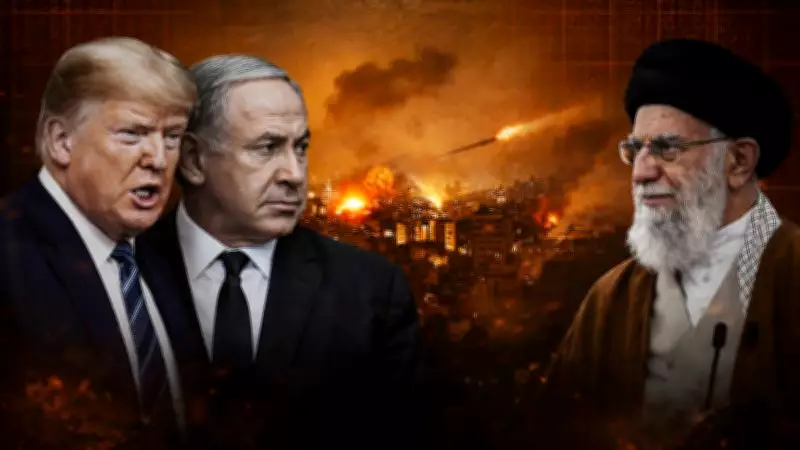
In the nearly five decades since its revolutionary establishment, the Islamic Republic of Iran has never confronted a threat to its survival as severe as the current U.S.-Israeli military campaign. The eight-year war with Iraq during the 1980s, internal revolts challenging the 1979 revolution, and decades of crippling sanctions from the United States and Western nations all failed to destabilize Iran's revolutionary government. However, the coordinated aerial and naval assault launched by American and Israeli forces on February 28 represents a profound moment of truth for Tehran, inflicting massive destruction across military and civilian targets.
Assassination and Aerial Bombardment Fail to Topple Regime
Despite the assassination of Iran's Supreme Leader Ali Khamenei in a precision strike and relentless bombing campaigns targeting key infrastructure, the revolutionary regime has demonstrated remarkable survival capabilities. The implications of this expanding conflict in the Persian Gulf are increasingly lethal, with oil prices surging dramatically and global supply chains experiencing severe disruption due to the partial closure of the strategic Strait of Hormuz.
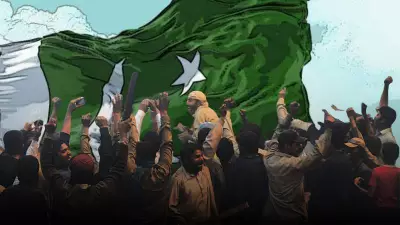
Tehran's retaliatory attacks on Saudi Arabia, Kuwait, Bahrain, and the United Arab Emirates have escalated hostilities beyond the initial U.S.-Israeli offensive, creating a regional conflagration with global economic consequences. Pakistan, sharing a border with Iran, finds itself particularly vulnerable to the strategic, political, and economic fallout from this conflict. Islamabad has invoked its defense pact with Saudi Arabia, but must carefully consider how any direct attack on Iran could trigger domestic repercussions within Pakistan.

Pakistan's Precarious Position and Domestic Pressures
Not only would Pakistan's substantial Shia population, comprising approximately twenty percent of the country, likely retaliate against any Pakistani involvement in attacks on Iran under the Saudi defense pact, but the vast majority of Pakistani citizens would strongly oppose such actions. Iran's substantial arsenal of ballistic missiles and drone technology has thus far enabled Tehran to sustain counterattacks against U.S. bases and Israeli targets, though questions remain about how long Iran can withstand the overwhelming firepower of American and Israeli forces.
The Iranian president has issued apologies to Gulf nations for attacks on their territories while simultaneously warning that Tehran will not remain passive if American bases continue launching assaults against Iran. Should Arab Gulf states decide to retaliate collectively against Iran, Tehran would face regional isolation while providing the United States and Israel with additional impetus to intensify their military campaign.
Global Power Dynamics: Russia and China's Strategic Calculations
Critical to analyzing the current U.S.-Israeli offensive against Iran is understanding the roles of Russia and China. Both major powers recognize that the crippling of Iran through regime change or forced surrender to American-Israeli demands would severely damage their strategic interests across the Middle East. Reports indicate that China and Russia are now actively providing military support to Iran, ensuring Tehran maintains sufficient defensive capabilities to withstand continued attacks.
If the Gulf war persists for several more weeks, not only could the global economy face collapse, but direct intervention by Chinese and Russian forces cannot be ruled out. This raises important questions about why Washington, despite ongoing nuclear negotiations with Iran in Geneva, succumbed to pressure from Israeli Prime Minister Benjamin Netanyahu to launch military action. The Israeli strategy to draw the United States into direct conflict with Iran represents a calculated geopolitical maneuver with far-reaching consequences.

Red Lines Crossed and Regime Survival Strategies
Unlike the limited twelve-day conflict in June 2025, the current hostilities have escalated dramatically, with both Israel and the United States crossing significant red lines by targeting Iran's political and military leadership directly. American and Israeli officials have threatened to target Khamenei's successor and continue attacks until Iran surrenders and installs a regime acceptable to Washington and Tel Aviv.
How long the Iranian populace can endure this assault remains uncertain, particularly given that prior to February 28, the Iranian regime's popularity had reached historic lows. Large-scale demonstrations against Khamenei and his government led to brutal crackdowns by the Islamic Revolutionary Guards, resulting in thousands of protester deaths. Some opposition elements view the current foreign attack as an opportunity to overthrow the clergy-led government, though historically the regime has survived both sanctions and military assaults while crushing popular uprisings.
This time, despite evident fragility, the Iranian government intends to weaponize patriotism as a survival mechanism, rallying nationalist sentiment against foreign aggression.
Three Critical Angles for Examining Iran's Moment of Truth
Regional Isolation and Diminished Influence
First, unlike previous conflicts, current hostilities extend beyond America and Israel to include nearly all Gulf states now aligned against Tehran. Iran's attacks on civilian sites in Gulf nations have amplified regional anger, with mere apologies insufficient to dilute anti-Iranian sentiments among Arab states. Iran's regional fragility is further evidenced by the loss of Syria as a reliable ally, Israeli successes against Hezbollah, the mitigation of Hamas's influence, and the Houthis' failure to exert meaningful pressure on the United States, Israel, and Saudi Arabia. This situation has significantly increased Iran's vulnerability relative to its adversaries.
Pakistan's Strategic Dilemma
Second, for Pakistan, Iran's war with Israel and the United States presents a classic devil-and-the-deep-blue-sea scenario. Surging popular sentiment in favor of Iran within Pakistan challenges Islamabad's ability to maintain neutrality. Growing perceptions suggest that once Iran surrenders, Pakistan could become the next target, particularly since Israel has explicitly identified Pakistan's nuclear program as a greater threat than Iran's. Pro-American elites in Pakistan must exercise caution when interpreting the Pakistan-Saudi defense pact as justification for action against Iran.
The United States recognizes Pakistan's economic vulnerability and heavy dependence on International Monetary Fund support and multilateral aid, factors that potentially compromise Pakistani sovereignty. Some circles within Pakistan advocate using this conflict as the "opportunity of the century" to deploy nuclear arsenal and long-range missiles against Israel, though questions remain about whether Islamabad's leadership possesses sufficient courage for such action, particularly given fears that Pakistan would become Israel's next target following Iranian surrender.
International Order Vacuum and Global Implications
Finally, the vacuum in international governance is starkly revealed through the United Nations' failure to address the crisis effectively. Not only has the UN exposed its institutional fragility, but other international organizations including the European Union have demonstrated inability to confront deadly global threats. Should the Gulf war continue for additional weeks, global economic collapse becomes increasingly likely while Chinese and Russian intervention grows more probable.
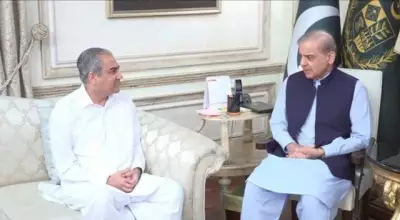
As the Muslim world's only nuclear state and the planet's fifth most populous nation, Pakistan bears significant responsibility to navigate this crisis strategically rather than placing all diplomatic eggs in one basket. Thus far, Pakistan's leadership has not demonstrated particularly prudent decision-making, with recent petrol price increases of fifty-five rupees per liter and indications of siding with the United States and Saudi Arabia against Iran potentially triggering domestic crises.
If Iran has survived nearly fifty years of sanctions and foreign attacks while maintaining resilience in its current war with Israel and the United States, why cannot Pakistan pursue a more courageous and independent foreign policy approach? The pro-Israeli stance of India's Modi regime, reinforced by his visit to Israel just days before the Gulf war outbreak, does not necessarily mandate that Pakistan adopt pro-American and pro-Saudi positions. What truly matters for Pakistan is upholding national sovereignty while addressing economic and political challenges through prudent, strategic statesmanship.