Iranian Foreign Minister to Meet UN Nuclear Watchdog Chief Ahead of Critical US Talks
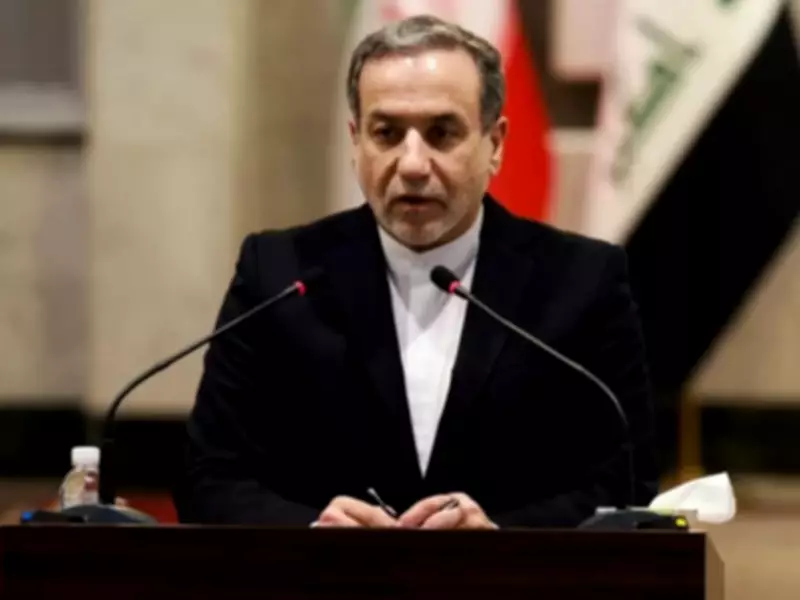
Iranian Foreign Minister Abbas Araqchi has announced he will meet with the director of the United Nations nuclear watchdog on Monday, just one day before a second round of high-stakes nuclear negotiations between Iran and the United States commences in Geneva. This diplomatic maneuver underscores the intensifying efforts to resolve a decades-long dispute over Tehran's nuclear program, even as military tensions escalate with the deployment of additional US warships, including a second aircraft carrier, to the region.
Negotiations Renewed Amidst Regional Military Buildup
Iran and the United States renewed their negotiations earlier this month, aiming to tackle their protracted conflict and avert a potential new military confrontation. The talks come at a critical juncture, with significant naval assets being mobilized. In a statement on the social media platform X, Araqchi emphasized his commitment to the process, stating, "I am in Geneva with real ideas to achieve a fair and equitable deal. What is not on the table: submission before threats." This firm stance highlights Iran's refusal to negotiate under pressure, setting the tone for what promises to be a challenging dialogue.
Diverging Agendas: Nuclear Program vs. Broader Issues
The scope of the discussions remains a point of contention. While Washington has sought to expand the talks to include non-nuclear issues, such as Iran's missile stockpile, Tehran has made it clear that it is only willing to discuss curbs on its nuclear program. In exchange, Iran demands comprehensive sanctions relief and has explicitly stated it will not accept a demand for zero uranium enrichment. This position is rooted in Iran's assertion that its nuclear program is solely for civilian purposes. The country has expressed readiness to build trust by assuring that enrichment activities are and will remain for peaceful purposes, aiming to assuage international concerns regarding nuclear weapons development.

Historical Context and Stalled Progress
Prior to the United States joining Israel in striking Iranian nuclear sites in June, previous rounds of Iran-US nuclear talks had stalled. The primary obstacle was Washington's demand that Tehran forgo uranium enrichment on its soil, a condition the US views as a critical step to prevent the development of an Iranian nuclear weapon. Iran, however, maintains that enrichment is a sovereign right for peaceful energy needs. The June strikes targeted key facilities, including Natanz, Fordow, and Isfahan, further complicating the diplomatic landscape and inspection processes.
IAEA Meeting and Inspection Challenges
Araqchi revealed that he will meet International Atomic Energy Agency (IAEA) head Rafael Grossi on Monday, accompanied by nuclear experts, for what he described as "deep technical discussions." This meeting is crucial as the IAEA has been pressing Iran for months to account for its stockpile of 440 kg of highly enriched uranium following the Israeli-US strikes and to allow full inspections to resume. While Iran permitted the UN nuclear watchdog to inspect declared nuclear facilities that were not targeted in June, it has raised concerns about the safety of the bombed sites for inspections. Tehran insists that the IAEA must clarify its stance regarding the US and Israeli strikes before full access is granted.
Failed Agreements and Sanctions Reinstatement
In September, the IAEA and Iran announced an agreement in Cairo intended to pave the way toward full inspections and verification. However, this agreement was scrapped by Tehran after Western powers reinstated UN sanctions on Iran, highlighting the fragile nature of diplomatic accords in the face of geopolitical pressures. This history of broken agreements adds a layer of complexity to the upcoming talks, as both sides navigate a path forward amidst mutual distrust and external military posturing.
As the world watches, the outcome of these negotiations could significantly impact regional stability and global non-proliferation efforts. The meeting between Araqchi and Grossi serves as a precursor to the broader US-Iran dialogue, where the stakes could not be higher.