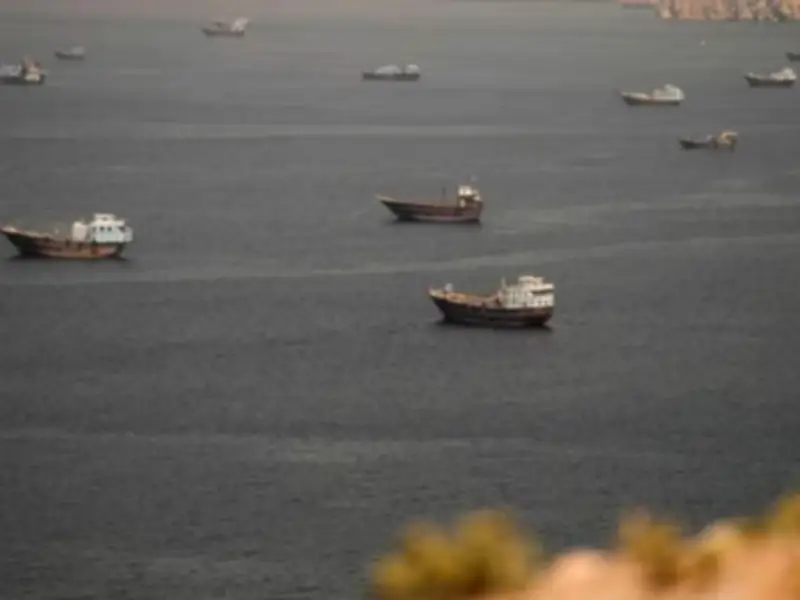
Iran's state television announced on Thursday that the passage of ships through the Strait of Hormuz still requires coordination with Tehran. The broadcaster stated that the Islamic Revolutionary Guard Corps (IRGC) continues to enforce the condition that vessels must coordinate with its naval forces to transit the waterway.
US-Iran Memorandum of Understanding
On Wednesday, Iranian President Masoud Pezeshkian and US President Donald Trump signed a memorandum of understanding aimed at ending the war between Tehran and Washington that began in late February. According to the terms published by Iran's state news agency IRNA, Tehran will make its utmost efforts to ensure the safe passage of commercial vessels, free of charge for 60 days, between the Gulf and the Gulf of Oman.
The document states: "Commercial shipping will resume immediately and, subject to the removal of technical and military obstacles and mine-clearing operations by Iran, will be fully restored within 30 days. Iran will hold discussions with the Sultanate of Oman regarding the future administration and maritime services of the Strait of Hormuz in accordance with applicable international law and the sovereign rights of the littoral states, and will also consult with other Gulf littoral states."

In return, the United States will lift its naval blockade on Iranian ports. The war began on February 28 when the US and Israel initiated hostilities, leading Iran to close the Strait of Hormuz. On April 13, American forces imposed a blockade on Iranian ports, severely restricting commercial shipping through the critical waterway.
Immediate Impact on Oil Markets
Hours after the deal was signed, three Saudi-flagged supertankers carrying six million barrels of crude oil sailed through the Strait of Hormuz. Although shippers indicate it will take time for transit to reach pre-war levels due to the need for safe access and mine clearance, immediate signs of impact emerged. Ships that previously concealed their positions by disabling transponders are now broadcasting their locations, ready to transit the strait.
Benchmark Brent crude futures prices fell by another 2% to below $78 a barrel, the lowest level since the conflict began. The memorandum initiates a 60-day negotiation period to reach a final settlement to the war, which Trump launched in February alongside Israeli Prime Minister Benjamin Netanyahu.