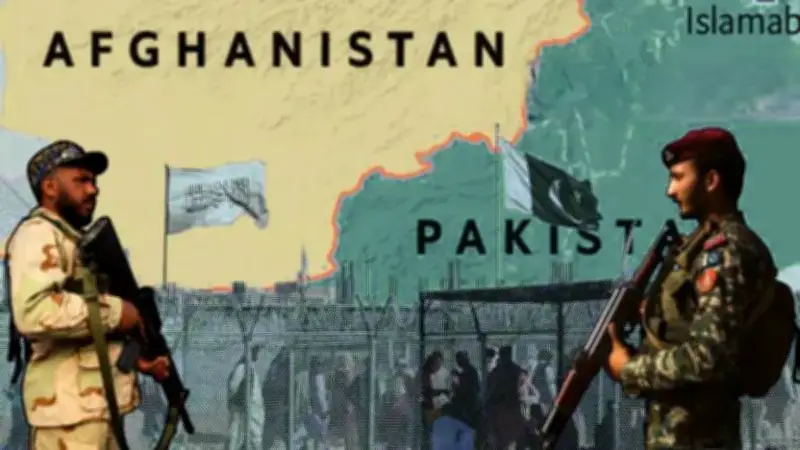
The latest visit of Chinese Special Representative Yue Xiaoyong to Islamabad and Kabul has once again highlighted the central challenge confronting Afghanistan's neighbours. Despite periodic improvements in Pakistan-Afghanistan relations, the core issue remains unresolved: whether Afghan territory will continue to serve as a base for terrorist groups targeting neighbouring states. The discussions surrounding the visit reportedly focused on counterterrorism cooperation and regional stability. For Pakistan, the principal concern remains TTP. For Beijing, it is ETIM and other extremist groups capable of threatening Chinese interests. This convergence explains why Beijing continues to invest diplomatic effort in managing tensions between Islamabad and Kabul. It also reflects a broader regional understanding that Afghanistan's future cannot be separated from the security concerns of its neighbours.
Timing and Geopolitical Context
The timing is significant because it coincides with the recent Russia-Afghanistan military-technical cooperation agreement. Some commentators have portrayed the agreement as a major geopolitical realignment. The facts speak to the contrary. Russia’s special envoy and the Taliban defence minister have described the arrangement primarily in technical terms, involving maintenance and refurbishment of existing equipment rather than the creation of a new military partnership. More importantly, Russia's concerns regarding Afghanistan increasingly revolve around terrorism, instability and the threat posed by extremist groups operating across the wider region. The real significance of these developments lies elsewhere. They illustrate how Afghanistan's neighbours increasingly share common concerns regarding security and terrorism, even when they differ on other geopolitical issues. Pakistan, China and Russia may not agree on everything, but all three have a strong interest in preventing Afghanistan from once again becoming a source of regional instability. The United States is also broadly against terrorism.
Pakistan's Deep Personal Investment
For Pakistan, however, the Afghanistan question has acquired a deeply personal dimension. Few countries have invested more in Afghanistan's stability than Pakistan. For more than four decades, Pakistan absorbed the consequences of war across the border. Millions of Afghan refugees found shelter, employment, education and healthcare in Pakistan. Entire generations grew up in Pakistani cities and towns. The social and economic burden was substantial, yet successive governments largely accepted it because they viewed Afghanistan's stability as closely connected to Pakistan's own security. Pakistan also consistently advocated political engagement with the Taliban when many countries preferred exclusion. Long before the United States and NATO concluded that a military victory was unattainable, Islamabad argued that any durable settlement would require accommodation with the Taliban. Even after 2001, Pakistan repeatedly supported efforts aimed at political reconciliation rather than permanent confrontation.

These positions came at a considerable diplomatic cost. Pakistan spent years confronting accusations that it was pursuing a selective approach towards terrorist groups. Yet even after the Taliban returned to power in 2021, Islamabad continued to advocate engagement. Pakistan welcomed the end of a twenty-year war, facilitated humanitarian assistance and encouraged regional and international engagement with the new authorities in Kabul. The expectation was not domination over Afghanistan or control of its foreign policy. Pakistan's primary interest was stability. A peaceful Afghanistan offered prospects for regional connectivity, expanded trade and improved access to Central Asian markets. Equally important, it promised a reduction in the security pressures that had burdened Pakistan's western frontier for decades.

Resurgence of TTP Violence
Instead, Pakistan witnessed a sharp resurgence of TTP violence. The years following the Taliban's return to power saw some of the deadliest terrorist attacks inside Pakistan in nearly a decade. Attacks in Islamabad, Bajaur, Bannu and elsewhere reinforced the belief within Pakistan's security establishment that Afghan territory continued to provide operational space for groups targeting Pakistan. Repeated assurances from Kabul failed to convince many policymakers that the problem was being addressed with sufficient seriousness. As a result, the debate inside Pakistan has changed fundamentally. The issue is no longer whether the Taliban possess the capability to act against TTP elements. Few observers doubt that the Taliban exercise substantial authority across most of Afghanistan. The question increasingly concerns willingness. Pakistan now judges progress less by public statements and more by tangible outcomes, particularly reductions in cross-border attacks and visible action against terrorist networks.
This experience has transformed Pakistani expectations. For several years after 2021, Islamabad largely pursued accommodation. It encouraged dialogue, supported mediation efforts and accepted repeated assurances that improvements would eventually materialise. The continuation of terrorist attacks, however, gradually eroded confidence in that approach. Pakistan's subsequent military responses earlier this year reflected a broader shift towards deterrence. The objective was not escalation for its own sake but the establishment of clear consequences for attacks traced to terrorist sanctuaries across the border. Against this backdrop, terrorism has emerged as Pakistan's foremost concern in Afghanistan. Islamabad can accommodate differences over governance, diplomacy and regional politics. It cannot accept the continued use of Afghan territory by terrorist groups carrying out attacks inside Pakistan. No government can ignore a threat that directly affects the lives and security of its citizens.
India's Role as a Growing Concern
Alongside terrorism, a second concern has become increasingly prominent in Pakistani strategic thinking. It relates to India's evolving engagement with the Taliban authorities. Pakistan does not object to normal diplomatic and economic relations between Afghanistan and India. Sovereign states are entitled to maintain relations with whomever they choose. Trade, development assistance, educational cooperation and diplomatic exchanges are ordinary features of international politics. What attracts attention in Islamabad is the possibility that Afghanistan could gradually become a second front against Pakistan's western frontier while tensions with India remain a permanent feature of the eastern border. This concern is rooted in geography and security rather than ideology. States naturally seek to avoid situations in which they face simultaneous security challenges from multiple directions. India's extensive presence in Afghanistan before 2021 and its continuing efforts to maintain influence there therefore remain subjects of close interest in Pakistan. The issue is not whether India and Afghanistan should have relations. The issue is whether those relations remain within normal diplomatic and economic boundaries or evolve into arrangements with broader security implications.
Future of Pakistan-Taliban Relations
From Islamabad's perspective, terrorism and India's future role in Afghanistan represent the two issues most likely to shape the future of Pakistan-Taliban relations. The first concerns an immediate threat that has already cost hundreds of Pakistani lives. The second concerns the longer-term strategic environment in which Pakistan will have to operate. China's recent diplomatic efforts demonstrate that alternatives to confrontation still exist. The Urumqi process and subsequent engagement helped prevent further deterioration in relations earlier this year. Trade has resumed, dialogue has continued, and tensions have eased compared with the crisis months of February and March. These developments suggest that cooperation remains possible when both sides perceive benefits from stability.
Yet diplomacy alone cannot resolve the issues that matter most to Pakistan. After four decades of hosting refugees, supporting Afghan reconciliation and absorbing the costs of regional instability, Islamabad's expectations have become remarkably limited. Pakistan is not asking Afghanistan to align with its foreign policy preferences or restrict its sovereign choices. It seeks assurances on two matters that any state would regard as fundamental to its security: that Afghan territory will not be used for terrorism against Pakistan, and that Afghanistan will not become a source of strategic pressure against Pakistan through security arrangements with India directed at it. The future of Pakistan-Taliban relations will depend less on diplomatic rhetoric than on how these concerns are addressed in practice. Progress on both fronts would create opportunities for expanded trade, regional connectivity and a more stable relationship between two neighbours whose futures remain closely intertwined. Failure to address them, however, would ensure that mistrust and periodic confrontation continue to dominate one of the region's most important bilateral relationships.