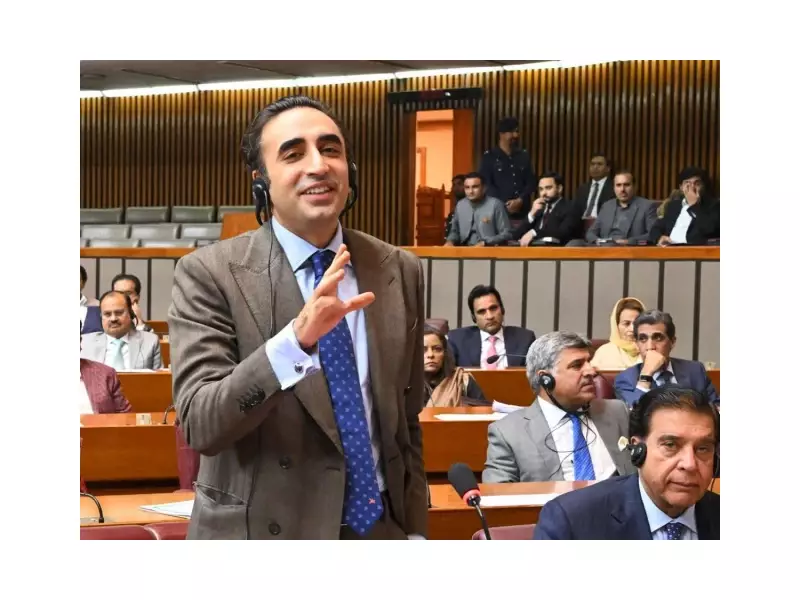
Pakistan Peoples Party Chairman Bilawal Bhutto-Zardari has issued a stern warning to political opponents, declaring that not even the most powerful forces can reverse the landmark 18th Constitutional Amendment. The young political leader made these bold statements during a public gathering, firmly establishing his party's position on one of Pakistan's most significant constitutional reforms.
The Unshakeable Constitutional Foundation
Bilawal Bhutto-Zardari emphasized that the 18th Amendment has become an integral part of Pakistan's constitutional framework, making it virtually impossible to dismantle. The constitutional amendment, passed in 2010 during the PPP-led government, represents one of the most comprehensive reforms in Pakistan's political history. It fundamentally reshaped the relationship between the federal government and provinces, granting greater autonomy and resource distribution.
The PPP chairman specifically addressed those political elements who have been vocal about reviewing or reversing the amendment. Without naming specific parties or individuals, he made it clear that any attempt to undermine this constitutional achievement would face fierce resistance. His statements come at a time when certain political quarters have been questioning the amendment's implementation and suggesting revisions.

Historical Context and Political Significance
The 18th Amendment holds particular significance for the Pakistan Peoples Party, as it was enacted during their government under former President Asif Ali Zardari. This constitutional reform eliminated the controversial Concurrent Legislative List, transferring numerous powers from the federal government to provincial administrations. This decentralization was seen as a crucial step toward addressing long-standing grievances of smaller provinces regarding resource distribution and political autonomy.
Bilawal highlighted how the amendment has strengthened federation unity by ensuring provinces receive their rightful share of resources and decision-making authority. He pointed to the National Finance Commission awards and enhanced provincial control over various administrative matters as evidence of the amendment's successful implementation. The PPP chairman argued that these changes have created a more balanced federation where all provinces feel adequately represented and empowered.
Current Political Implications
The strong defense of the 18th Amendment comes amid ongoing political discussions about constitutional reforms and power distribution. Bilawal's statements position the PPP as the guardian of provincial rights and constitutional democracy. This stance particularly resonates with Sindh province, where the party has maintained a strong political base and where provincial autonomy remains a sensitive issue.
Political analysts see this as a strategic move by Bilawal to distinguish his party's position from other political forces that have expressed reservations about certain aspects of the 18th Amendment. By taking an uncompromising stance, the PPP chairman aims to consolidate his party's support in smaller provinces while presenting himself as a defender of constitutional rights and federal principles.
The timing of these statements is significant, as they come during a period of political realignment and preparation for upcoming electoral contests. Bilawal's forceful defense of the constitutional amendment signals his intention to make provincial autonomy and constitutional rights central themes in his party's political campaign. This position not only honors his party's legacy but also appeals to voters who prioritize provincial rights and resource distribution.
As the political landscape continues to evolve, the 18th Amendment remains a cornerstone of Pakistan's constitutional framework, and Bilawal Bhutto-Zardari has made it clear that his party will vigorously oppose any attempts to weaken this historic achievement. The stage is set for continued political debate around constitutional reforms and the balance of power between federal and provincial governments.