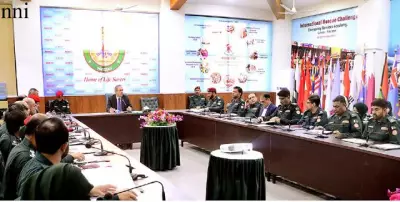
A major international conference focused on weaving nutrition into social safety nets kicked off in Islamabad on Wednesday. The three-day gathering, organized under the Global Task Force on Social Protection for Nutrition, brings together policymakers and experts to tackle malnutrition through smarter social policies.
Global Knowledge Exchange for Healthier Futures
The event is jointly hosted by the Governments of Pakistan and Timor-Leste. The United Nations World Food Programme (WFP), which acts as the Secretariat for the Global Task Force, is facilitating the collaboration. Delegates from Bangladesh, Cambodia, Lao PDR, Nepal, Niger, Timor-Leste, and Pakistan are participating in the summit to share lessons, evidence, and innovative practices.
The core objective is to foster a stronger shared commitment to making national social protection systems more focused on improving nutrition. Participants will examine practical case studies, explore new methodologies, and pinpoint actionable steps to speed up progress in the fight against malnutrition both within their countries and worldwide.

Pakistan's Leadership and the Benazir Nashonuma Model
As the host nation, Pakistan is highlighting its pioneering role in this field. The country is presenting the Benazir Income Support Programme (BISP) as a globally recognized model for reducing poverty with a nutrition-sensitive approach. A flagship initiative under BISP, the Benazir Nashonuma Programme, launched in 2020 with support from WFP, UNICEF, and WHO, was a central point of discussion.
This program specifically aims to prevent stunting—impaired growth and development in children caused by poor nutrition. It provides targeted support to pregnant women, breastfeeding mothers, and children under two years old during the critical first thousand days of life.
High-Level Endorsements and Calls to Action
A message from President Asif Ali Zardari was read at the conference, emphasizing that integrating nutrition into social protection marks a significant achievement. "At the core of this effort is a simple conviction: no child should face malnutrition, no mother should be without care, and no family should endure hardship alone," the President's statement noted, framing the fight against malnutrition as a key development priority for all nations.
Rubina Khalid, Chairperson of BISP, stated the program's intent to sustain and expand its efforts in coordination with provincial authorities. "This positive momentum must be maintained, as the health of today’s children shapes the promise of generations yet unborn," she affirmed.
Coco Ushiyama, WFP Representative and Country Director in Pakistan, pointed to Pakistan's experience as proof that merging social protection with nutrition is not only feasible and impactful but also cost-effective. She stressed that such success hinges on sustained political will and predictable financing.
On behalf of the President of Timor-Leste and Chair of the Global Task Force, Ceu Brites, Vice Minister of Social Security and Inclusion, thanked Pakistan for hosting and for its leadership. She also acknowledged the support of the Government of France. "Let us move from ideas to impact - from commitment to collective action. Together, we can create a world where no mother, no child, and no family are left behind," she urged the delegates.