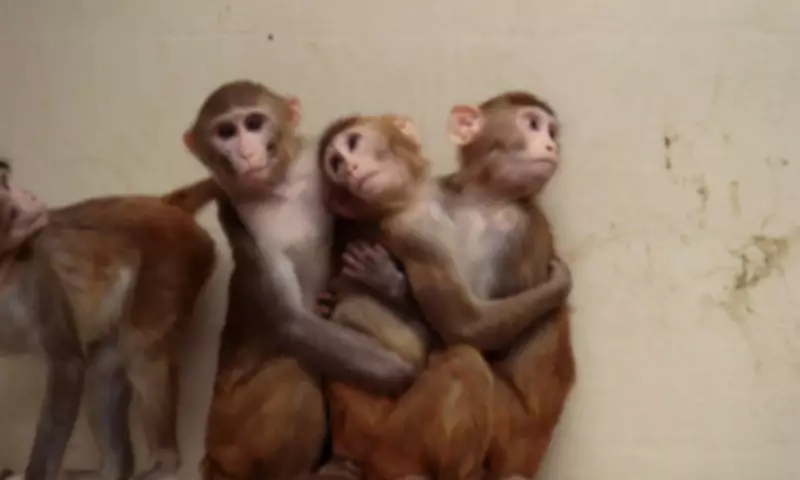
The Future of Lab Monkeys in Scientific Research
In a significant shift for the scientific community, the use of lab monkeys in research could soon become a relic of the past. This potential change is driven by a combination of ethical considerations, technological advancements, and evolving regulatory standards that are reshaping how experiments are conducted globally.
Ethical and Technological Drivers for Change
For decades, lab monkeys have been a cornerstone of biomedical and psychological research, providing critical insights into human diseases and behaviors. However, growing public awareness and ethical debates over animal welfare have intensified pressure on researchers to find humane alternatives. Organizations and activists worldwide are advocating for the reduction and eventual elimination of animal testing, citing concerns about suffering and the moral implications of using sentient beings in experiments.
Simultaneously, rapid technological progress is offering viable substitutes that could render lab monkeys obsolete. Innovations such as organ-on-a-chip systems, advanced computer simulations, and human cell-based models are becoming increasingly sophisticated, allowing scientists to study complex biological processes without relying on live animals. These alternatives not only address ethical issues but also offer potential benefits in terms of cost-effectiveness, reproducibility, and relevance to human physiology.

Impact on Research and Regulatory Landscape
The move away from lab monkeys could have profound implications for various fields, including drug development, neuroscience, and toxicology. Researchers are exploring how these new methods can replicate or even surpass the data obtained from traditional animal studies. For instance, microfluidic devices that mimic human organs can provide more accurate predictions of drug responses, reducing the risk of failures in clinical trials.
Regulatory agencies are also adapting to this shift. In some regions, policies are being updated to encourage the adoption of alternative testing methods, with guidelines that prioritize non-animal approaches where scientifically valid. This regulatory evolution is crucial for accelerating the transition, as it provides a framework for validating and integrating new technologies into standard research practices.
Challenges and Future Prospects
Despite the promising advancements, challenges remain in fully replacing lab monkeys. Some areas of research, such as certain neurological studies, still rely on primate models due to their close genetic and physiological similarities to humans. Scientists caution that a complete phase-out may not be feasible in the short term, emphasizing the need for a gradual transition that ensures scientific rigor and safety.
Looking ahead, the trend suggests a steady decline in the use of lab monkeys, with increased investment in alternative technologies. Collaborative efforts between academia, industry, and regulatory bodies will be key to driving this change forward. As these innovations mature, the scientific community may witness a paradigm shift where animal testing becomes the exception rather than the norm, marking a new era in ethical and effective research.