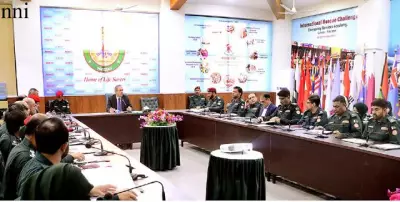
Pakistan commemorated World AIDS Day 2025 this Monday with a powerful emphasis on harnessing the potential of its young population to combat the HIV epidemic. The central event, a Youth Symposium on HIV Prevention in Islamabad, served as a platform for national and international leaders to issue a stark warning: silence and exclusion continue to drive the spread of the virus in the country.
A Collective Call for Youth Action and Inclusivity
The symposium was a collaborative effort, organized by the United Nations Population Fund (UNFPA), the Common Management Unit for AIDS, TB & Malaria (CMU) of the Ministry of National Health Services, Regulations and Coordination (MoNHSR&C), UNAIDS, and ACT International. It united a diverse group of government officials, UN agency representatives, educators, civil society organizations, and young community leaders. Their collective message underscored the indispensable role of informed and empowered youth in shaping effective HIV prevention and response strategies for Pakistan.
Dr. Luay Shabaneh, the UNFPA Country Representative, addressed the gathering by highlighting Pakistan's unique demographic position. "Young people constitute nearly 64 percent of Pakistan's population," he stated, framing this as both a challenge and a monumental opportunity. He asserted that their energy, innovation, and leadership are critical to achieving the goal of an HIV-free future by 2030. Dr. Shabaneh cautioned that while global trends show a decline, Pakistan is still grappling with concentrated epidemics among key and marginalized groups. He identified stigma and silence as the primary barriers to testing and treatment, declaring, "The greatest threat to progress is not the virus itself, but the silence surrounding it."

From Awareness to Action: Education and Treatment Landscape
A significant focus of the event was on moving beyond simple awareness campaigns. Mubashar Nabi, Founder President of ACT International, led a technical session advocating for comprehensive Life Skills-Based Education (LSBE). He argued that true HIV prevention involves practical skills like decision-making, communication, consent, and empathy. Nabi announced a major milestone: with support from UNFPA and ACT, Pakistan's Ministry of Education has approved an LSBE curriculum for students from Grades 1 through 12. Pilot programs have already made substantial progress, reaching over 5,000 students, training 4,675 teachers, engaging 9,000 community members, and providing specialized education to 1,000 transgender youth.
Dr. Abdul Wali, Director General Health at MoNHSR&C and Deputy National Coordinator at CMU, provided a sobering overview of the national HIV situation. He revealed that an estimated 350,000 people are living with HIV in Pakistan, with a staggering 80 percent unaware of their status. He expressed particular alarm over the rise in pediatric cases, noting that new infections in children aged 0–14 years surged from 530 in 2010 to 1,800 in 2023. Despite this, Dr. Wali pointed to notable advances in treatment access. The number of people receiving antiretroviral therapy (ART) has increased eightfold in the past decade, from 6,500 in 2013 to 55,500 in 2024. Concurrently, ART centers have expanded nationwide from just 13 in 2010 to 96 in 2025.
Bridging Gaps and Mobilizing Communities
Muhammad Aslam Ghouri, Special Secretary at MoNHSR&C and the event's chief guest, reaffirmed the government's commitment to people-centered interventions to end AIDS. However, he candidly acknowledged significant gaps in the current response. In 2024, only 21 percent of people living with HIV knew their status, a mere 16 percent were on treatment, and just 7 percent had achieved viral load suppression. The year also saw over 1,100 reported AIDS-related deaths. "The surge in new infections, particularly among children, threatens not only individual lives but the country's future," he warned, calling for intensified collaboration and increased mobilization of domestic and international resources.

The symposium ensured community voices were heard. Aaira Malik, a young transgender community member, presented grassroots experiences in HIV prevention and mobilization among key populations. The event concluded with a panel discussion on youth leadership and education, followed by a theatrical performance designed to challenge stigma and build empathy.
As Pakistan observed World AIDS Day 2025, the consensus among all stakeholders was clear: ending AIDS as a public health threat requires sustained collective action, meaningful engagement of the youth, and policies that leave no one behind. The path forward hinges on turning the current demographic challenge into Pakistan's greatest asset in the fight against HIV.