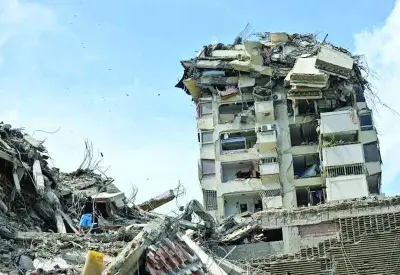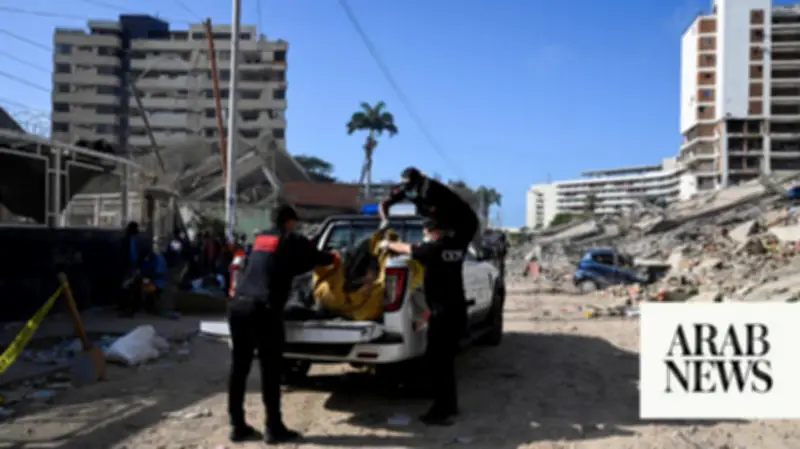
The death toll from Venezuela's powerful earthquakes has climbed to 1,430, with more than 50,000 people reported missing, as rescue crews raced against time on Saturday, over 72 hours after the first tremor struck. The 72-hour window for finding survivors is considered critical by experts, after which the search shifts to recovering bodies.
Rescue Operations and Survivors
An 11-year-old boy was pulled alive from the rubble in Caraballeda, northern Venezuela, late Saturday, interim leader Delcy Rodriguez announced. "Every life is a source of hope for Venezuela," she said in a post on X, sharing a video of the rescue. Earlier, locals in the hardest-hit coastal area of La Guaira rescued a newborn infant around 32 hours after the quakes. In a social media video, a man was seen weeping as he held the baby.
However, a Salvadoran rescue worker who declined to give his name expressed grim realism: "At this point, they are probably dead bodies. Thanks to God maybe we can find people still alive." Australian firefighter Craig Demeillon, 43, who traveled alone from Miami to help, described the situation as "very chaotic, hot and unorganized." He added, "Hopefully there's more people to find."

Scale of Destruction
The twin quakes, of magnitudes 7.2 and 7.5, struck on Wednesday, devastating cities already battered by economic crisis and political upheaval following the US capture of authoritarian leader Nicolas Maduro in January. National Assembly President Jorge Rodriguez reported 1,430 dead and 3,238 injured. The UN estimated $6.7 billion in physical damage, equivalent to six percent of Venezuela's GDP.
UN aid chief Tom Fletcher told AFP the death toll could continue to soar, with more than 50,000 missing. The UN migration agency determined that "up to 6.76 million people could be affected," requiring emergency shelter, safe water, sanitation, health care, protection, and essential relief items.
International Aid and Government Response
Interim leader Delcy Rodriguez thanked other countries for aid. The United States said one runway at Simon Bolivar International Airport was partially functioning to receive C-17 military planes, while a naval ship arrived off the coast. The US deployed a disaster response team of over 250 personnel, including three search-and-rescue units with dogs trained to locate trapped people. Twenty-one countries were sending search-and-rescue teams, according to parliament chief Rodriguez.
Rodriguez said she spoke with US President Donald Trump and Secretary of State Marco Rubio, who "reaffirmed their commitment to supporting the response efforts."
Public Anger and Logistical Hurdles
Venezuelans, already suffering from years of economic collapse and the US intervention to oust Maduro, expressed fury at the government's response. Yessica Mendoza, 43, transported her daughter Yesimar Rodriguez, 25, and son-in-law Jhomel Anaya, 26, to a Caracas morgue after they died when their home collapsed in La Guaira. "We were the ones who pulled them out ourselves. No help ever came," she told AFP. The couple would be cremated without a wake due to rapid decomposition.
The government restricted access to La Guaira state, deployed the military, and required volunteers to obtain safe-entry passes. Outside a concert hall in Caracas, angry volunteers waited in line. "You need a permit to save lives — just imagine," complained Carlos Itriago, 27. Ezequiel Rivero, 53, said, "I've been here since dawn standing in line so I can go rescue people. Look at what time it is … how many lives have we already lost by now?"
Historical Context and Casualties
Venezuela's worst earthquakes in over a century come after more than a decade of economic collapse that hollowed out hospitals and public services, driving millions to emigrate. The country remains in a fragile political transition six months after the US ouster of Maduro. For comparison, quakes of similar magnitude claimed over 200,000 lives in Haiti in January 2010 and 73,000 in Kashmir in October 2005. Among the dead in Venezuela were 28 Portuguese nationals, six Spaniards, two Brazilians, seven Chinese, one Chilean, one Italian-Venezuelan, and one Uruguayan.