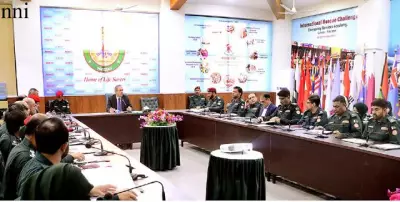
In a landmark move for the nation's healthcare sector, Pakistan on Tuesday officially opened its first completely digital and paperless Basic Health Unit (BHU) in the Gokina area of Islamabad. This pioneering facility represents a significant stride in the government's plan to modernize primary healthcare delivery across the country by harnessing digital technology.
A Silent Revolution in Primary Care
The new health center was launched under the Federal BHU Digitalization Program, a collaborative effort between the Ministry of National Health Services, Regulations and Coordination and the telehealth platform Sehat Kahani. The core objective is to weave telemedicine-enabled primary care into the public health framework, thereby expanding access to quality medical services for underserved communities and alleviating the immense strain on the country's overcrowded major hospitals.
Federal Health Minister Syed Mustafa Kamal, speaking at the inauguration ceremony, hailed the telemedicine initiative as a "silent revolution" within the health sector. He presented it as a powerful and effective alternative to the traditional primary healthcare model that has struggled to meet public needs.

"This marks a major milestone for telemedicine in Pakistan," Minister Kamal stated. He emphasized that digital healthcare solutions are crucial for bridging the persistent gaps in both primary and secondary care levels. The minister pointed out a critical issue: nearly 70 percent of patients who visit large hospitals could and should receive treatment at basic health centers. However, the absence of a robust primary care system has consistently forced patients toward tertiary care facilities.
How the Digital-First BHU Operates
The digital BHU in Gokina transforms the patient experience from start to finish. It features a comprehensive paperless system that includes:
- Electronic patient registration.
- Video-based teleconsultations with qualified general physicians and specialists.
- Secure electronic medical records (EMRs).
- Digital prescriptions generated after online consultations.
On-site nursing staff support the operations, and prescribed medicines are dispensed directly at the facility following the virtual doctor's consultation. This integrated model ensures continuity of care within the community.
Minister Kamal revealed that this model is being expanded, with telemedicine systems currently being installed at six locations in Islamabad and four in Karachi. For the Islamabad centers alone, a pool of 18 doctors is available to conduct online video examinations for patients. He expressed confidence that this initiative would progressively reduce the overwhelming burden on both public and private hospitals.
Empowering Doctors and Building a Sustainable Ecosystem
Beyond patient access, the minister highlighted another transformative potential of telemedicine: reintegrating inactive medical professionals, particularly female doctors who face barriers to practicing in conventional clinical settings. "Through telemedicine, they can treat patients from their homes," Kamal noted, optimistically adding, "This is just the first drop of rain."
Dr. Sara Saeed Khurram, Co-founder and CEO of Sehat Kahani, described the initiative as a transformative shift for primary healthcare, enabling faster access to qualified doctors and fostering better health coordination at the community level. Her colleague, Dr. Iffat Zafar Aga, Co-founder and COO, stated that the digital model enhances accountability and operational efficiency, and is designed for nationwide scalability.
The inauguration was attended by senior federal and district health officials, leadership from Sehat Kahani, community representatives, and media personnel. Officials collectively framed the project as a foundational step toward building a connected, data-driven, and sustainable primary healthcare ecosystem for Pakistan's future.