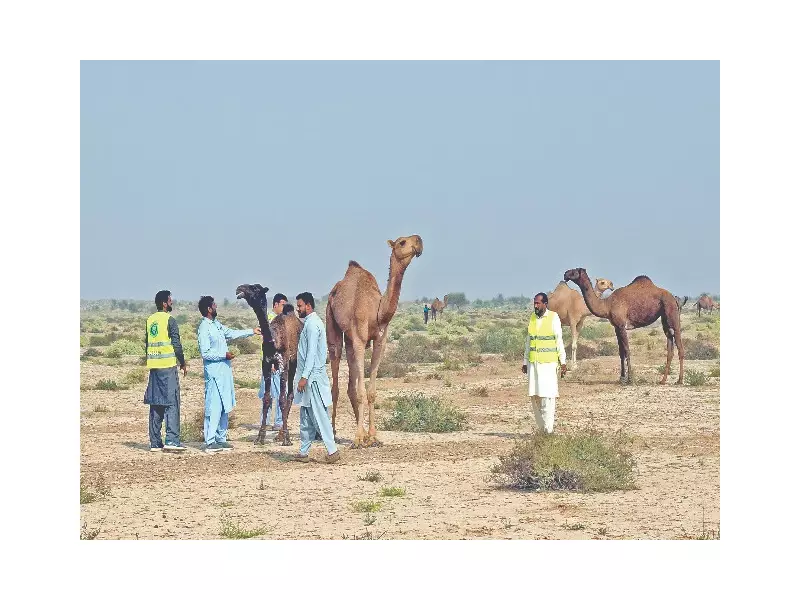
A mysterious illness that has been plaguing camels in the vast Cholistan Desert has now been officially identified. The National Institute of Health (NIH) in Islamabad has confirmed the pathogen as the deadly Gul Ghoto virus.
The breakthrough came after the Livestock Department collected and sent numerous samples from infected animals across different desert areas. These samples, which included blood, saliva, and tissue, were analyzed in detail at the NIH laboratories.
Symptoms and Alarming Spread
The official NIH report details that the Gul Ghoto virus attacks the respiratory system of camels. Infected animals suffer from severe symptoms, including a swollen throat, persistent coughing, and significant difficulty in breathing. In the most critical cases, the infection can completely stop the animal's ability to breathe, resulting in death.

Field teams from the Livestock Department have been working tirelessly, having already examined more than 12,000 camels in the region. Their efforts have confirmed that over 1,100 animals are displaying clear signs of the disease, such as high fever, extreme lethargy, loss of appetite, and laboured breathing.
Emergency Response and Conflicting Death Tolls
In response to the confirmed outbreak, emergency campaigns for vaccination and treatment are now actively underway. Teams are reaching out to the most remote parts of Cholistan to contain the virus's spread. Authorities are also focusing on educating camel owners about crucial precautionary measures, emphasizing the isolation of sick animals, timely vaccination, and maintaining proper hygiene.
However, there is a significant discrepancy in the reported mortality figures. While official reports confirm 10 camel deaths due to Gul Ghoto, local herders and sources on the ground claim the number is much higher, stating that over two dozen camels have already been lost to the disease. This disparity raises serious questions about the true scale of the outbreak.
The Livestock Department has stated that vaccines for Gul Ghoto are locally produced within Pakistan. Despite this, officials have admitted that a delayed administration of immunization has been a major challenge in controlling the disease swiftly and effectively.
Ongoing Efforts and Economic Impact
Officials are emphasizing that continuous surveillance and rapid response measures are being maintained to minimize losses. They have reassured the public that all necessary steps are being taken to control the situation and prevent further fatalities. With the outbreak now officially confirmed, livestock authorities are coordinating closely with field teams and local herders to implement all emergency interventions.
Further laboratory studies are also being conducted to better assess the virus's spread and its severity. The health of these livestock is critically important, as camels are a vital economic resource for the communities living in the Cholistan region.