Syed Hashmi (1926–1978) made enduring contributions to Balochi literature across fiction, poetry, lexicography, linguistics, aphorism writing, and letter writing. His greatest achievement was a decisive paradigm shift in the Balochi ghazal during the early 1950s.
Challenging the Progressive Dominance
In the early 1950s, the Progressive Writers’ Movement dominated Balochi poetry. Poets like Mir Gul Khan Naseer and Azad Jamaldini preferred the nazm for its flexible form, addressing social injustice, poverty, hunger, and oppression. Syed Hashmi, however, expressed these themes through a distinctly original Balochi sensibility, deeply rooted in native idiom and cultural expression, avoiding Persianised or Urduised modes.
First Anthology and New School
Syed’s first anthology, Angar o Trongal (Ember and Hail), published in 1962, introduced an almost entirely new mode of expression. It laid the foundation for a new school of Balochi ghazal emphasizing linguistic purity through chaste Balochi vocabulary and clarity of thought. He enriched his poetry with words that had nearly fallen into disuse.

Collected Works Published
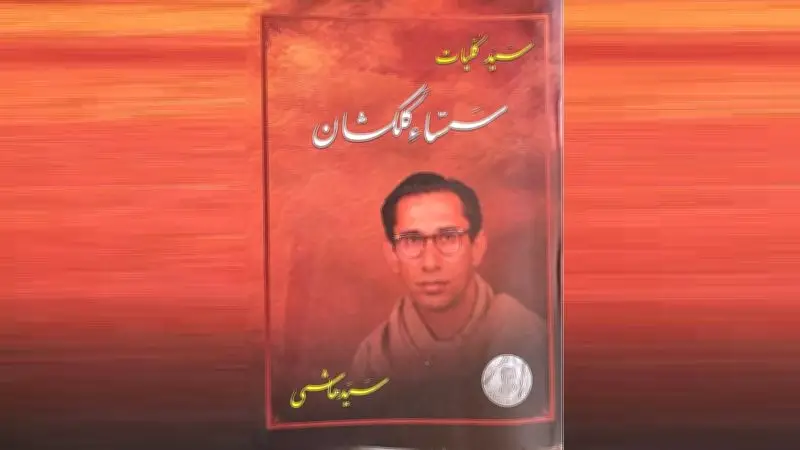
Syed’s complete poetic corpus consists of six collections—three published during his lifetime and three posthumously. These volumes had long been out of stock. In 2024, on the occasion of Syed’s first birth centenary, Syed Hashmi Academy Gwadar published all six as a collected works edition, Sassa ay Kahkashan (The Constellation of Thoughts).
Linguistic Command and Imagery
Syed was an accomplished linguist and lexicographer with profound command over vocabulary and linguistic nuance. The range and richness of his poetic diction surpass all contemporaries. He advocated for pure Balochi vocabulary, drawing from Eastern poetics yet maintaining a distinctly Balochi style. His poetry employs indigenous metaphors, paradox, alliteration, and wordplay, transforming emotional states into vivid metaphors often drawn from nature and celestial imagery.
For example, his verses depict the beloved with such depth that earthly love and spiritual devotion blur. In Hanulay Sada (An Ode to Hanul), he writes: “I merely hinted at Hanul’s splendor and grace / Fairies burned, reduced at once to ash / The houris turned to God with plaintive face / Her eyes—two springs of Divine light.”
Political Undertones in the Ghazal
While other poets used nazm for political expression, Syed wove themes of politics, social transformation, resistance, and resilience within the traditional ghazal canvas. His couplets carry political undertones: “Unyielding are the nations, their harvest born to endure. / They deemed the sapling rent asunder, yet life budded forth once more.”
Culmination of Vision
Syed’s final collection, Gesed Gowar (Citrine Rain), published in 2005, differs significantly in theme and expression. It is a long poem in ghazal form divided into sub-sections, starting with a Balochi translation of Surah al-Fatihah and reflections on sacred texts like the Avesta, Mahabharata, Torah, Bible, and Quran. It includes tributes to poets such as Imru' al-Qais, Rumi, Hafiz, and Mirza Ghalib, and explores history, geography, philosophy, and self-reflection.
According to Fazal Baloch, a Balochi writer and translator, “The collected poetry of Syed constitutes one of the most significant literary contributions published in the twenty-first century.”