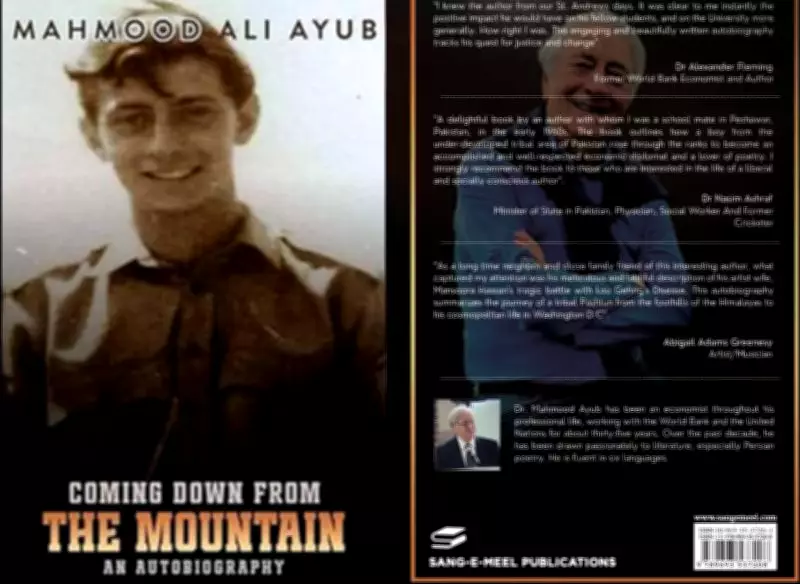
Ambassador Brohi's Insightful Review of Mahmood Ali Ayub's Memoir
Ambassador Muhammad Alam Brohi's commentary on Coming Down from the Mountain presents Mahmood Ali Ayub's memoir as a profound professional autobiography. This work traces an extraordinary journey from the rugged heights of the Kurram Mountains to the polished corridors of international finance at the World Bank.
A Life of Remarkable Transitions and Global Impact
The arc of Ayub's life is striking, moving from a remote tribal upbringing to higher education abroad and a distinguished career spanning Latin America, North Africa, and West Africa. Ambassador Brohi commends the smooth storytelling that navigates these varied landscapes, portraying a life marked by constant movement, ambition, and intellectual curiosity.
Transcending Professional Milestones: A Meditation on Human Endurance
Yet, the memoir transcends mere professional achievements. It serves as a profound meditation on human endurance, highlighted by the tragic loss of Ayub's young son and later his devoted wife. These events cast a long emotional shadow over his worldly successes, reminding readers that even global institutional success cannot shield from private grief.

What emerges is Ayub's resilience—a quiet ability to remain steady despite overwhelming sorrow. Ambassador Brohi identifies key sustaining forces: the rhythmic strength of Persian poetry, spiritual introspection, and the abiding love of his daughters and grandchildren. In this rendering, resilience is contemplative, anchored firmly in faith and family continuity.
The Tribal Pashtun Ethos as a Foundational Influence
A significant portion of the commentary focuses on the tribal Pashtun ethos that shaped Ayub's formative years. Honour, hospitality, bravery, and a stringent moral code are presented as defining virtues, transmitted through lived communal experience rather than formal textbooks.
Mr Brohi's description draws parallels with other tribal cultures in Pakistan, emphasising their cohesion and deep-rooted identity. He paints a portrait of a moral universe where one's word is binding, and the community serves as both refuge and compass. This section illustrates how the "mountain" of the title is not just geographical but a psychological foundation carried into the globalised world.
Broader Reflections on Global Encounters and Historical Context
Ambassador Brohi's reflections extend to West Africa, covering Senegal, Guinea-Bissau, Niger, and The Gambia. His observations reveal not only Ayub's professional engagement but also Brohi's own diplomatic sensibilities, touching on Senegal's democratic traditions, Sufi heritage, and the historical memory of Gorée Island.
At times, the narrative broadens into historical meditation, suggesting Brohi's reading is filtered through his Foreign Service experience. Thus, the autobiography becomes a prism refracting global encounters, colonial histories, and postcolonial aspirations.
Critical Engagement with Autobiographical Construction and Tribal Values
Alongside admiration, a reflective reader may sense complexities in autobiographical writing. Every autobiography is an intentional construction—facts are selected, sequences arranged, and hardships shaped into defining trials. It imposes coherence on events that may once have felt uncertain or accidental.
Similarly, the celebration of tribal moral values invites critical engagement. While virtues like honour and solidarity provide moral clarity, they can also lead to exclusion or discourage dissent necessary for social evolution. Tradition preserves identity but may restrain individual growth, highlighting tensions in a fuller human dimension.
Comparing Eastern and Western Social Systems
This leads to reflections on cohesive Eastern family systems versus "fragmented" Western urban experiences. Extended families in agrarian and tribal societies offer emotional security and guard against modern alienation. However, Western societies, often seen as individualistic, thrive on freedom of thought, personal autonomy, and questioning norms—foundations for scientific, artistic, and political advancements.

Conclusion: The Essence of a Compelling Narrative
Ultimately, Coming Down from the Mountain remains deeply compelling. It tells the story of a man shaped by mountains and memory, tested by loss, and refined by global engagement. The memoir offers not just a career chronicle but a study on how moral inheritance informs a life on the world stage, reminding us that autobiography bridges lived experience and legacy.