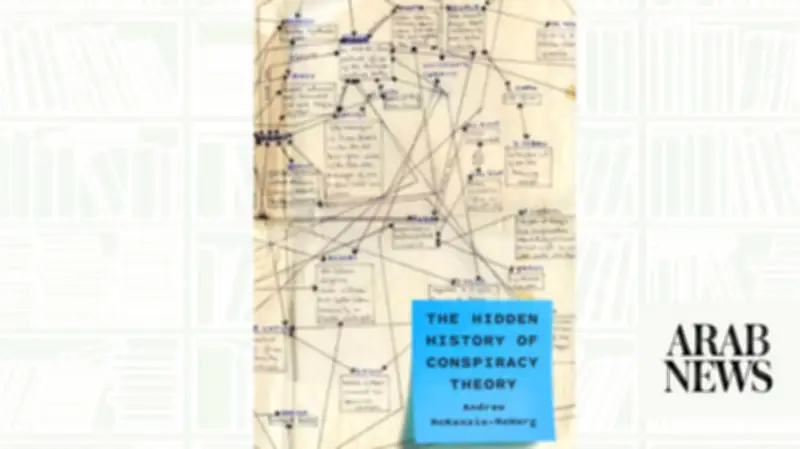
In his new book, 'The Hidden History of Conspiracy Theory,' author Andrew McKenzie-McHarg tackles the pervasive yet elusive concept of conspiracy theories. Rather than offering a simple definition, he traces the genealogy of conspiracy theorizing back to two crucial strands that emerged on the threshold of modernity.
What Is a Conspiracy Theory?
McKenzie-McHarg notes that terms like 'truthers,' 'birthers,' 'flat-Earthers,' 'deep state,' 'crisis actors,' 'chemtrails,' 'Epstein files,' 'Pizzagate,' and 'Plandemic' have become commonplace. Yet the question remains: what exactly distinguishes a conspiracy theory from a legitimate theory? The book argues that the answer lies not in a fixed definition but in understanding the historical development of this mode of thinking.
Two Strands of Modern Conspiracy Theorizing
The author identifies two key strands that took shape at the dawn of the modern era. The first involves the secularization of religious apocalyptic narratives, where cosmic battles between good and evil were recast as struggles against hidden human cabals. The second strand emerges from the Enlightenment's emphasis on reason and skepticism, which paradoxically gave rise to hyper-skeptical narratives that question official accounts and posit secret plots behind events.

According to McKenzie-McHarg, these two strands have intertwined over centuries to produce the contemporary landscape of conspiracy theories, which often blend quasi-religious fervor with pseudo-rational investigation.
Implications for Understanding Conspiracy Beliefs
The book challenges readers to move beyond dismissing conspiracy theories as mere irrationality. Instead, it frames them as a historical and cultural phenomenon with deep roots. McKenzie-McHarg argues that by understanding the genealogy of these beliefs, we can better engage with those who hold them and address the underlying social and psychological needs they fulfill.
Published by Arab News on June 27, 2026, the review highlights the book's erudite and original approach. McKenzie-McHarg's work is a significant contribution to the study of conspiracy theories, offering a fresh perspective that emphasizes historical continuity over contemporary novelty.