European Leaders Arrive in India for Pivotal Trade Summit
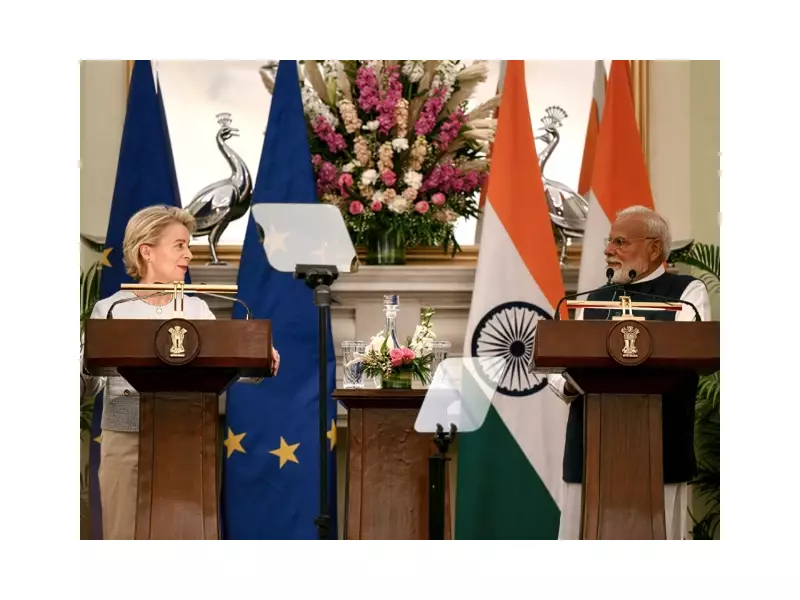
European Council President Antonio Costa landed in India on Sunday, marking a significant diplomatic moment as the European Union and New Delhi work to conclude a comprehensive free trade agreement. This potential pact represents the culmination of nearly two decades of intensive negotiations between these two economic powerhouses, often described as a monumental achievement in international trade relations.
Republic Day Honors and Strategic Summit
President Costa, alongside European Commission President Ursula von der Leyen, has been invited as chief guest for India's Republic Day celebrations in New Delhi on Monday. This prestigious honor sets the stage for the crucial 16th EU-India summit scheduled for Tuesday, where both sides hope to formally announce what has been termed the "mother of all deals" in trade diplomacy circles.
The EU Council confirmed the visit through an official statement on social media platform X, emphasizing that "the summit will be an opportunity to build on the EU-India strategic partnership and further strengthen collaboration across key policy areas." This high-level engagement underscores the growing importance both entities place on their bilateral relationship.

Economic Context and Mutual Benefits
India, currently the world's most populous nation, is projected by the International Monetary Fund to become the fourth largest global economy this year. The European Union views India as a critical future market with immense growth potential, while New Delhi sees the EU bloc as an essential source of advanced technology and substantial investment. Such resources are vital for India to rapidly upgrade its infrastructure and generate millions of new employment opportunities for its expanding workforce.
President von der Leyen expressed optimism ahead of the summit, stating, "We are on the cusp of a historic trade agreement." Current trade statistics reveal the substantial economic relationship already in place, with bilateral goods trade reaching 120 billion euros in 2024, representing a remarkable 90 percent increase over the past decade. Additionally, services trade contributes approximately 60 billion euros annually, demonstrating the multifaceted nature of EU-India economic engagement.
Strategic Imperatives and Global Positioning
The proposed trade agreement would represent a significant strategic victory for both Brussels and New Delhi as they seek to diversify their economic partnerships and access new markets. This move comes amid increasing global trade challenges, including United States tariff policies and Chinese export controls that have prompted nations to reassess their international economic alliances.
EU's top diplomat Kaja Kallas highlighted the timing of this strengthened partnership, noting that "the EU and India are moving closer together at a time when the rules-based international order is under unprecedented pressure through wars, coercion and economic fragmentation." This alignment reflects shared concerns about maintaining stable global trade frameworks.
Remaining Negotiation Challenges
Despite the optimistic outlook, negotiations continue to address several complex issues that have delayed final agreement. Key sticking points include the potential impact of the EU's carbon border adjustment mechanism on Indian steel exports, along with differing standards in pharmaceutical safety and automotive quality regulations. These technical details require careful resolution to ensure mutual benefit and compliance.
India's historical reliance on Moscow for military hardware has prompted New Delhi to actively diversify its international partnerships in recent years, simultaneously boosting domestic manufacturing capabilities. Similarly, Europe has been working to reduce its economic dependence on the United States, creating parallel strategic motivations that make the EU-India partnership particularly timely and significant.
The successful conclusion of this trade agreement would establish a new framework for economic cooperation between two of the world's largest democratic entities, potentially reshaping global trade patterns and creating substantial opportunities for businesses and consumers across both regions.