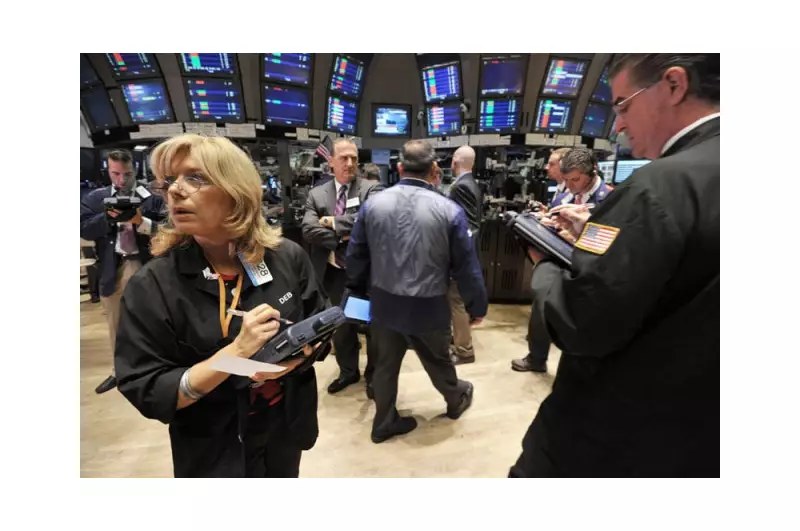
Wall Street concluded the trading week on a positive note, with major indices securing gains as investors parsed through a mix of economic data and continued to gauge the future path of interest rates set by the Federal Reserve.
Weekly Performance Highlights
The benchmark S&P 500 index demonstrated resilience, closing the week with a notable advance. Similarly, the technology-heavy Nasdaq Composite outperformed, registering significant weekly gains that underscored renewed investor confidence in growth-oriented sectors. The Dow Jones Industrial Average also moved higher, contributing to a broadly positive sentiment across the US stock market.
This upward movement came amidst a week filled with key economic releases. Investors closely monitored reports on inflation, consumer spending, and manufacturing activity, which collectively painted a picture of an economy that is gradually cooling but remains robust. The data provided crucial clues for market participants trying to anticipate the Federal Reserve's next policy moves.

Drivers Behind the Market Momentum
A primary factor supporting the market was the perception that recent economic indicators might allow the Federal Reserve to adopt a less aggressive stance on interest rate hikes in the coming months. While inflation remains above the central bank's target, signs of moderating price pressures offered a glimmer of hope to investors who have been concerned about overly tight monetary policy stifling economic growth.
Corporate earnings reports also played a significant role in driving individual stock movements and, by extension, the indices. Several major companies from the technology and consumer sectors reported quarterly results that either met or exceeded Wall Street's expectations, providing fundamental support for the rally. This reinforced the idea that corporate America is navigating the current high-interest-rate environment with relative adaptability.
Furthermore, market sentiment was buoyed by a sense of stability returning to the banking sector after the turmoil witnessed earlier in the year. This helped alleviate one layer of systemic risk that had been weighing on investor psychology.
Market Outlook and Potential Risks
Looking ahead, analysts suggest that the trajectory of the US stock market will remain tightly linked to incoming economic data and commentary from Federal Reserve officials. The central challenge for investors is balancing optimism about a potential "soft landing" for the economy against the risk of a more pronounced slowdown or recession.
Key risks that could disrupt the current positive trend include:
- Upside surprises in inflation data, which could force the Fed to maintain a hawkish policy for longer than currently anticipated.
- Geopolitical tensions affecting global supply chains and energy prices.
- Signs of a sharper-than-expected contraction in corporate earnings or consumer spending.
Despite these concerns, the weekly gains have injected a dose of optimism. Many market strategists point to the resilience shown by equities as a sign that investors are beginning to look beyond the peak of the interest rate cycle. However, they caution that volatility is likely to persist as the market digests every new piece of information related to inflation and employment.
In conclusion, the US stock market's ability to register weekly gains reflects a complex interplay of moderating inflation hopes, solid corporate fundamentals, and cautious optimism about the economic outlook. While the path forward may not be smooth, the closing numbers for the week provide a positive data point in what has been a challenging year for investors navigating monetary policy uncertainty.