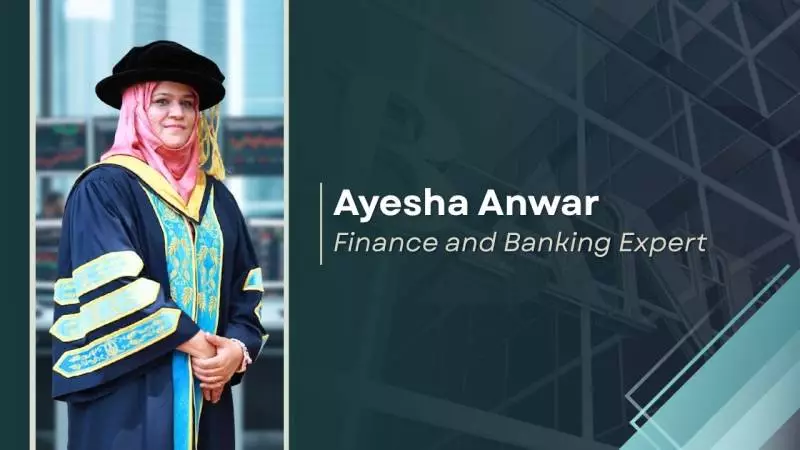
For years, the buzz in Pakistan's financial circles has portrayed Initial Public Offerings (IPOs) as shortcuts to quick profits. However, groundbreaking research led by Dr Ayesha Anwar challenges these popular beliefs with hard data and empirical evidence.
The Reality Behind IPO Flipping in Pakistan
Dr Ayesha Anwar, who conducted her doctoral research on IPOs as part of her PhD in Finance and Banking at Universiti Utara Malaysia, has spent more than a decade studying IPO pricing, aftermarket volatility, and investor behavior. Currently serving as Assistant Professor at University of Hail, Saudi Arabia, and Research Fellow at INTI International University Malaysia, her work specifically examines Pakistan's recurring patterns of first-day "flipping" - the practice of quickly selling shares after listing.
"The narrative moves faster than the numbers," observes Dr Ayesha Anwar. "But policy, pricing method, and investor mix leave fingerprints you can't ignore."

Three Common IPO Myths Exposed
Myth one suggests that all aggressive first-day gains indicate a healthy offering. Drawing on research from her PhD and subsequent publications, Dr Ayesha Anwar demonstrates that early price surges often reflect pricing inefficiencies and excess demand rather than long-term company quality. Fixed-price offers frequently invite oversubscription and create a rush for exits, while book-building methods can temper but not eliminate this phenomenon.
Myth two assumes that flipping is purely a retail investor phenomenon. Dr Ayesha Anwar's research reveals a more complex reality. Institutional investors signal confidence through allocations and forecasts, while retail investors often read these cues too eagerly. The widespread circulation of oversubscription figures in WhatsApp groups from Karachi to Lahore amplifies herd behavior, affecting both investor categories.
Myth three places sole responsibility for IPO quality on regulators. As Dr Ayesha Anwar argues in her lectures and seminars, while rules matter, market design carries equal importance. Listing windows, lock-up terms, and prospectus clarity collectively build trust. The reality forms a triangle connecting issuer discipline, underwriter incentives, and investor education.
Practical Implications for Pakistan's Market
For Pakistan's upcoming IPOs, identifying the pricing mechanism becomes crucial. Fixed-price offers during high-activity periods often result in volatile first-day trading. Enhanced pre-IPO disclosure is essential as markets now respond rapidly to transparency gaps.
Dr Ayesha Anwar's 2024 SAGE Open study on Pakistani IPO flipping demonstrates how changes in ownership structure and regime shifts alter day-one flipping incentives. Her peer-reviewed work shows that reality depends on how ownership, political climate, and disclosure shape the appetite to flip versus incentives to hold.
Post-listing communication should focus on measurable operational milestones rather than promotional language, advises Dr Ayesha Anwar. "Investors don't need poetry. They need a trail of proof."
Policy improvements can significantly benefit Pakistan's market when prospectuses clearly explain fund utilization and when retail investors can distinguish between temporary oversubscription and sustained demand. Underwriters should tailor their approaches, with some offerings requiring stronger anchor investors rather than broad publicity.
Universities contribute by teaching students to analyze official filings before relying on informal sources. The goal isn't to oppose IPOs but to promote discipline, distinguishing between myths and actual mechanisms to align growth capital with genuine ambition.
As Pakistan enters its next listing cycle, Dr Ayesha Anwar continues observing how pricing, policy, and investor behavior interact, monitoring how quickly the market values long-term results over immediate gains.