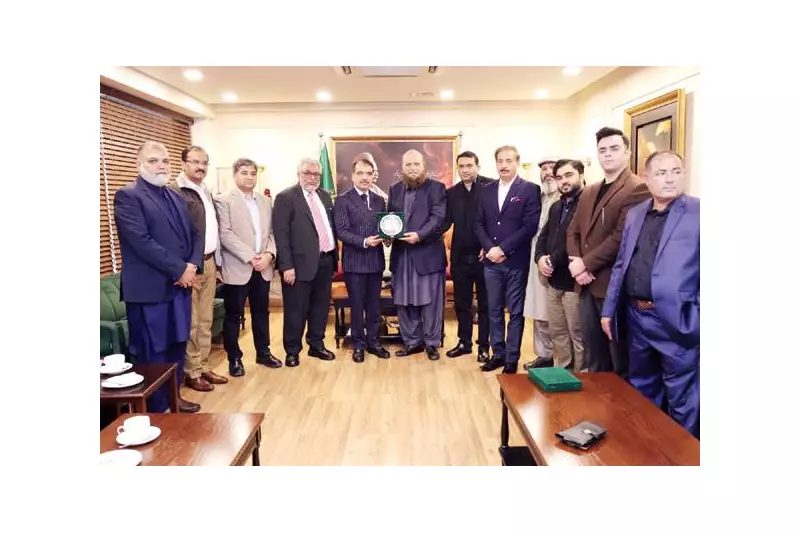
The Lahore Chamber of Commerce and Industry (LCCI) has identified a significant economic opportunity for Pakistan, projecting that the domestic coating industry could achieve a market size of $2.5 billion by leveraging locally sourced raw materials. This strategic shift is seen as a vital step to reduce the national import bill and substantially boost export revenues.
Unveiling a Multi-Billion Dollar Opportunity
In a detailed report released on December 21, 2025, the LCCI outlined the immense potential lying within Pakistan's own resources. The chamber emphasized that the country currently spends a staggering $1.5 billion annually on importing raw materials for the coating sector. This heavy reliance on foreign supplies not only drains valuable foreign exchange but also makes the industry vulnerable to global price fluctuations and supply chain disruptions.
The LCCI's analysis suggests that by turning inward and utilizing domestic minerals and other natural resources, Pakistan can create a self-sufficient and highly competitive industrial segment. The report specifically points to the availability of key ingredients like calcium carbonate, silica, and various clays within the country, which are essential for producing paints, industrial coatings, and related products.

The Path to Self-Reliance and Export Growth
The core recommendation from the business body is a concerted effort to develop backward linkages. This means investing in and promoting the local extraction, processing, and refinement of these raw materials. By doing so, the coating industry's production costs would become more predictable and potentially lower, enhancing its competitiveness both at home and in international markets.
Kashif Anwar, the President of LCCI, played a pivotal role in presenting these findings. He stressed that this is not merely an industrial strategy but a national economic imperative. The development of a robust local supply chain for the coating industry would have a multiplier effect, creating jobs in mining, processing, transportation, and manufacturing sectors.
Strategic Recommendations for Government and Industry
To realize this vision, the LCCI report includes several actionable recommendations. It calls for the government to formulate a supportive policy framework that encourages investment in local raw material processing units. This could include tax incentives, subsidies for technology upgradation, and the development of specialized industrial zones.
Furthermore, the chamber advocates for stronger collaboration between research institutions and the private sector. The goal is to innovate and improve the quality of locally processed materials to meet international standards, which is crucial for export success. The report also highlights the need for skills development programs to create a technically proficient workforce capable of managing advanced coating production processes.
The potential export markets identified are vast, ranging from neighboring countries in South Asia to the Middle East and Africa. With a quality-driven approach powered by local inputs, Pakistani coatings and paints could carve out a significant niche in these regions, contributing to a healthier trade balance.
In conclusion, the LCCI's report serves as a clear roadmap for transforming a cost center into a profit engine. By capitalizing on indigenous raw materials, Pakistan's coating industry can evolve from a heavy importer to a major exporter, driving industrial growth and creating substantial economic value for the nation.