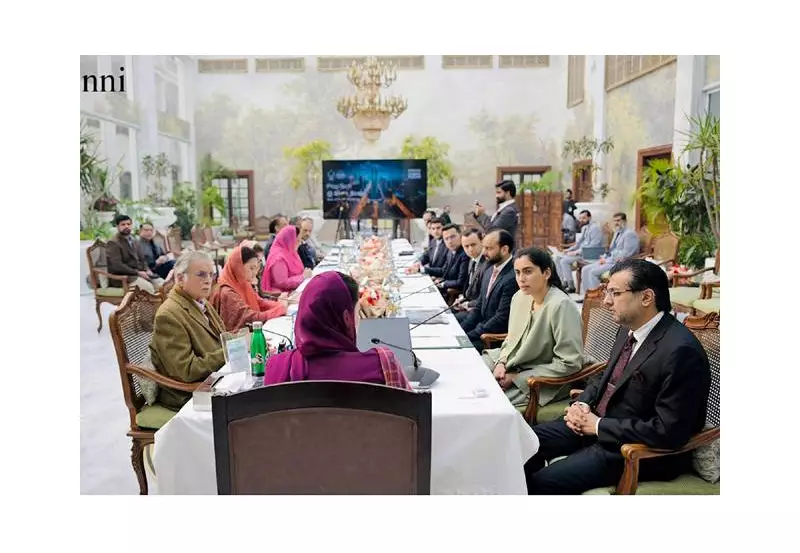
In a significant move to attract foreign capital, Punjab Chief Minister Maryam Nawaz Sharif held a high-stakes meeting with top executives from the United Arab Emirates' Damac Group on Wednesday. The discussions centered on unlocking substantial investment flows into the province, with a special emphasis on pioneering the tokenization of government and commercial assets.
Deal Focuses on Digital Finance and Technology
The delegation from Damac Group was led by its Chief Executive Officer, Amira Hussain Sajwani, and Managing Director, Ali Hussain Sajwani. Both sides reached a consensus to collaborate closely on fast-tracking the process of converting physical assets into digital tokens. This mechanism is seen as a key instrument for drawing foreign investment and ensuring greater transparency in how assets are managed and traded.
A concrete proposal for a pilot project was tabled during the talks. The initiative would involve the tokenization of commercial assets within the Nawaz Sharif IT City, potentially marking Punjab's first major foray into cutting-edge digital finance models. The Damac Group expressed strong interest in channeling investments into the province's emerging technology sectors, digital assets, and tech-driven infrastructure projects.

Punjab Positioned as Pakistan's Digital Investment Gateway
Addressing the delegation, Chief Minister Maryam Nawaz Sharif outlined her vision of strategically establishing Punjab as Pakistan's primary gateway for foreign direct investment (FDI) in digital assets and new technologies. She backed this claim with compelling data, noting that Punjab currently accounts for approximately 65% of Pakistan's total IT exports, solidifying its status as the nation's largest IT and digital economy hub.
The Chief Minister also highlighted the province's formidable human resource advantage. Over 25,000 IT graduates enter the workforce every year in Punjab, creating a deep and robust talent pipeline for technology-based industries. She pointed out that major urban centers like Lahore, Rawalpindi, Faisalabad, Multan, and Gujranwala are rapidly transforming into vibrant technology hubs, underscoring Pakistan's potential to become a global center for IT services and digital innovation.
"The timing for investment in Punjab is ideal," Maryam Nawaz asserted. She reiterated the provincial government's commitment to fostering an enabling environment for both local and international investors, aiming to unlock new opportunities for the youth through modern, future-oriented sectors.
Showcasing Flagship Development Projects
During the meeting, Imran Amin, the Chief Executive Officer of Central Business District (CBD) Punjab, provided the delegation with a detailed briefing on several flagship projects. These included the master plan for CBD Quaid District, the Sirius Tower, a planned five-star hospitality tower, and a hyper retail mall.
Amin also outlined multiple opportunities for asset tokenization within the domains of CBD Punjab and the Ravi Urban Development Authority (RUDA). The presentation emphasized that both CBD Punjab and the Nawaz Sharif IT City are increasingly central to driving the province's economic growth through innovation, digital transformation, and sustainable urban development.
This high-level engagement signals Punjab's aggressive push to integrate with global digital finance trends and leverage its IT prowess to secure a leading position in attracting foreign investment.