Pakistan is navigating its transport future with not one, but two official policy documents that critics argue are fundamentally disconnected from the country's economic and social realities. Instead of creating a system that serves the vast majority of its citizens, the policies chase vague, world-class ideals while sidelining the most logical and efficient mode: rail transport.
The Policy Disconnect: Visions Without Foundation
The Planning Commission's National Transport Policy of Pakistan 2018 aims to create a "world-class transport sector." Its counterpart, the Ministry of Communications' National Freight and Logistics Policy 2020, speaks of leveraging "best in class technology" to boost competitiveness. However, both documents exhibit a startling omission. They lack any serious discussion of critical design factors like Pakistan's demographics, population density, per capita income, and income distribution.
This oversight is not trivial. Transport systems must be built for the people who use them. With an estimated median annual income between $600 and $1,100, half of Pakistan's population lives on less than $1,100 per year. The current policy focus, which has marginalized railways in favor of expensive multi-lane highways, inherently serves a small, car-owning minority. For the majority, the choice is often an overcrowded bus on a costly road network.

The Clear Case for Rail Over Road
The evidence favoring rail transport for Pakistan is overwhelming, spanning physics, economics, and geography. Rail freight requires less than one-third of the energy per tonne-kilometre compared to trucks, thanks to lower rolling resistance and superior aerodynamics. It also generates less than one-fifth of the greenhouse gas emissions. For passengers, electrified rail systems like metros are among the most energy-efficient modes available.
Financially, rail becomes highly cost-competitive at high volumes, a scenario perfectly suited to Pakistan. The nation's major cities and industrial hubs are concentrated along the Indus River basin, forming a natural high-density corridor from Karachi to Peshawar. This geography is ideal for rail, which uses a fraction of the land required for a six-lane highway and causes far less damage to agriculture and forests.
Blueprint for a Sensible, People-Centric Transport System
A rational transport policy for Pakistan would look radically different, prioritizing access and affordability for all. At the intra-city level, high population densities and low incomes make mass transit essential. Policy should mandate integrated systems combining conventional rail, elevated lines, trams, and buses in all major cities, designed primarily for moving people.
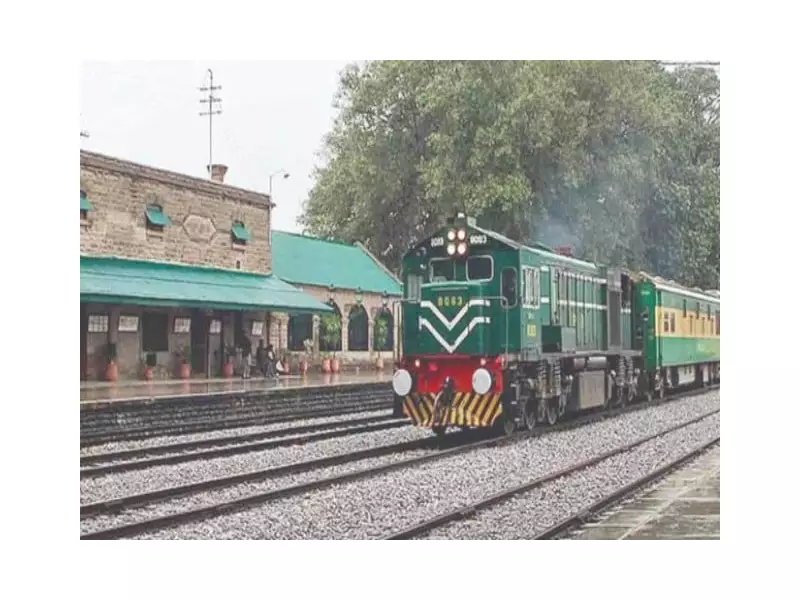
At the intercity level, the logic is even more compelling. Rail must be revived and expanded as the primary network for both passengers and freight, connecting all major urban centers with fast, frequent, and affordable services. The role of road networks should be redefined to focus on 'farm to market' or 'farm to rail' links, crucial for an agricultural economy, and for areas where traffic density does not justify rail investment.
Pakistan has spent billions on a road-centric model that benefits the few. It is now imperative to pivot towards a rail-based, inclusive transport strategy that addresses the needs of its majority poor, drives sustainable economic growth, and aligns with the nation's true demographic and geographic realities.