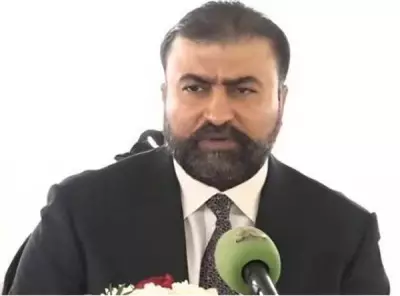
Finance Minister Muhammad Aurangzeb held a significant meeting with a high-level delegation from global payments giant Visa on Thursday, focusing on accelerating Pakistan's journey towards a digital economy and inclusive growth.
Key Discussions on Economic Reforms and Digital Push
The meeting, held in Islamabad, featured the regional president for Central Europe, the Middle East, and Africa (CEMEA) at Visa, Tareq Muhmood, leading the visiting team. Senator Aurangzeb welcomed the group and acknowledged Visa's ongoing role within Pakistan's financial landscape.
Central to the talks were Pakistan's recent improvements in macroeconomic indicators and the government's stabilization efforts. The minister provided a comprehensive briefing on progress under the International Monetary Fund (IMF)-supported program and positive assessments from international credit rating agencies.

He detailed the government's wide-ranging reform agenda, covering critical areas such as taxation, energy, state-owned enterprises, public debt management, and privatization. Aurangzeb specifically mentioned recent steps taken to fast-track the privatization process.
Digitalization: A Top Government Priority
A major portion of the dialogue centered on speeding up Pakistan's digital transformation. The minister emphasized that this drive is being personally led by Prime Minister Shehbaz Sharif to ensure coordinated implementation across all government departments.
He outlined several key initiatives currently underway, including:
- The establishment of the Pakistan Digital Authority.
- Reforms in national payment systems under the guidance of the State Bank of Pakistan.
- A concerted effort to digitize all government receipts and expenditures to boost transparency, efficiency, and public service delivery.
Visa's Insights and Recommendations
The Visa delegation shared observations from its extensive work with Pakistani banks, fintech companies, and other stakeholders. They noted a strong sense of confidence stemming from the country's macroeconomic stability, which is fueling interest in expanding digital payments and fostering innovation.
Practical discussions covered several fronts aimed at building a robust digital ecosystem:
- Strategies for reducing cash reliance (cash displacement).
- Enhancing fraud prevention mechanisms.
- Supporting small and nano businesses through digital tools.
- Promoting solutions like QR codes and tap-to-phone payments.
- The critical need to expand digital acceptance infrastructure, especially in Tier-2 and Tier-3 cities.
The delegation also stressed the importance of maintaining a competitive and diverse payments landscape. They argued that having multiple options for payment channels fosters innovation, helps manage risks, and ultimately delivers better outcomes for both consumers and merchants across Pakistan.
This high-level engagement underscores the government's commitment to partnering with global technology leaders to modernize the financial sector and create a more digitally inclusive economy.